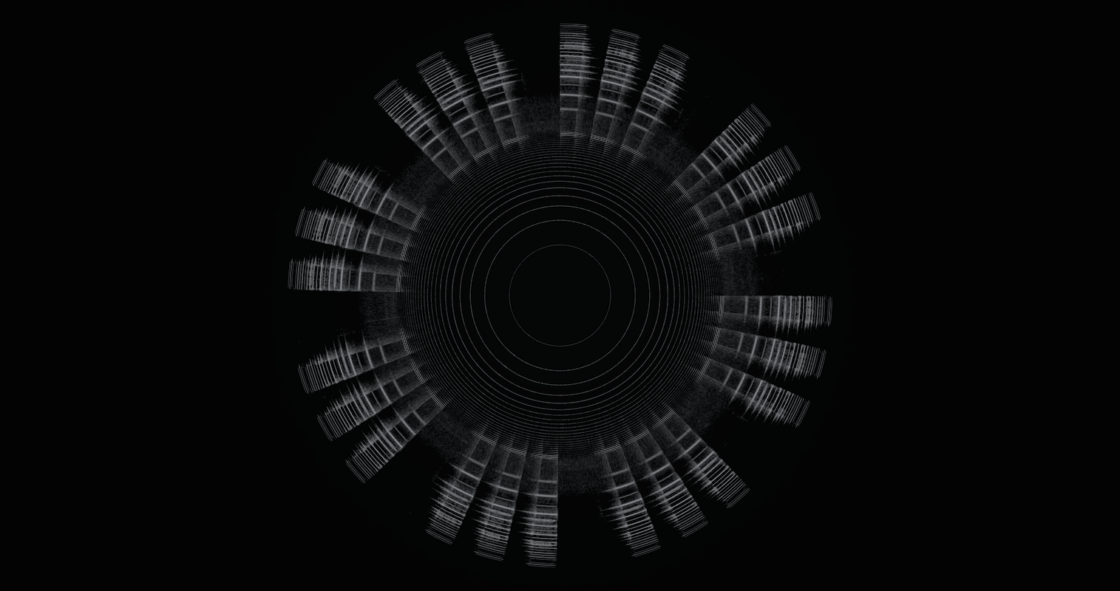
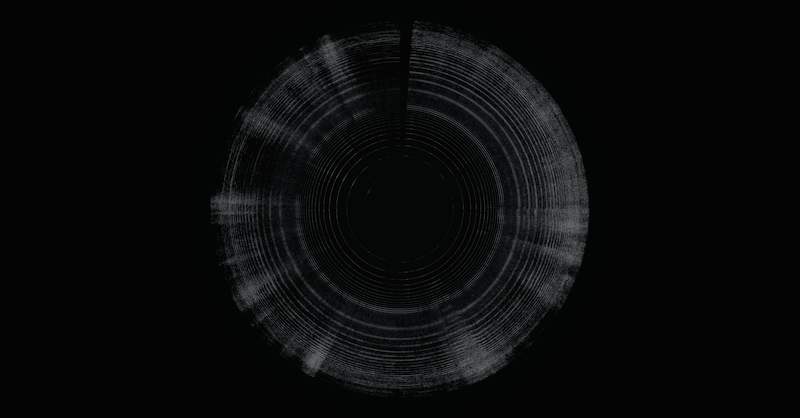
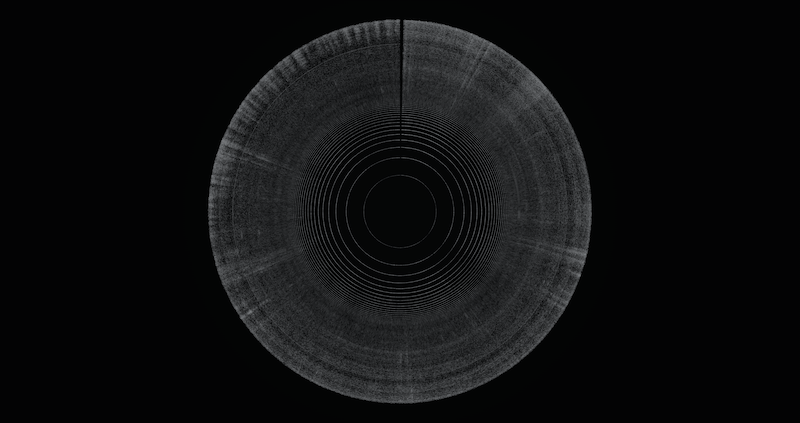
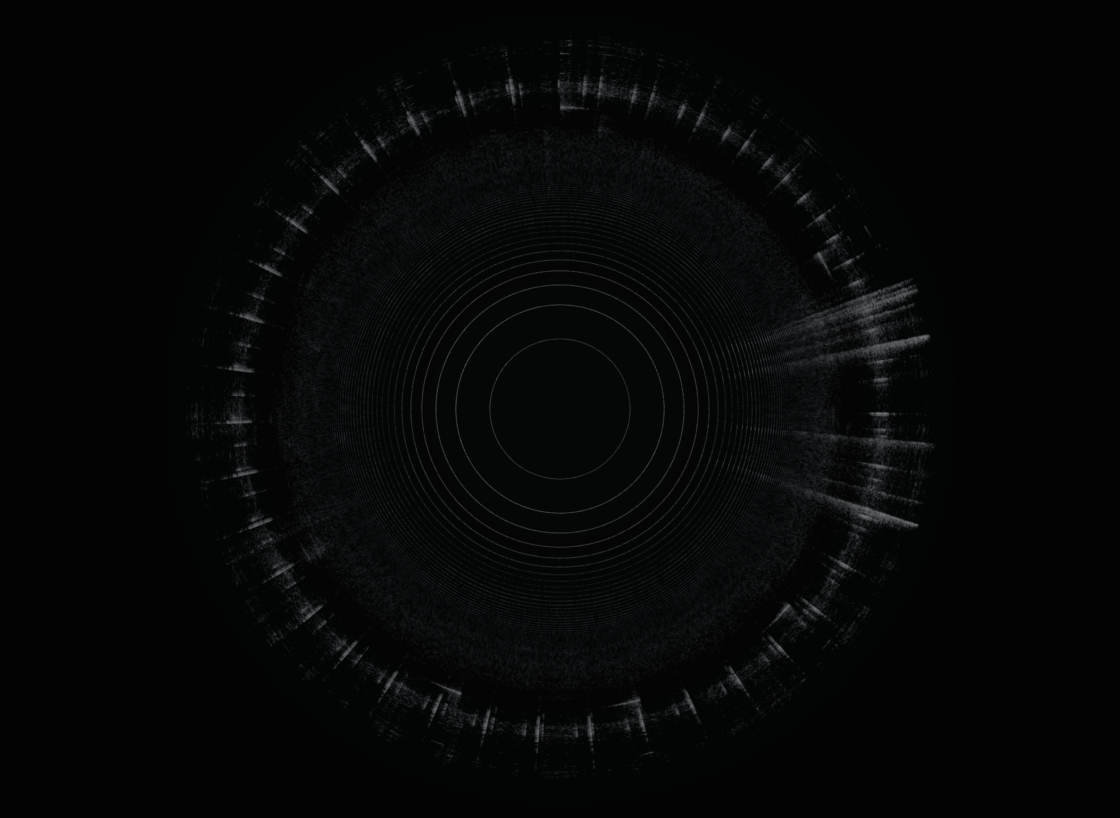
What does a color sound like? What does a description of a color sound like? We’re exploring questions such as these in this week’s Disquiet Junto project, which is titled Spectrum Analysis. The Junto is a community of musicians around the world who respond to weekly music composition concepts expressed primarily with words, sometimes with images. This week, participants were invited to choose a crayon color and write a piece of music inspired/informed by its color/name.
The project’s title is a pun on the word “spectrum.” In sound, what we call “spectrum analysis” is a technological means of gauging an audio signal’s frequency over time. We speak of color, similarly, as being located along a spectrum. This latter phenomenon is evident in the way bands appear in a rainbow in the sky or through a prism.
These two types of spectrums — or spectra — are not isolated concepts. Color is often employed when describing certain types of noise. For example, white noise, which is rapid random bits of sound from across the spectrum of what is audible, connects with color theory, in which white is the combination of an equal amount of all colors across the spectrum of what is visible. There are other such colors of noise, including pink, brown(ian), and blue. Black noise can be considered as silence.
In this project, however, we are not looking to locate or imagine other sorts of noise, or at least not necessarily. We’re thinking about the way words — as with Mango Tango, Burnt Umber, and Lilac Luster, all popular Crayola names — are a repository of color, and how in turn those words, along with a musician’s awareness of the given color, might inspire music. It’s a matter of mood, narrative, tone, depth, texture, and other such elements.
Below is a list of the colors used by the various participants in the Spectrum Analysis project, which is the 735th consecutive weekly Disquiet Junto music composition. Discussion by the participants along with their tracks unfolds at a dedicated thread on the llllllll.co message board, and there is a playlist of tracks uploaded to SoundCloud. The project began on Thursday, January 29, 2026, and will end at the end of Monday, February 2, 2026. Many of the colors below — related to 26 tracks so far — are followed by excerpts of descriptions posted by the musicians (listed parenthetically) who were inspired by that color.
▰ Alien Armpit — (JoaGymshoe)
▰ Atomic Tangerine — “These recordings were made for a previous installation which was partly informed by a nuclear power plant” (Leon Clowes)
▰ Black Hole — “This got to a dark place, but again, i guess it’s supposed to. Sine tones and electric guitar.” (emremeydan)
▰ Blue — “I associate blue with distance, depth, melancholy, and calm, but also with something unfinished and rough around the edges. I wanted that tension to be reflected in the sound: a slow, slightly ominous foundation with room for movement and improvisation.” (Rolf Oosting)
▰ Blue Liz — “It’s a reference to one of [Andy Warhol’]s silkscreen works depicting Elizabeth Taylor as Cleopatra. The artwork portrays an enigmatic and mystical mood to me.” (he_nu_ri)
▰ Camo — “Been feeling like I need to get back to my punk rock roots and beat the crap out of some instruments. Somehow a line along the lines of ‘no crayons in the box gotta color called camouflage’ came into my head along with a simple little beat and bass line.” (Dawn Falls)
▰ Colour Pencil 363 — “I have a set of twenty-four colour pencils. Each one is marked with a number rather than a memorable name. In position seventeen there’s a nice looking emerald green pencil labelled 363. I transcribed the numbers in the order that I found them, scaled them to fit a range between 0 and 10, and used those numbers to program a twenty-four step pitch sequence in vcv rack. Step seventeen (the location of nice looking pencil 363) is used to open a filter envelope that (maybe) gives the sequence a sense of orientation.” (giant dove)
▰ Cosmic Cobalt — “deep purple blue, luminous shades, slightly unreal” (Daniel Diaz)
▰ Electric Lime — “a touch of reverb added” (Ray Cobley)
▰ Hunter Green — “I couldn’t find my old crayons. Went out to get some but bought Tombow brushes instead. Is that cheating?” (kamidev)
▰ Laser Lemon — “Robin’s Egg Blue was one my favorite crayons growing up, but I selected Laser Lemon due to the sonic possibilities that the name suggested” (nsinnenberg)
▰ Laser Lemon — “I … tried to use synthesizer sounds that had kind of a pew pew quality” (Modulatia / Calmnesia)
▰ Mahogany — “when I was very young the song seemed so sad and kinda scary to me” (Hugh Prat)
▰ Maroon — “The idea of crayons evoke the simple joy and naivety of early childhood for me, so I feel like this ended up capturing that feeling more than the colour itself in the end. I began with a simple sine wave harmony, then the melody, effects, and ambient elements just followed from there.” (Ray Marcher)
▰ Maximum Red — “Sometimes it all goes to maximum red” (wasabicube)
▰ metallic crayons — “seeks to capture both the youthful bliss of finally holding these crayons and the accompanying anxiety of knowing that time was limited and that I had to work quickly to realize the full potential of these magical colours” (Andreas Kitzmann)
▰ Orange — “a bright, fun color, so my piece leans more toward the higher end of the frequency spectrum” (jtsoundtech / Jessica the VI Artist)
▰ Periwinkle — “I chose Periwinkle because of its ambiguity. Is it cool? Yes. Is it warm? Maybe. Sometimes. Could it pass for gray? Maybe, depending on what is next to it.” (AloisSenefelder)
▰ Permanent Geranium Lake (dandante)
▰ Petrified Forest — “a soundscape suggestive of a forest in which one might be petrified (with fear)” (enomorricone / Arable Lands)
▰ Purple — “Chose a purple colored, tasty, foggy crayon” (fakeg3nius)
▰ Red Orange — “I remembered I had found a crayon in the street quite a while ago. It took me ages to find it in my chaotic studio. The colour name is red orange. I scribbled on some paper that had also been found in the street. I recorded the scribbling with a contact mic and made lots of layers panned left and right. The clicky pop sound is me scribbling over a blob of dried paint on my desk.” (Raincat)
▰ Sea Green — “E por isso, o verde flutuante do mar é acompanhado por uma batida funana” — or, roughly, “And so, the floating green of the sea is accompanied by a funaná beat.” (Torpid Scorpion)
▰ Sepia — “tried to capture the sensation of this magical color in sound: its richness, its saturation, its sadness, its nostalgia” (Coraline Ada Ehmke)
▰ three shades of Sky Blue — “Some instruments feature cascaded filtering and distortion” (Gianantonio Patella)
▰ Soft Blue — “bright high-altitude skies, where the sunlight seems crisp yet the air is frigid” (bassling)