Scratch Pad: Johnson, Akimusire, Faithfull

From the past week

At the end of each week, I usually collate a lightly edited collection of recent comments I’ve made on social media, which I think of as my public scratch pad. I find knowing I’ll revisit my posts to be a positive and mellowing influence on my social media activity. I mostly hang out on Mastodon (at post.lurk.org/@disquiet), and I’m also trying out a few others. And I generally take weekends off social media.

▰ The most off-putting score cue I’ve heard in a while occurs five minutes into the new TV series Prime Target. An adorable little girl and her mom fall into a hole after a bomb explodes in a Baghdad market, beneath which are ruins of an ancient tomb. The music gets all Da Vinci Code / Raiders of the Lost Ark, and I’m like, “Uh, a cute kid just died. And her mom.” The camera even pauses on the kid’s dropped ice cream cone, but mysterious music soon erases the deaths that occurred seconds before.

▰ RIP, New Orleans food figure Pableaux Johnson, whom I hung out with quite a bit during my NOLA days (1999-2003). He was the first person I ever saw burn a CD.

▰ The next two Frame by Frame four-panel comics I’m doing with Hannes Pasqualini are done. One comes out February 3, the next one after that on February 17.

▰ I’m a heavy user of Discogs to find appearances on other people’s records by musicians I like in supporting roles. Is it possible we’re almost a full month into January and there isn’t a single new record featuring Bill Frisell, Ambrose Akinmusire, or Eivind Aarset? (As someone tipped me off after I made that comment: a new Akinmusire album, honey from a winter stone, was announced and due to come out a few days later. I’m not sure why it’s not on Discogs yet.)

▰ Tired: is the Beat tour line-up (Belew, Levin, Vai, Carey) gonna record a live album?

Wired: are they gonna write new material?

▰ As I do each morning, I was looking over my notes from yesterday and, no kidding, there is one that reads “I somehow didn’t finish my” — and that’s it. I have no idea what it was going to say in full, not even with the context of the other notes around the half-sentence.

▰ Traveling virtually. Today, listening to sounds of Mexico City.

▰ Social media tips:

1: Post before you follow anyone.

2: Stick to a beat (sports, music, books, your profession) or be entirely personal.

3: Whichever option you decide for step 2, do a little of the other for balance.

4: If none of this is appealing, get out while you can.

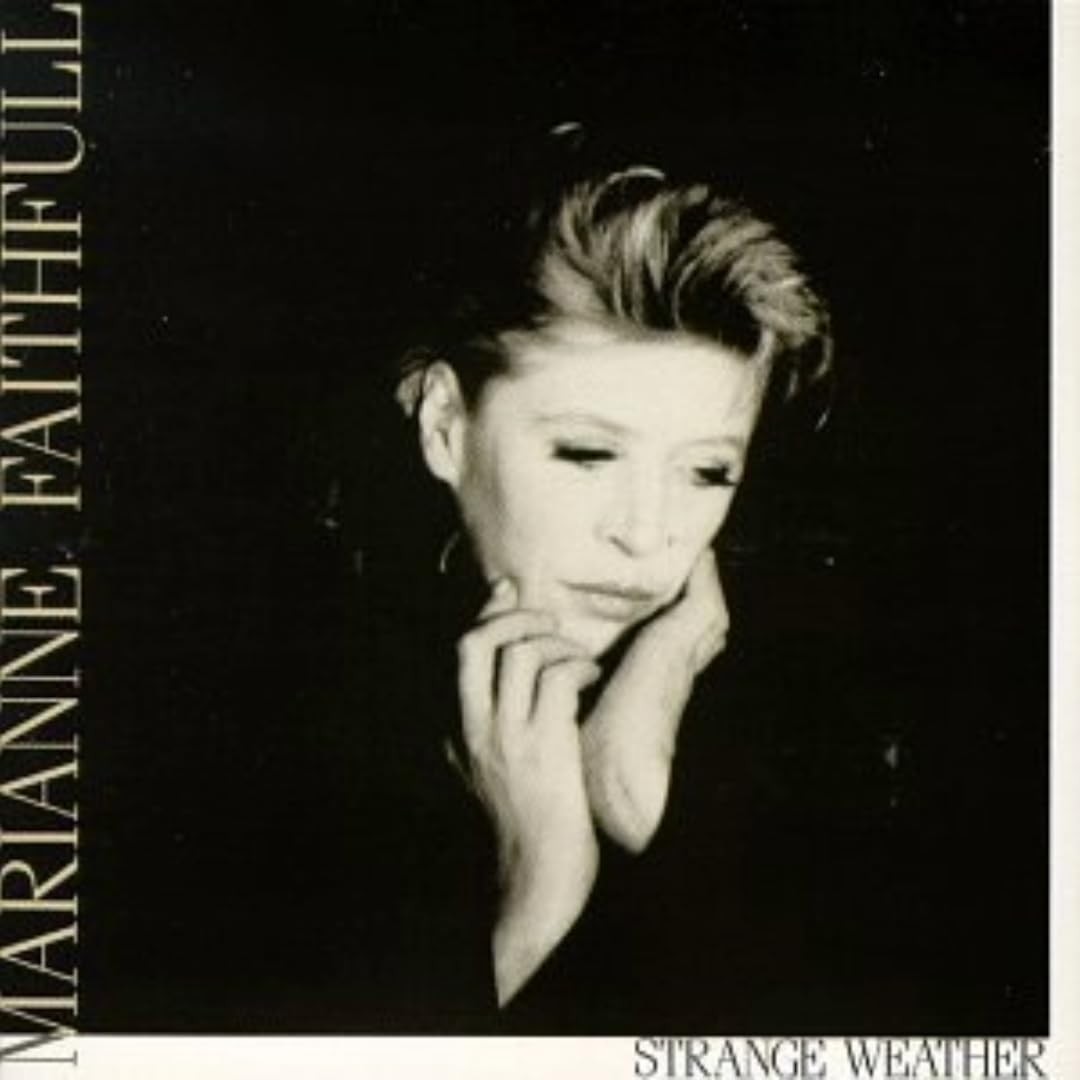
▰ Current mood
    ▰ The evolution of my matzah brei over the years:

    1: made basic matzah brei

    2: added salsa

    3: swapped out matzah for tortilla chips

    4: swapped out salsa for chili crisp

      I said it was my matzah brei, but I then realized it is the matzah brei of Theseus. (And yeah, I realize it’s become chilaquiles with Chinese hot sauce on it — which is to say, as always, what matters is the journey, not the destination.)

      ▰ Sentence I just wrote as part of a longer message about dealing with music PR: “Your name is a field in a database and your email address is like a number on a bathroom wall.”

      ▰ Reading update: I made a lot of progress on Neal Stephenson’s Cryptonomicon (I’m 54% of the way through, having completed the chapter where WWII-era Waterhouse meets the love of his life in Brisbane) and some more progress on George Eliot’s Middlemarch (which is about a lot of people hoping to meet the loves of their lives, and it’s going more slowly for them — and for me). And I finished reading one graphic novel, The Prague Coup, written by Jean-Luc Fromental and illustrated by Miles Hyman. It’s a fictional — more to the point, hypothetical — retelling of a visit that Graham Greene actually took to Vienna while writing The Third Man. (Fun fact: illustrator Hyman is a grandson of author Shirley Jackson, whose “The Lottery” he previously adapted into a graphic novel.)

      Learning from and With

      683 weeks and counting

      This paragraph is from the email I’m sending out tomorrow, January 30, to the Disquiet Junto email announcement list for the weekly projects:

      The Junto has been around for well over a decade now, starting way back in January 2012, and a lot of people have come and gone, some returning, some pausing, and many have stayed for extended periods once they’ve joined. No matter the specific duration, frequency, or cadence of those individual presences, in combination they have formed what can be termed, for lack of a less overused word, a community. I really can’t do justice to the sensation I experience (to the way I am both inspired and touched) each week (683 consecutive weeks to date) when musicians take these rough ideas (from the stringent to the open-ended) for music composition prompts (some my own, some in collaboration with others) and make music from them. It’s quite something, and I never take it for granted, not your efforts, your insights, or your time. The year is still quite young, and who knows what will come of it, but we’ll keep making music together, and learning from and with each other.

      Pipe Up

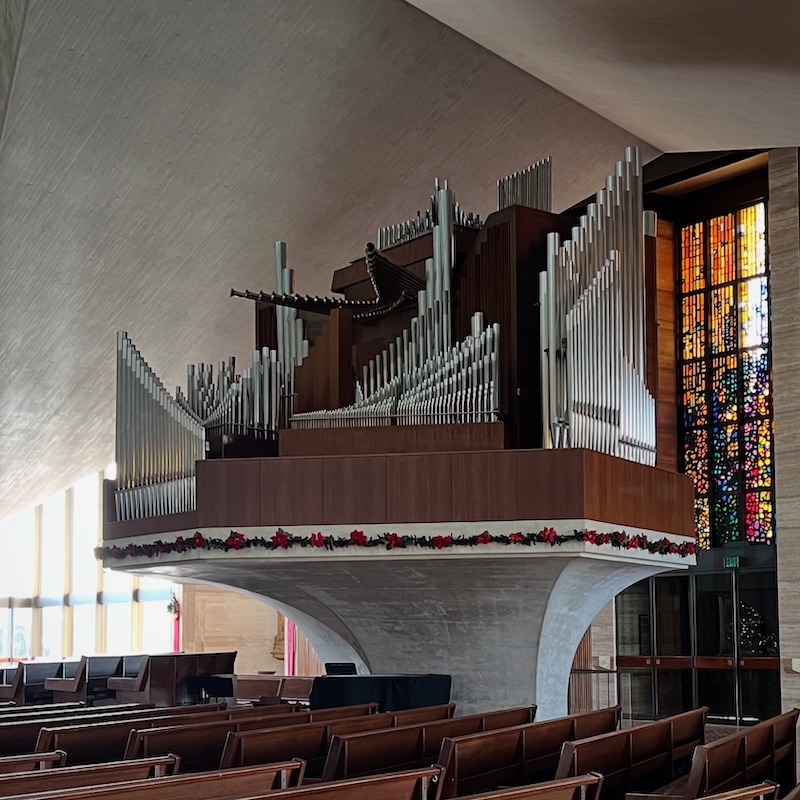
      At Cathedral of Saint Mary of the Assumption

      The most insane pipe organ in San Francisco? I love stopping by. (Decorations left over from the holidays.)

      On ‘The Straight Story’

      Or: Parable of the Mower

      I had the pleasure last year to write not once but twice about the work of David Lynch. I contributed a short essay about his film The Straight Story, which was just turning a quarter century old, for a special issue of The Wire dedicated to Lynch on the occasion of his new album release, Cellophane Memories, a collaboration with Texas-based singer Chrystabell. I also reviewed that album for Pitchfork. So, when Lynch’s death was announced, his work was especially present for me, still lingering from the hours I’d spent pondering it. Below is the Wire essay. I talked about it a bit when it first came out, and music critic Ned Raggett was generous enough to cite it in something he published this week.

      Parable of the Mower
      Sound design and radical juxtaposition lead the narrative in The Straight Story

      Disney acquired David Lynch’s The Straight Story in 1999 after the Cannes Film Festival showered it with praise. It remains, 25 years later, Lynch’s sole G-rated release, for general consumption.

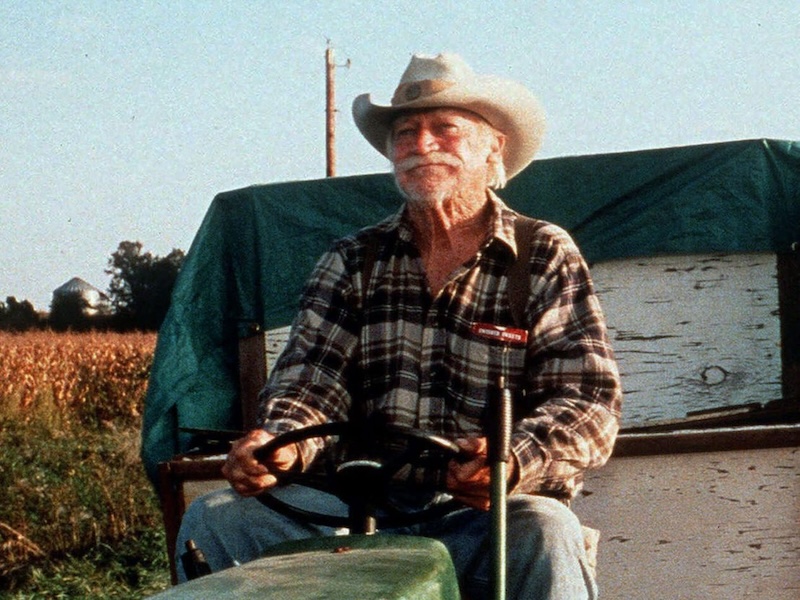
      The film tells a story (based on a true one) about an elderly American Second World War veteran, lacking a driver’s license, who employs his gas-powered lawn mower to travel from his home in lowa to visit his estranged brother in Wisconsin, hundreds of miles away. The brother suffered a stroke. The protagonist Alvin Straight, played by Richard Farnsworth, deals with countless trappings of old age, including emphysema and failing eyes. The mower isn’t in much better shape.

      Lynch’s only other credit on the film, besides directing, is sound design. And the sound in The Straight Story exudes his characteristic surreality by way of heightened mundanity (the score is by Angelo Badalamenti, dependably). The movie takes its title from the actual family name, Straight, of the man on whom its lead is based. Lynch also plays it straight, so straight that his use of sound here comes down to two approaches: very loud and very quiet.

      First, though, Lynch instructs us to listen by having his characters discuss listening. Straight’s daughter Rose (Sissy Spacek) tells him (and us) about the sounds he makes when he stands, thus raising concerns about advanced age without announcing them. Soon after, a giant agricultural structure fills the screen, and we hear its thunderous nocturnal drone (Eraserhead’s radiator, minus the lady, writ large). The scene shifts from the looming structure to a moonlit backyard, where father and daughter are enjoying the evening. The whirr, quieter now, persists in the ambience. Says the older Straight, “Listen to that old grain elevator.” Rose replies: “It’s harvest time.”

      Moments akin to the grain elevator’s violent drone punctuate The Straight Story like chapter headings. Lightning goes off with biblical intensity. A truck scares Straight off the road, and its fading rumble lasts for more than 30 seconds after it passes. Sometimes the noise is of Straight’s making: when he leaves town, his cantankerous friends yell over the mower’s motor. When a mower fails, Straight shoots it like a lame horse; it explodes loudly into flames. In the noisiest moments, exaggerated volume routinely subverts the seeming realism.

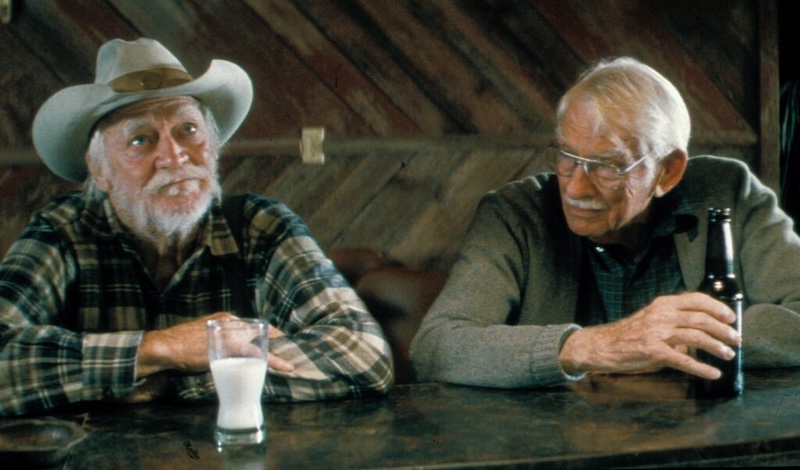
      At other times, near-silence is the emphasis. When Straight rises from the seat of his mower, we hear each creak, a sonic exoskeleton of his troubling fragility. Later, in a bar scene, we only notice someone sharpening a knife when the bartender extends his attention from Straight to include the other patron. It’s a masterful moment, when the creative opportunity of diegetic sound — not just what’s in the scene, but what’s perceived by those in the scene — is on full display. In that same sequence, Lynch appears to nod to one of his most famous scenes. The director who, in Blue Velvet, introduced the exchange, “Heineken? Fuck that shit! Pabst Blue Ribbon!” into the vernacular, here records the sound of a beer bottle being opened with delicacy befitting an ASMR session. The most telling quiet moments are the ones when Lynch captures conversations from a distance, and mikes them with a faithfulness that renders them just shy of unintelligible. If he instructed us to listen earlier, he later tags on ethical amendments about privacy.

      Throughout the film, all the sounds are real (or at least Foley) until late in the narrative, when a fellow veteran tells Straight a story of his own, and then the soundtrack superimposes the sounds of war itself. There’s nothing subtle about the audio overlay, but there’s also nothing subtle about the impact of the story on the man’s life, when his fellow soldiers were killed by a passing German warplane. The man switches, tellingly, to the present tense and says, “I can see the swastika.” Past and present are simultaneous in the moment. Straight commiserates with an equally harrowing story, and again there is a noisy resonance, but its origin is more ambiguous. Quite likely it is sound from the street given meaning and purpose by Straight’s tale. That is the best sound effect of all.