
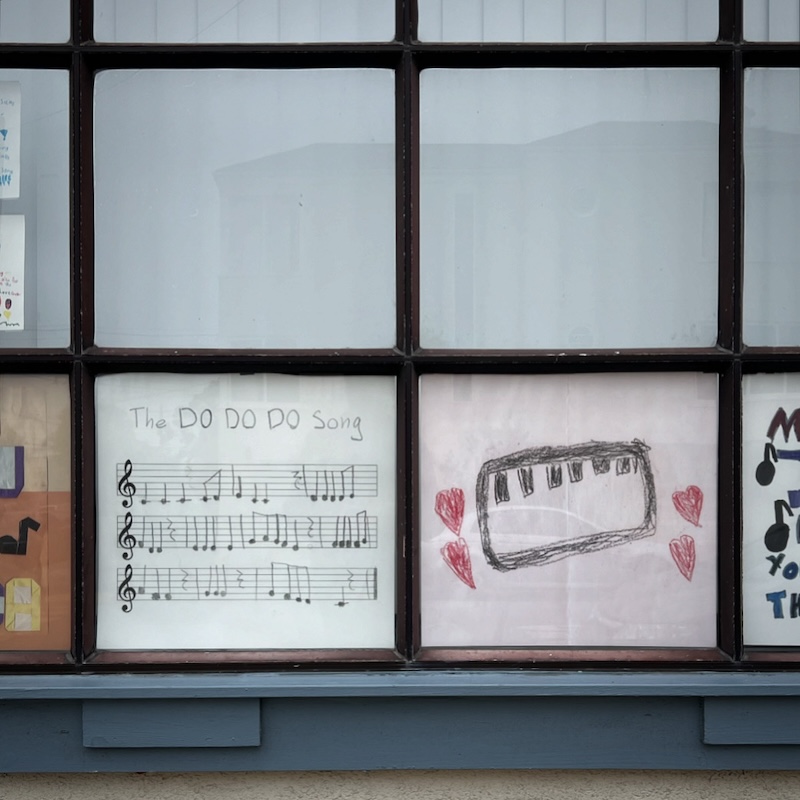
Children’s music school graphics FTW
News, essays, reviews, surveillance
Children’s music school graphics FTW
Correct me if you see other examples, but there wasn’t anything particularly sonically of note technologically in the fourth episode of Sunny, the playful Apple TV series about a grieving mother, a pesky robot, and the secrets of a (seemingly) dead husband. However, better yet, there was a moment at the very start of the episode that confirmed the sonic self-awareness of the overall series.
Earlier in Sunny, such as with the one-sided conversations in episode 3, and with the sound effects and the introduction of language-translation earbuds in the first two episodes, sound was explicit in the show’s place-setting science fiction. Nothing new of that sort plays out in episode 4, but there’s a special touch at the beginning. We see Masa, the dead husband, very much alive. We’re initially led to believe it’s a flashback, because we see him dropping off the son, Zen, he has with Suzie, at Zen’s school — but we sense something is up when Masa starts whistling along with the song that’s been playing the whole time. It’s a fantastical gesture, right out of the TV work of the late great Dennis Potter (The Singing Detective, Lipstick on Your Collar), when diegetic and non-diegetic merge, when the way songs can encapsulate human experience manifests in what is, in essence, a kind of movie-musical karaoke.
Then the sequence splinters, and we realize this isn’t a flashback, but instead Suzie processing her sudden recognition that there is a yakuza, or gangster, element in their midst. The moment is fantastical precisely because it is a fantasy, a dark one, as her troubled mind, deep in mourning, tries to find sense in the chaos her life has become. It’s also a signal from the show’s creators that, yes, sound is a deliberate element in the story that is unfolding.
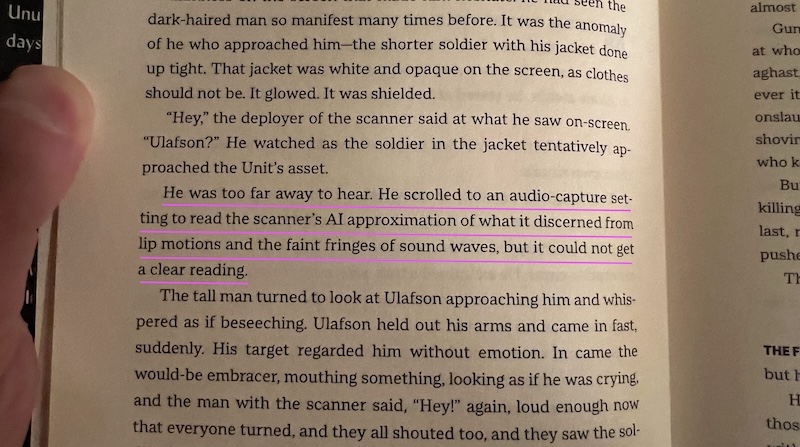
Yes, I’m enjoying the new collaborative novel, The Book of Elsewhere, from Keanu Reeves and China Miéville
“Sometimes it turns into a production kata, sometimes it’s a history lesson, sometimes it’s a subversion of muscle memory. It’s just what I need.”
That is Coraline Ada Ehmke on what the Disquiet Junto has supplied. It’s a rewarding summary statement.
I do this manually at the end of each week: collating most of the recent little comments I’ve made on social media, which I think of as my public scratch pad. I also find knowing I will revisit my posts to be a positive and mellowing influence on my social media activity. I mostly hang out on Mastodon (at post.lurk.org/@disquiet), and I’m also trying out a few others. And I generally take weekends off social media.
▰ First passing siren of the week
▰ Inevitably after guitar class I write down a bunch of notes on what I’ve learned, and then the only fool*-proof way to find my pick is to stand up and wait for it to fall to the floor
*me being the fool in this equation
▰ Again, it’s not, in fact, “I Dream of Wires.” It’s: “I was using my modular synth too late and then I couldn’t sleep because I couldn’t stop thinking about wires.”
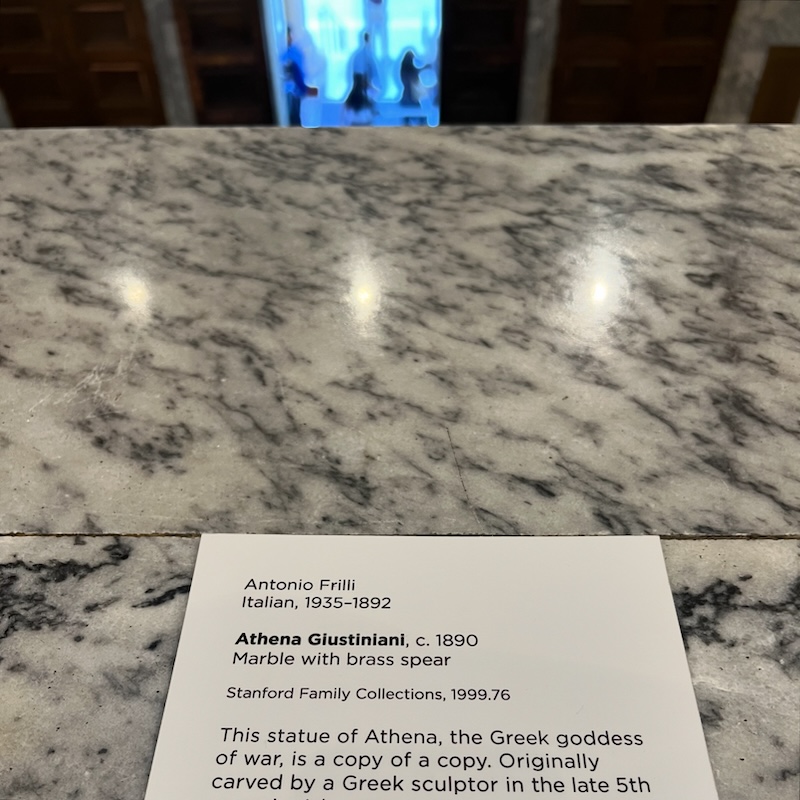
▰ Apparently this artist lived backwards in time (at Stanford Cantor). And yes, as a friend pointed out, kinda love the “a copy of a copy.”
▰ Fun fact: Even when the editor likes your essay a lot and has only made minor edits to it, managing those edits in Track Changes can take a confusing hour-plus. By the end, it becomes the punctuation equivalent of Where’s Waldo.