This Week in Sound: “The Silence Screamed, Terrible”

A lightly annotated clipping service

These sound-studies highlights of the week originally appeared in the May 2, 2023, issue of the Disquiet.com weekly email newsletter, This Week in Sound.

▰ GROUND SWELL: Absolutely fascinating: Listening to the earth — to soil — as a means of gauging biodiversity in a forest restoration: “With emerging sound recording technologies, ecological acoustic survey methods — also known as ‘ecoacoustics’ — are increasingly available. These provide a rapid, effective, and non-intrusive means of monitoring biodiversity. Above-ground ecoacoustics is increasingly widespread, but soil ecoacoustics has yet to be utilised in restoration despite its demonstrable effectiveness at detecting meso- and macrofauna acoustic signals.” (Thanks, Nicola Twilley!)

▰ TALK TALK: Fascinating research into how the language in which one is raised “shapes cognition,” per Courtney Hilton, a cognitive scientist at the University of Auckland in New Zealand, co-author of a study with Jingxuan Liu and others: “Speaking a native language that requires tones appears to boost perception of melody, but at the cost of rhythm.” (Thanks, Glenn Sogge!)

Voices Carry: A map of languages used in the study, showing sample sizes for each language (grouped by three language types)

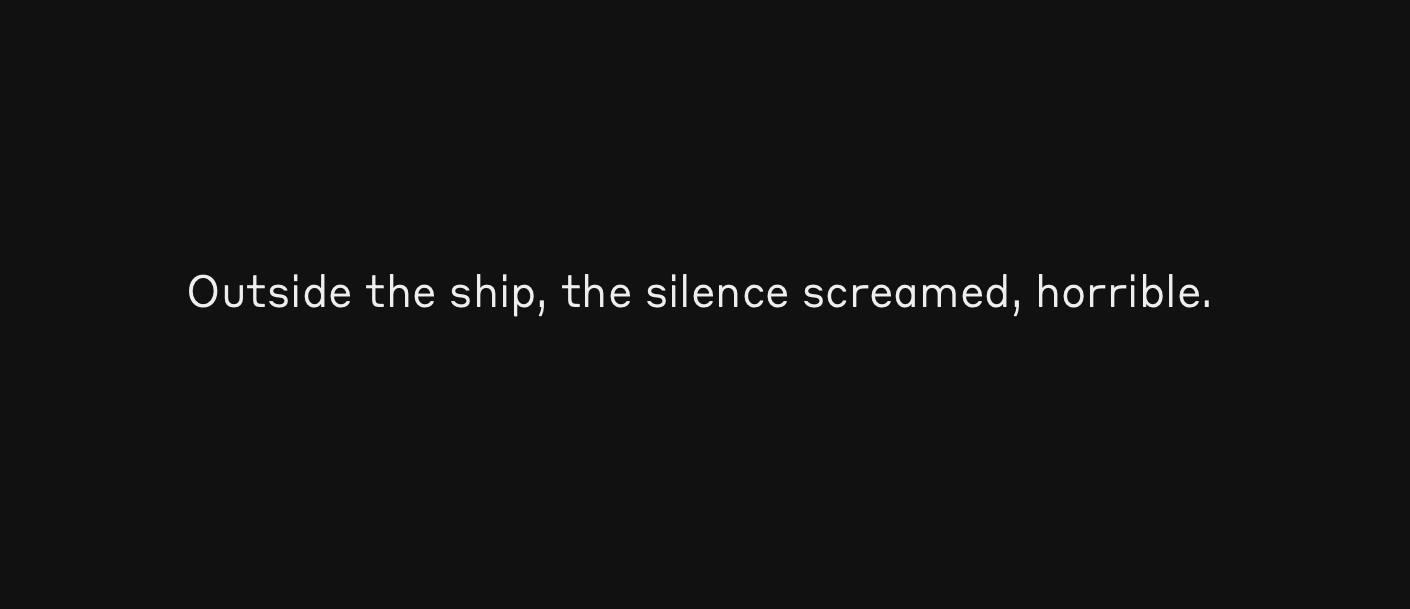
▰ SHIP SHAPE: Novelist Robin Sloan has a new album out under the name Cotton Modules, his collaboration with musician Jesse Solomon Clark. The album, titled The Greatest Remaining Hits, was created with AI-generated voices. The name of the album comes from a tragic short story, written by Sloan, that provides a sci-fi backdrop for the overall concept. It’s a quick read, and highly recommended. The story appears on the website ooo.ghostbows.ooo one phrase or sentence at a time. The main thing I want to highlight at this juncture is a particular sentence. It will make more sense after you read the story, but the point of it is that the silence outside the spacecraft — the silence of the void of space — is all the more harrowing when there is a deep, terrible silence inside the ship. This moment is exquisite. 
▰ OLD SCHOOL: “On one side of the road, exposed rock the color of raw liver angles up the valley slope. Entombed within this stone are the ancestors of the insects that fly and sing around me. One of this fossilized swarm bears the earliest known sound-making structure of any animal, a ridge on the wing of an ancient cricket. This fossil is the oldest direct physical evidence of sonic communication,” writes David George Haskell, describing “The First Known Earthly Voice.” (An excerpt from his excellent book Sounds Wild and Broken.)

▰ VALLEY GIRL: “My quiet place is not always without sound: sitting on a dune at dusk, I hear the soft rustling of the wind against the grains of sand,” writes Yulia Denisyuk of Jordan’s Wadi Rum valley for Condé Nast Traveler. “Leaving my tent at sunrise, I notice the bellows of camels as they return from their daily excursions. A crackling of the fire fills the long pauses in the unhurried conversations at night. The presence of this silence is a salve that helps me connect to the core of who I am.”

▰ BATS, MAN: A new exhibit at the British Library, Animals: Art, Science & Sound, is the subject of the BatChat podcast, itself a service of the Bat Conservation Trust (bats.org.uk): “Hear the recordings of horseshoe bats made on one of the first commercially available bat detectors; the Holgate Mk VI and you can see this detector within the exhibition along with photographs of the waveforms it could make from recordings. It sits alongside other important works such as Ernst Haeckel’s Kunstformen der Natur (Artforms in nature) with the plate of bats on display.” (Thanks, Lotta Fjelkegård!)

▰ OUT THERE: Via SETI: “One of the world’s most powerful radio telescope arrays is joining the hunt for signals from other galactic civilizations. The National Science Foundation’s Karl G. Jansky Very Large Array (VLA), situated about 50 miles west of Socorro, New Mexico, is collecting data that scientists will analyze for the type of emissions that only artificial transmitters make, signals that would betray the existence of a technically accomplished society. … The new processing system for SETI is dubbed ‘COSMIC’ – the Commensal Open-Source Multimode Interferometer Cluster – and is spearheaded by the SETI Institute, in collaboration with the National Radio Astronomy Observatory and the Breakthrough Listen Initiative.”

QUICK NOTES: Balls Out: Soccer becomes truly multi-lingual in Mexico now that the games are broadcast in not one (as has been the case in the past) but seven languages, the other six being major native ones: “Maya, Nahuatl, Mixteco, Chatino, Zapoteco and Mixe” (fastcompany.com). ▰ Ears Have It: Google Pixel phones may “proactively displaying warnings for potentially harmful conditions like sleep apnea” (androidpolice.com). ▰ Night Time(r): YouTube Music has added a sleep timer (9to5google.com). ▰ Casting Change: Bernie Wagenblast, “the voice of NYC’s subways,” has come out as trans (wnycstudios.org). (Thanks, Mike Rhode!) ▰ Two Wheels Bad: News of a Belgian protest against motorcycle noise (brusselstimes.com).

Sound Ledger¹ (Superman, Noise, Silence)

Audio culture by the numbers

29: The number of fighting types represented by onomatopoeia found in the comic Superman: The Doomsday Wars comic

300,000: Penalty (in $US) for noise (and dust) pollution for the owner and operator of a scrap metal facility in Massachusetts

40: Percent of surveyed travelers who reported interest “in booking a silent retreat”

. . .

¹Footnotes: Superman: traverse.asia (Thanks, Mike Rhode!). Penalty: mass.gov. Retreat: cntraveler.com.

Junto Profile: Ethan Hein

From New York City: teaching technology and theory, sampling Thelonious Monk

This Junto Profile is part of an ongoing series of short Q&As that provide some background on various individuals who participate regularly in the online Disquiet Junto music community.

What’s your name? My name is Ethan Hein, which is also my online name; I have never been able to think of a good pseudonym for myself.

Where are you located? I was born in New York City, have lived here for pretty much all of my life, and have never really wanted to live anywhere else. You hear an incredible variety of music just walking down the street here; it makes all the noise pollution worthwhile.

What is your musical activity? I have been making music since I was a teenager, though I did not get serious about it (or good at it) until deep into my twenties. I play harmonica very well, guitar, ukulele and mandolin pretty well, and I hack around on synths and percussion and various other things. For the past decade, I have been making most of my music with Ableton Live and related software. I like funk, jazz and hip-hop, and most of my original stuff aspires to danceability.

What is one good musical habit? My best musical habit is to chase things down with dogged persistence over long spans of time. I find it hard to sustain my focus moment-to-moment, but I make up for it by coming back to ideas or techniques repeatedly over weeks or months. I will chew on some particular riff or rhythm or sample over and over and over, and the coolest things can unexpectedly pop out.

What are your online locations? My main online home is my blog, which has gone from feeling futuristic to charmingly retro. You can now also subscribe to it as a Substack newsletter, which is a thing some people prefer. I post all my music on Bandcamp. I love Bandcamp. I’m also active on Twitter, in spite of its chaotic evilness.

What was a particularly meaningful Junto project? It’s so hard to choose a particularly meaningful Junto project! It has been a formative influence on my musical practice, especially on my music teaching practice. I have Bandcamp compilations of my favorite Junto tracks and more of my favorite Junto tracks. Here are some standouts:

0052: This one just came out well, I think it goes really hard. It was remarkable to discover I could take samples of music by three people I had never heard of and make something that felt so much like me.

0100: I picked a couple of samples based on the fact that their titles mentioned phase transitions — “Boilin’ Water” by the Soul Stoppers Band and “Shuffle Boil” by Thelonious Monk. But then they ended up sounding great together, and I found a tea kettle whistle on freesound.org that played this lovely melody.

0315: This one is important because I spent less than ten minutes conceptualizing, recording, mixing and posting it, and it got the most vocally positive response of any of my Junto projects. It was a real revelation for a chronic overthinker like me.

You’ve mentioned the Junto has informed your teaching. You could talk about that topic a bit more, especially for other music educators who might be reading this interview? I teach music technology and theory. I think the best way to learn these things is by writing and producing original music. The Junto has been a huge inspiration for this approach. I love the idea of giving creative prompts with narrow conceptual parameters but that are otherwise wide open. Junto-style projects can accommodate students with a range of prior knowledge, preferred styles and genres, access to DAWs and instruments and so on. And I like the weekly project structure, too, it gets everybody used to pushing out lots of completed ideas without being too fussy about them.

Unfolding Trios

Background on an especially popular Disquiet Junto project sequence

Each week, the music community I have managed since 2012, the Disquiet Junto, receives and acts on a music composition prompt that is sent out via email. I mention the latest of these projects in each Tuesday’s This Week in Sound issue, as the prompts end each Monday (at 11:59pm, wherever a given participant may be). This week we’ve embarked on what is often among the most popular and active projects of the year, which is why I’m mentioning it while it’s still underway. Barely a day and a half after the project went live, already over 20 musicians had contributed to the SoundCloud playlist, with additional folks posting from YouTube and other hosting services on llllllll.co, where Junto discussion usually takes place. That was Friday evening, when I sent out an issue of This Week in Sound, containing an earlier version of this post. As I update it right now, just after noon on Sunday, there are 35 tracks in the playlist, plus a YouTube video on llllllll.co.

Dr. Ethan Hein, a frequent and longtime Junto participant, who has also written a lot about the Junto over the years, has said this particular project is “a horizon-broadening creative experience.” What he’s referring to is not just this specific week’s project, but also the two that will follow in the coming weeks. 

You see, how this sequence of projects works is that the first week, participants upload a solo piece, one that is intended to, over time, with the contributions of other musicians, become a trio. Thus, for the first week, it’s helpful for participants to leave room for who and what will follow. 

The second week, musicians each select solo pieces from week one, pan them to the left, and add a second channel on the right, creating not just duets, but incomplete ones. Then the final week, new participants add a third track in the center, thus completing the trios. 

It’s a pretty incredible project to listen to as it unfolds, especially when, come week two, you can sometimes hear multiple duets built from one initial solo track — and the same, when the trios are complete, come week three. Sometimes there’s even a fourth week, when Junto members remix the trios, utilizing the raw source material from previous weeks. We’ll see what happens. I sometimes consider doing a “quartet” version of this project, but that always feels ever so slightly too busy. Maybe down the road.

If you have interest and time, please join in (details at disquiet.com/0591). And check back in a week when the duets begin to take shape.

Austin Kleon’s Concrete Poetry

A debt to Tom Phillips, and extracting music from an obituary

An Austin, Texas–based artist and all around generous thinker about creativity, Austin Kleon is a great admirer — as am I — of the late Tom Phillips, who died last November at age 85. Kleon is also a marvelous practitioner of one of Phillips’ primary techniques, which was to extract concrete poetry from pre-existing texts. 

Phillips achieved this most famously in his ongoing project The Humument, which had several editions, all of them exacting reworkings of an earlier book, called The Human Document, by William Hurrell Mallock, who died in 1923, 14 years before Phillips was born. 

Where Phillips often employed dramatic colors and textures, Kleon often brings an energetic, brutalist vibrancy to his pieces. Shown here is a recent favorite of mine, reproduced with the artist’s permission:

Kleon, who often bases such poems on newspaper clippings, explained to me that this one came from a New York Times obituary (gift link) from last August for Sy Johnson, an arranger who collaborated with Charles Mingus, the jazz bassist and composer. I love the “music” that Kleon found within an obituary that had music as its topic, and I love the idea that such a phrase could emanate from the original, unbeknownst to the overall text’s “first” writer. 

The scenario reminds me of an often quoted comment about aesthetics by novelist Don DeLillo: “when I work I have a sculptor’s sense of the shape of the words I’m making.” Kleon is, as well, a sculptor in this manner, making shapes from raw materials provided, unwittingly, by another writer, who in DeLillo’s thinking is also a sculptor.

When granting approval to share this piece, Kleon also explained to me an aspect of his approach: “I don’t ‘read’ the article first when I make these — try to think of them as a raw field of words, like a word search puzzle.”