
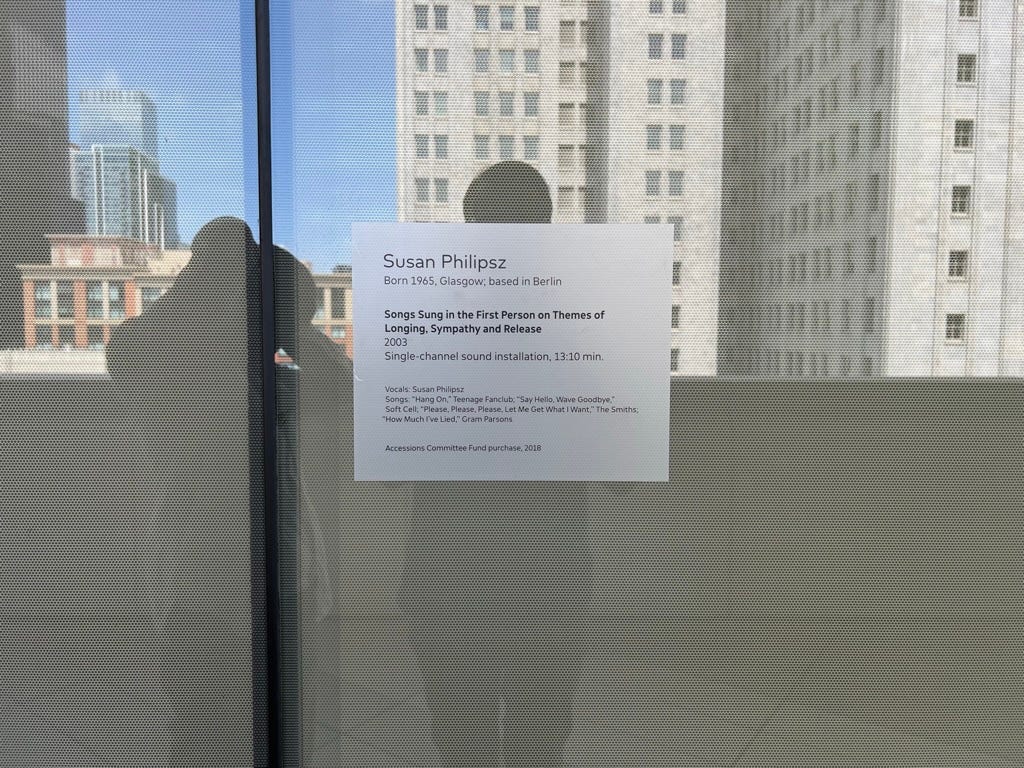
I spent much of an afternoon this past week at the San Francisco Museum of Modern Art, a key cause of my visit being an exterior installation, on a high balcony, of a piece by sound artist Susan Philipsz. The work is titled “Songs Sung in the First Person on Themes of Longing, Sympathy and Release.” Philipsz was born one year before I was. Her personal songbook registers her as a peer: Teenage Fanclub, Gram Parsons, the Smiths, and Soft Cell. Philipsz’s voice has a lovely quality. An untrained singer, she combines a mix of tenderness and self-consciousness that feel, for lack of a less ordinary term, real. Then again, ordinary is sort of the point. There is a useful ordinariness to her singing. It’s not “bad” by any means. In fact, as someone who doesn’t listen to much music with singing, I prefer her dedicated amateur tonality with the throaty, emotive overkill of many professional entertainers (trained or otherwise).
Perhaps ironically, the work that this ephemeral piece reminded me of most is one with visuals: a video titled “the world won’t listen” by the artist Phil Collins (not the recording artist). That piece presents music fans from Colombia, Indonesia, and Turkey singing karaoke versions of Smiths songs. Collins is a half decade younger than Philipsz, both are from the United Kingdom, and they naturally draw from the same cultural source material.
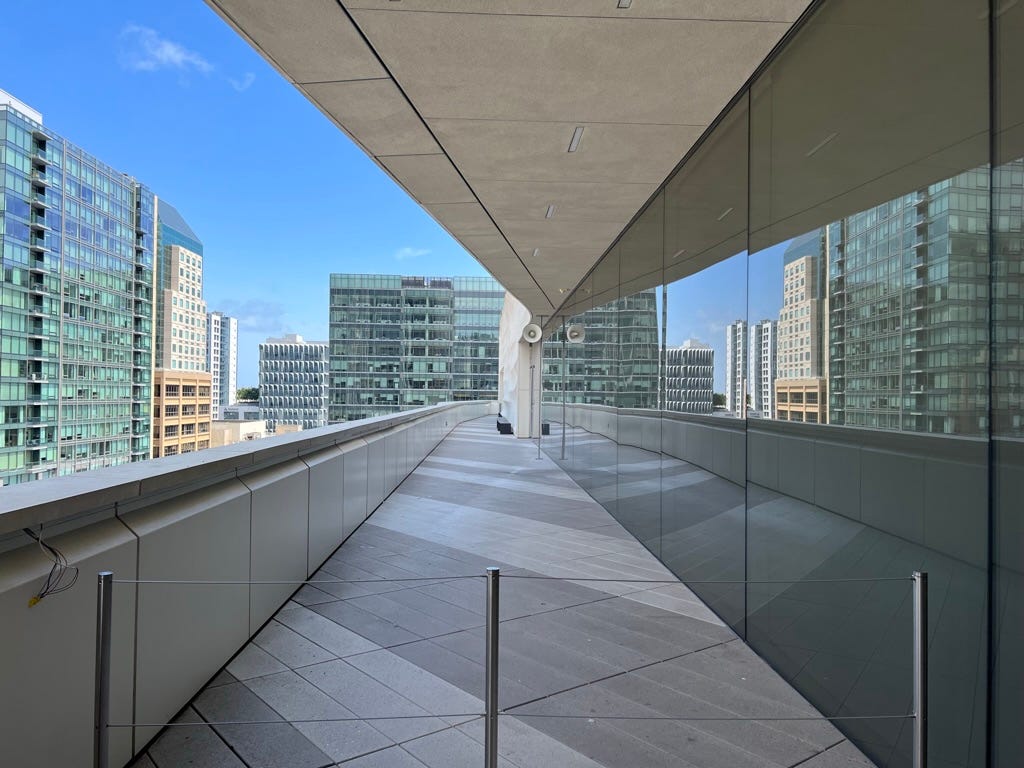
As with a lot of Philipsz’s work, there is no real physical presence to “Songs Sung in the First Person on Themes of Longing, Sympathy and Release.” You stand on the balcony and you listen. You do or don’t look at the other people who are also present. Perhaps the intimacy of her voice makes eye contact difficult. Perhaps that is the point. There is some ritual to the scheme. You have to walk through two heavy sets of doors to get to the balcony. If you look around, you might spy a distant, massive speaker, separated from visitors by a light metal stanchion that signals to not venture further. A bit of unintentionally exposed cabling at the balcony’s edge suggests that maybe some other approach had been experimented with earlier. (I’m fairly certain this speaker cone is the same model I’ve seen in other Philipsz installations — interior and exterior — and I wonder if it’s an intended marker of her work, or simply the right choice for certain type of space.)
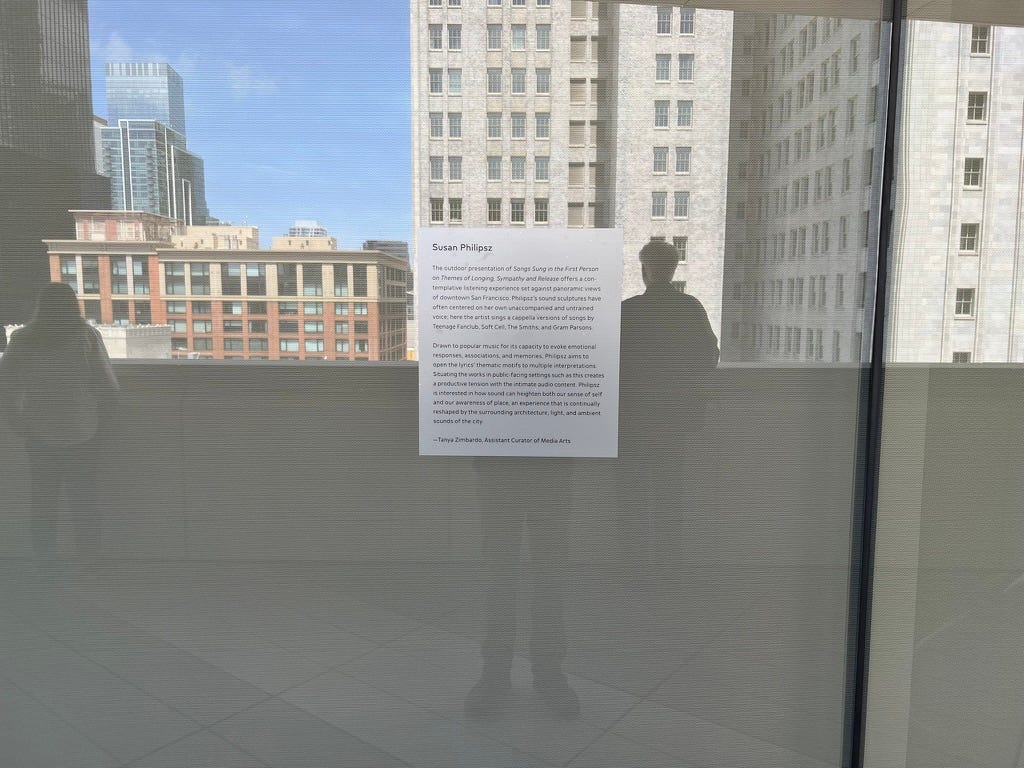
I wondered how, aside from a photograph of the exposed speaker, I might visually document the Philipsz piece. In the end, photos of the wall text made particular sense: they show the related information, and reflect back the view in which the singing is experienced.