At the end of each week, I usually collate a lightly edited collection of recent comments I’ve made on social media, which I think of as my public scratch pad. I find knowing I’ll revisit my posts to be a positive and mellowing influence on my social media activity. I mostly hang out on Mastodon (at post.lurk.org/@disquiet), and I’m also trying out a few others. And I generally take weekends off social media.
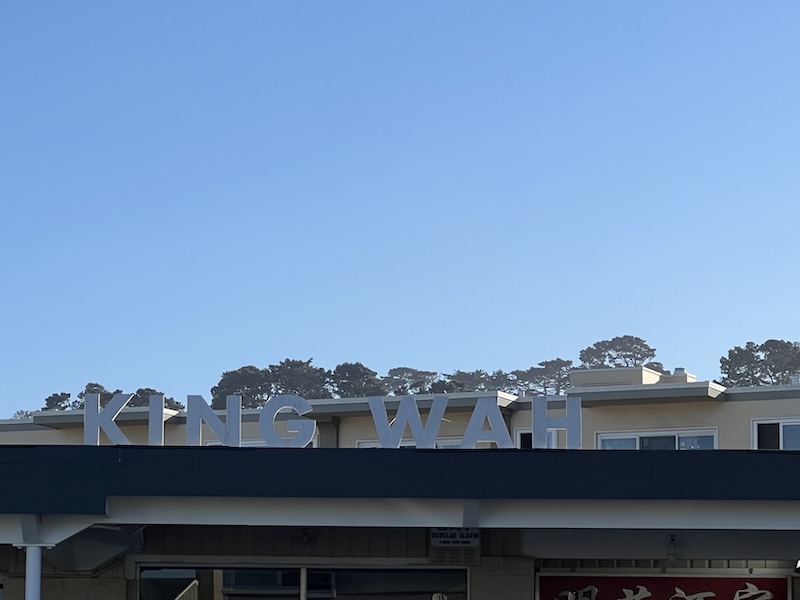
▰ A Chinese restaurant, not a guitar pedal shop
▰ Obsidian-headz: is there a detriment to deleting files from the Finder folder (I’m on a Mac), versus deleting them within the app itself (right click -> delete)? Thanks. I ask because I often have a dozen Bebop files and it’s easier to delete a group rather than one by one. (And I got replies, including one from someone who works on Obsidian, that indeed, this is OK. No detriments, no issues.)
▰ Imagine working on a product where everyone cheers when it goes down and talks about how much more they’re getting done
▰ Hyper local, but I just gotta take a moment to say that the vegan coconut at Polly Ann Ice Cream in the Outer Sunset (San Francisco) is insanely fluffy and tasty
▰ As I mentioned in the email containing the instructions for this week’s Disquiet Junto, the weekly process of these projects is like a biological clock for me, somewhere between the two processes — the “physiological” and the “behavioral” — that provide this week’s theme. And if I bungled the science with this one, that’s on me — please just roll with the metaphor.
▰ The cash register at this cafe had a malfunctioning receipt roll, and after an extended period of failed attempts by the cashier, who had many other simultaneous duties, to rectify the situation, several customers went on YouTube to locate solutions, and one of those worked. Just remarkable.
▰ Wasn’t expecting the first episode of the new season of Reacher to have a Thee Headcoats song playing during the end credits. (I’m wondering if a music supervisor just did a lyric search for a song talking about something context-specific, in this case a young girl.)
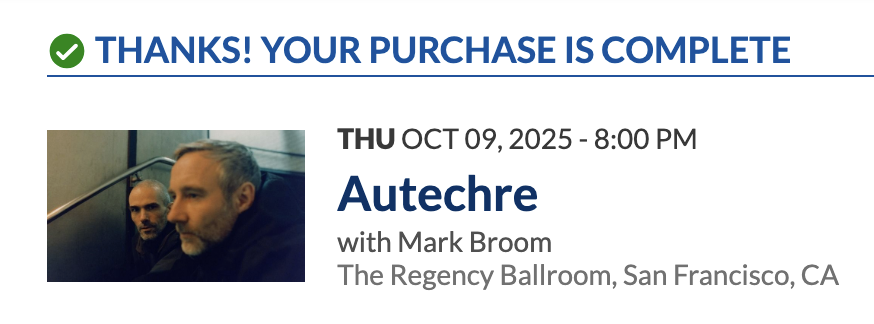
▰ I have no idea the extent to which this makes me an economic boycott scab, but I did manage to jump over various e-commerce hurdles to purchase a ticket to attend the Autechre / Mark Broom concert in a little over seven months. It’s at the Regency. Last show I saw there was the Atarashii Gakko! concert.
▰ I entered a tiny bathroom stall at the back of a bar, only to be greeted by a voice. The voice belonged to David Attenborough: a recording of him from Life on Earth. As I flushed, I Iearned that the “identity of species is proclaimed by the plumage.”
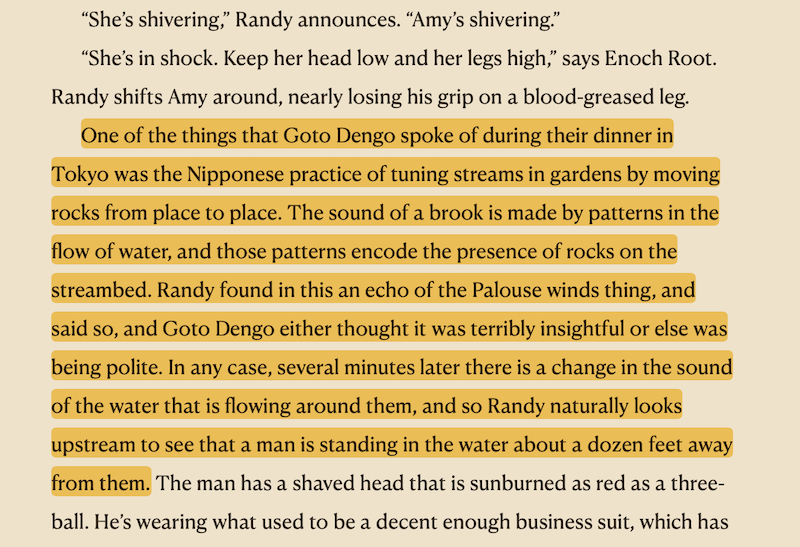
▰ Reading: I finished reading my third novel of the year, which given that we’re two months into 2025 feels a little slow, but of course this third book was Neal Stephenson’s epic and fantastic Cryptonomicon, and I read its 900-plus pages at a particularly slow pace because, this being my fourth time through it, I really wanted to pay particular attention. And I have to say, it is better than ever. When it was published, in 1999, the end of World War II was barely a half century past, and now we’re more than a quarter of a century since the book came out. Its technology is now old, if not as old as the technology of the Second World War. The book also closes better than I had recalled; Stephenson is known for often falling short in how his books conclude, but this Cryptonomicon should not be counted among the failures in that regard. And this bit comes from close to the end:
I’m nearly done, meanwhile, with Ford Madox Ford’s The Good Soldier, and well into Cory Doctorow’s Walkway, and making continued slow progress with George Eliot’s Middlemarch. And I somehow didn’t finish reading a single graphic novel this week, even though I’m in the middle of a few.