
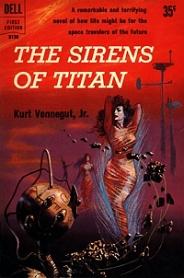
 Some netabels neither die nor go on an extended hiatus — they just reserve their releases to a modest few each year. Take the Sine Fiction series — housed at notype.com — which commissions soundtracks to classic and lesser known science-fiction novels. Last year saw three, including Hinyouki’s appropriately intense backing track for Robert Heinlein’s Starship Troopers, and this year two, first Philip K. Dick’s Lies, Inc., by A_dontigny, who oversees Sine Fiction, and more recently Érick D’Orion‘s music for Kurt Vonnegut‘s Sirens of Titan. D’Orion doesn’t map a track per chapter; nor does he — harddrive forbid — try to match the length of the reading experience. Instead he provides 11 distinct, loop-reading cues, each between a minute and a minute and a half in length, and each thick with industrial rigor. Get the full thing as a ZIP file. Additional info at notype.com.
Abstrakt Machine MP3
One of the ironies of netlabels is the prevelance of full-length recordings. The mainstream record industry (MRI? — maybe “mainstream music business,” MMB?) is slowly adjusting to an iTunes business model, in which songs are purchased individually. But so many aspiring netlabels — which are forward-looking enough to post their music online for free — persist in pushing multi-song releases.
 There are occasional outliers, like the excellent, if less than prolific, Yo.yo pang (ambulatore.com/yoyo), which I wrote about back in October (disquiet.com) and which only releases individual songs. More often, an ongoing concern, like the ironically named netlabel top-40.org — a Moscow-based netlabel that likes its tunes dank and glitchy — takes a break from weighty albums for the occasional single, such as Abstrakt Machine‘s Motor (MP3), a through-composed survey of surface noise, distant voices and microsonics that suggests we’re evesdropping on a terrarium.
DJ Premiere Lecture MP3
Nothing like waiting for a nearly 40-megabyte MP3 to download, only to find little of interest inside. Earlier this year, a podcast popped up in the Red Bull Music Academy that included interviews with three producers: Martin Ware, Rob Bowman and, foremost, the great beatmaker and turntablist DJ Premier. But Premier’s segment was brief, and the most memorable part was hearing about how he got lost at a Tina Turner concert when he was a kid, and how she called out for his parents from the stage.
More than making up for that, Red Bull has now posted over an hour and a half of Premier (born Chris Martin) reflecting on his work in hip-hop, most famously as one half of Gang Starr (MP3, redbullmusicacademy.com). He talks frankly about appreciating the beauty of static, hearing beats in his head, crate-digging for fresh samples, and cutting the line at James Brown’s memorial. He freely explains he was no fan of Christina Aguilera before teaming with her for the horn-drenched, retro hit “Ain’t No Other Man,” one of the few memorable moments on pop radio in 2006 — and a 12″ worth tracking down for the instrumental edit. The Red Bull file is almost 90 megabytes, but it’s more than worth the bandwidth.
Elemental Calypso MP3s by Nikita Golyshev
The following song titles are not likely to find themselves lodged on any pop charts: “Oil, Glass, Acoustic Possibilities,” “Infra-Red Oil Analysis, Metal Source, Glass in Non-agressive…,” “Molecular Oil Structure Analysis with X-Ray and Metal…”
 Those are three of the tracks on Nikita Golyshev‘s 15 Songs from Glass, Oil and Other Sources, which was released earlier this year on the Musica Excentrica netlabel (netaudio.ru/musica-excentrica). They are each the result of research on Golyshev’s part “to detect some acoustic properties of oil as substance, placed in different capacities such as crystal glasses and medical bulbs.” The brief liner notes explain further: “The obtained 15 sound fragments are collected by the frequency and spectrum analysis of oil behaviour, its molecular changes in various environments (aggressive and non-agressive) and wide range of oil interactions with metal.”
The sounds are expectedly delicate, such as the elemental calypso of “Oil (Light X-Ray), Glass, Metal pt.2” (MP3) and the shamisen-like scratches amid the drone of “Infra-Red Oil Analysis, Metal Source, Glass in Non-agressive…” (MP3).
Uncut Monolake Cinemascope MP3
There’s uncut, and then there’s four times the original length. That’s how Monolake‘s expanded edition of “Indigo,” the track that closed his 2001 album Cinemascope, sizes up. The original track, at about eight and a half minutes long, is now available, for free for the month of December, at Monolake’s website, monolake.de. The key elements are a swelling bassy substructure and a high-fidelity recording of water drops. Now for more than half an hour, those raw materials collude and collide in slow motion, occasionally gathering in a deep dub. That found sound, it turns out, is almost a decade older than the album. Says Monolake of the recording:
… I came across a long deep ambient session that I had already edited down into a shorter track that was incuded in the Cinemascope album in 2001.
Here comes the original session, from the moment where I decided to press record till the point when I thought it is enough. I do not remember so much of that session, but I am quite sure it was late at night, and there were some friends present and we were all a bit stoned…
Tech stuff: The water drop sample has been recorded in my bathtub in april 1993. It is played back and processed with an ASR-10 sampler, which also contributes most of the other sounds. Which were themselfes recordings of sounds created with a Juno-6 and a SY77. All mixed together on a small mixer and with lots of reverb from the ASR-10, from a PCM-80 and a Quadraverb. Sequenced with Logic 1.0 running on a Apple Macintosh IIcx, recorded straight to DAT.
Monolake posts a new free download almost every month, but with the stipulation that no one link directly to the file, so just click on the above link — while the calendar still reads 2007.