Dance artists often spout rhythmic medleys of noises and counts during classes and rehearsals. In a wordless art that lacks a widely used form of written notation, these sounds, poetic and onomatopoeic, are strikingly efficient at conveying both what the steps are and how they should be performed. It’s an improvised language that can capture choreography’s cadence, texture and feel.
The silence, the thoughts / that come with it, the sinking / suspicion that something more / is wrong with me than anyone / knows, including myself, including / the doctor who hooked me up / to the EKG machine
That is the opening of a poem, “What Am I Afraid Of?” by Sasha Debevec-McKenney, in The New Yorker.
. . .
▰ Backing Track:
I always thought, if the acting thing didn’t work out, which it still might not, I would love to be a Foley artist.
One thing occurred to me when I began using the Auto Memo Recorder app, which provides a utility I’ve long looked for, which is the seemingly simple — but for a long time inaccessible — ability to easily record voice memos while driving, all without touching one’s phone. (Just to be more specific: I also mean without using voice commands, which I still find more of a hassle than they’re worth much of the time.)
The newly released Auto Memo Recorder app works through Apple CarPlay, which, like Android Auto, puts elements of a given app — or a combination of apps — on the touchscreen of one’s car. In the first version of Auto Memo Recorder that I tried, and I believe it was the very first version of the app, the button to record audio appeared in the upper right hand corner of the car’s touchscreen. Since I live in the United States, that was about as far away from the steering wheel as it could get. Not so far as to be a hassle, but far enough to be easily improved upon.
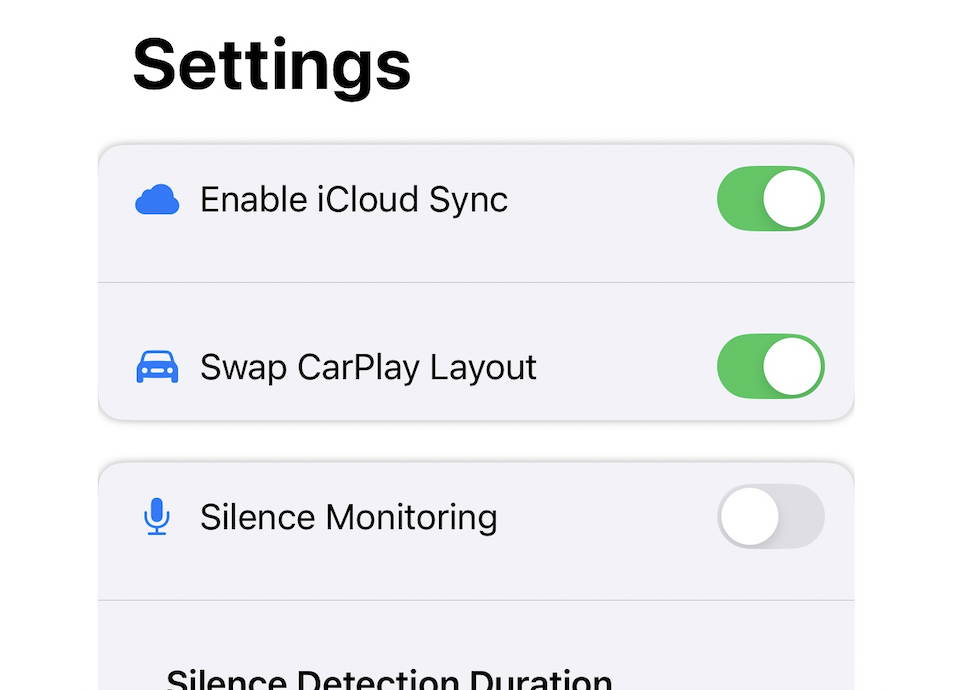
I was already corresponding at the time with the app’s creator, and when I began writing a note about the position of the button, I noticed that his email address had a .uk suffix, meaning he likely lived in the UK, and likely, therefore, had set the button placement where it was for the same reason I wanted it on the opposite side. He promptly updated the app, which now has the “Swap CarPlay Layout” option shown here:
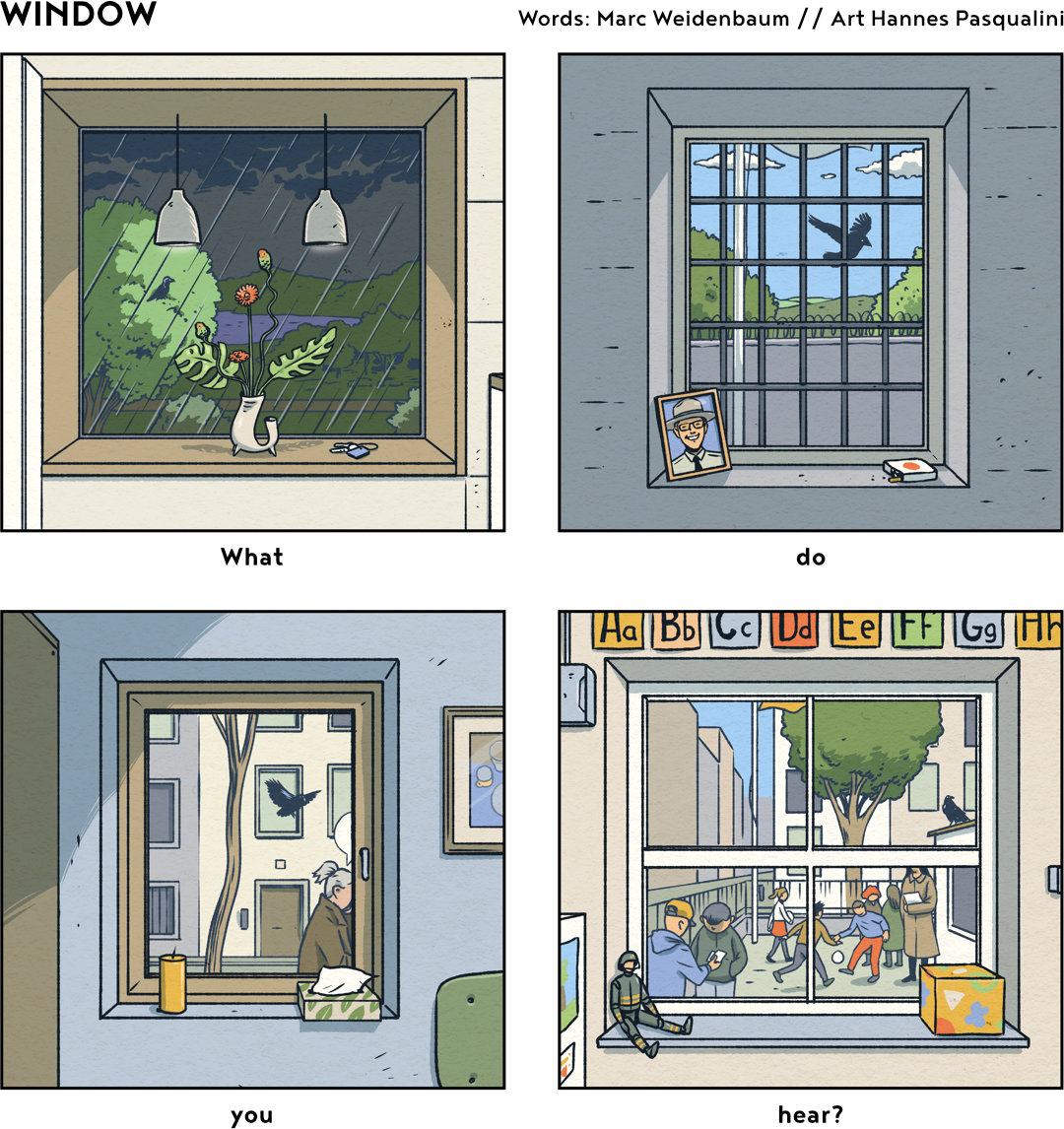
This is the 11th comic in the ongoing series I’m doing with Hannes Pasqualini. See a full index of Frame by Frame comics at disquiet.com/fxf. More from Hannes at horizontalpitch.com and papernoise.net.
This is so great. Katie Argyle, the Australian music education specialist who helps music teachers understand and utilize technology at her midnightmusic.com.au website, has written a post recommending the Disquiet Junto for students. This really made my day.
The article is titled “600+ Songwriting Ideas for High School Music Students.” She writes, at the opening:
The Disquiet Junto project is an incredible resource if you’re looking for fresh and exciting ways to inspire your high school music students in their songwriting projects. Since 2012, Marc Weidenbaum of Disquiet.com has curated over 600 unique composition challenges, each designed to push musicians out of their comfort zones.
These prompts aren’t your typical songwriting exercises. They encourage musicians to think beyond standard melodies and lyrics and incorporate sound design, chance operations, and environmental influences into their compositions.
And she proceeds to describe the Junto’s utility and to recommend 10 past Junto projects. Argyle also outlines four reasons she believes the Junto prompts are useful for teachers and students:
Encourages Creative Thinking – Students explore new approaches to composition.
Adaptable to All Skill Levels – Accessible for beginner to advanced music students.
Integrates Technology – Many prompts work well with DAWs and recording tools.
Cross-Curricular Connections – Involves science (acoustics), literature (storytelling), and film.
At the end of each week, I usually collate a lightly edited collection of recent comments I’ve made on social media, which I think of as my public scratch pad. I find knowing I’ll revisit my posts to be a positive and mellowing influence on my social media activity. I mostly hang out on Mastodon (at post.lurk.org/@disquiet), and I’m also trying out a few others. And I generally take weekends off social media.
▰ There are days when I look at — and listen to — my inbox full of music press releases, and I find myself wondering if George Winston may be the most influential pianist of the second half of the 20th century.
▰ It’s quite sunny out but I can tell the temperature is still low because there have been no sirens from emergency vehicles rushing to handle incidents at the beach
▰ “Slow Children at Play” “End” “Quiet Zone” “Duck Crossing”
— this is some of the signage that Disquiet Junto music community participants are willfully mis-interpreting as compositional prompts in this week’s project. Follow along, or maybe even join in.
▰ End of day. China Beach at dusk.
▰ Another slice of car voice-to-text weirdness: Once — just once, at least so far — I verbally responded “cool” to someone’s text message in the car, and the car replied, “No, you’re cool, Marc,” and there was a little pause between “cool” and “Marc” as the system stitched my name into the phrase.
▰ The car’s voice-to-text text messaging has funny quirks: like, if I reply “sounds good” to someone, the car mistakenly interprets that as me confirming its inquiry as to whether I want to respond, so I say “sounds good,” then it begins to record my outgoing message, and then I say “sounds good” all over again.
▰ It’s March now and we’re due in the Disquiet Junto music community for the trio project, likely not this week, but soon. The trio project goes like this: the first week, people record a third of a trio; the second, different people fill in a second slot of these trios; and in the third, the trios are completed by another person.
▰ Yeah, it’s been a minute, but a new free issue of my This Week in Sound email newsletter went this week
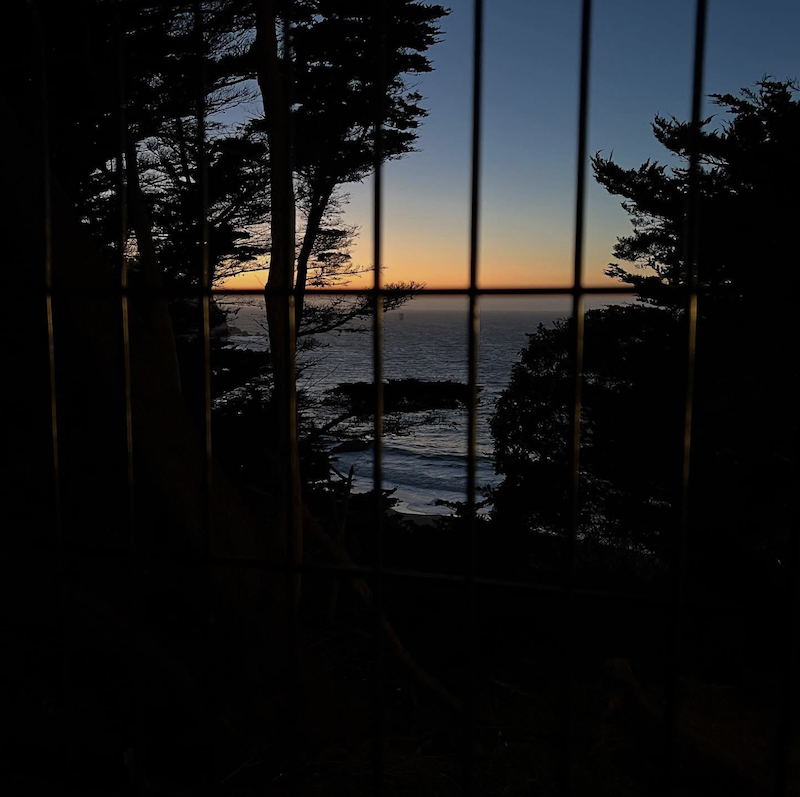
▰ We’re willfully misinterpreting signs this time around. When I saw the sign pictured here — near Ocean Beach in San Francisco, where I live — I wondered why there were so many dangerous arrows in the water, and what we could do about them. Then I wondered what this same sign might mean if it were interpreted as a musical instruction. Choose your own sign and do just that. The project went live at disquiet.com/0688 on Thursday, March 6, at 12:10am Pacific Time. That’s Pacific like the ocean — the ocean full of dangerous dangerous arrows.
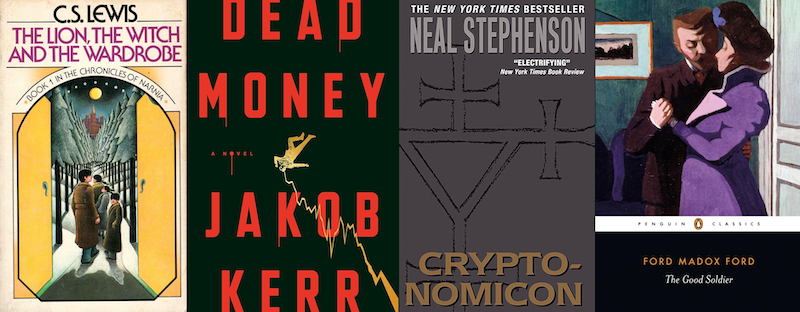
▰ These are the first four novels I finished reading this year. I never completed the C.S. Lewis as a kid. I think I’m more of a Philip Pullman reader, let’s say (though I love Lewis’ The Great Divorce). Kerr is a friend and fellow workmate from many years back, just pre-parenthood; if you want a fast-paced mystery set among the worst of San Francisco tech bros, this is your schadenthriller.
The final two were both re-reads. Cryptonomicon felt fresher than ever, a fantastic and rewarding book. As for The Good Soldier, there was much to appreciate, but I mostly felt like if these people had to work for a living, they’d have a lot less time to be this insufferable and self-centered.
And I finished reading zero books this past week. George Eliot’s Middlemarch will be in the works for many more weeks to come, I’m making progress in Cory Doctorow’s Walkaway and Hao Jingfang’s Jumpnauts, and I’ve been dipping into a bunch of other things, including various graphic novels. But right now my life is a slew of bookmarks: both physical slips of paper as well as virtual placeholders and percentage trackers.