Scratch Pad: Journal, Tabs, Sugar

From the past week

I do this manually at the end of each week: collating (and sometimes lightly editing) most of the recent little comments I’ve made on social media, which I think of as my public scratch pad. Some end up on Disquiet.com earlier, sometimes in expanded form. These days I mostly hang out on Mastodon (at post.lurk.org/@disquiet), and I’m also trying out a few others. I take weekends and evenings off social media.

▰ If you have trouble keeping a journal, write down the most mundane aspects of your day. The things we take for granted are often the things that, down the road, experience a change that is otherwise hard to track back in retrospect — or foresee in advance. Just noting those items, duties, processes, and instances can cement thoughts and provide a foundation for something to linger on and write about.

▰ Yow, 30 MPH gusts are something else

▰ The Punisher does a bit of time-sensitive acoustic deduction in the first issue of the new run (with a new title character) by David Pepose (author) and Dave Wachter (illustrator):

▰ My guitar teacher, looking further ahead in the score: “And you know this chord.”

▰ Me not recognizing the chord but, yes, seeing it later in between where I have gotten so far and where he is currently: “I think you mean I will have known this chord.”

▰ The funny thing about practicing “Easy Living,” the Robin/Rainger tune, in guitar class so as to learn more about 7th chords is that life is thus not particularly easy

▰ A day in which both the Connections and Strands games in the New York Times have the same word (“aioli”). I’d always wondered if the editors kept an eye out for such things, or weren’t concerned. Either way, both puzzles were fun (earlier this week).

▰ Halfway through episode 5 of the Colin Farrell show Sugar I said something out loud — something that turned out to be the case in the episode 6.

(And just as a side note, the whole thing looks like an Ed Brubaker / Sean Phillips jam. I’d swear the storyboards must resemble one of their comics.)

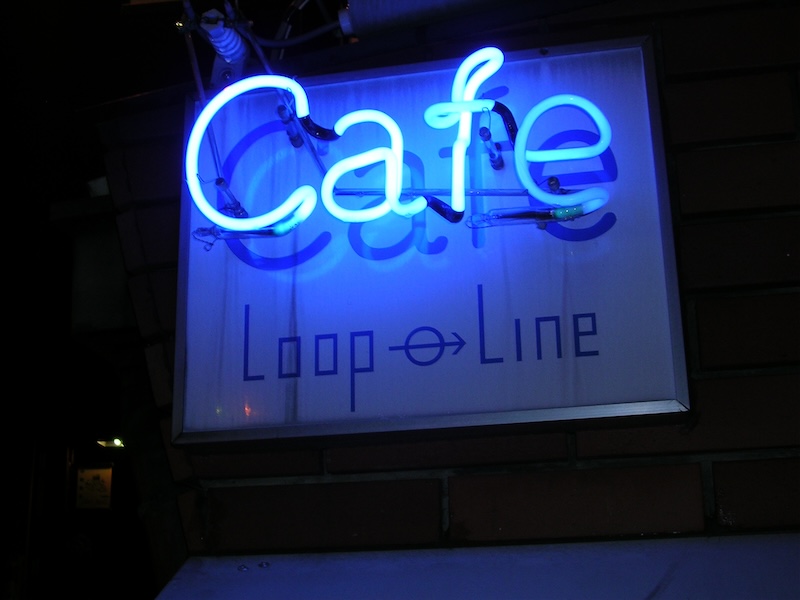
▰ The café has played Lucinda Williams, the Kinks, Sam Dees, and Pavement, and I’m easily twice the age of anyone apparently employed here. Everything will be fine.

▰ For every 10 browser tabs I have open, at least one will be for some esoteric-to-me guitar chord

▰ There are days when I’m not even sure which is my default web browser, and so I find a link in an email and click on it to remind myself

▰ According to my notes, I finished reading three books this week (while juggling more than I usually do, and adding several more in the process), a novel and two graphic novels. The novel is The Return of the Solidier by Rebecca West, about which I can’t say enough. It’s fantastic, and it sent me subsequently to The World Set Free by HG Wells (with whom she had a long out-of-wedlock relationship that early on yielded a son, the writer Anthony West); I’m just over the 50% mark on that one. Also In the Sounds and Sea by Marnie Galloway (a wordless comic with a mythical, Odyssean narrative) and the first volume of a new, ongoing Blade series, written by Bryan Hill and drawn by Elena Casagrande.

Disquiet Junto Project 0644: Event Horizon

The Assignment: Record music for a party of your choosing.

Each Thursday in the Disquiet Junto music community, a new compositional challenge is set before the group’s members, who then have five days to record and upload a track in response to the project instructions.

Membership in the Junto is open: just join and participate. (A SoundCloud account is helpful but not required.) There’s no pressure to do every project. The Junto is weekly so that you know it’s there, every Thursday through Monday, when your time and interest align.

Tracks are added to the SoundCloud playlist for the duration of the project. Additional (non-SoundCloud) tracks appear in the lllllll.co discussion thread.

These following instructions went to the group email list (via juntoletter.disquiet.com). 

Disquiet Junto Project 0644: Event Horizon
The Assignment: Record music for a party of your choosing.

Step 1: Imagine a party you want to attend.

Step 2: Write some music that would be appropriate as background music for that event.

Tasks Upon Completion:

Label: Include “disquiet0644” (no spaces/quotes) in the name of your track.

Upload: Post your track to a public account (SoundCloud preferred but by no means required). It’s best to focus on one track, but if you post more than one, clarify which is the “main” rendition.

Share: Post your track and a description/explanation at https://llllllll.co/t/disquiet-junto-project-0644-event-horizon/

Discuss: Listen to and comment on the other tracks.

Additional Details:

Length: The length is up to you. The party may never end, but your song will just be one among many.

Deadline: Monday, May 6, 2024, 11:59pm (that is: just before midnight) wherever you are.

About: https://disquiet.com/junto/

Newsletter: https://juntoletter.disquiet.com/

License: It’s preferred (but not required) to set your track as downloadable and allowing for attributed remixing (i.e., an attribution Creative Commons license).

Please Include When Posting Your Track:

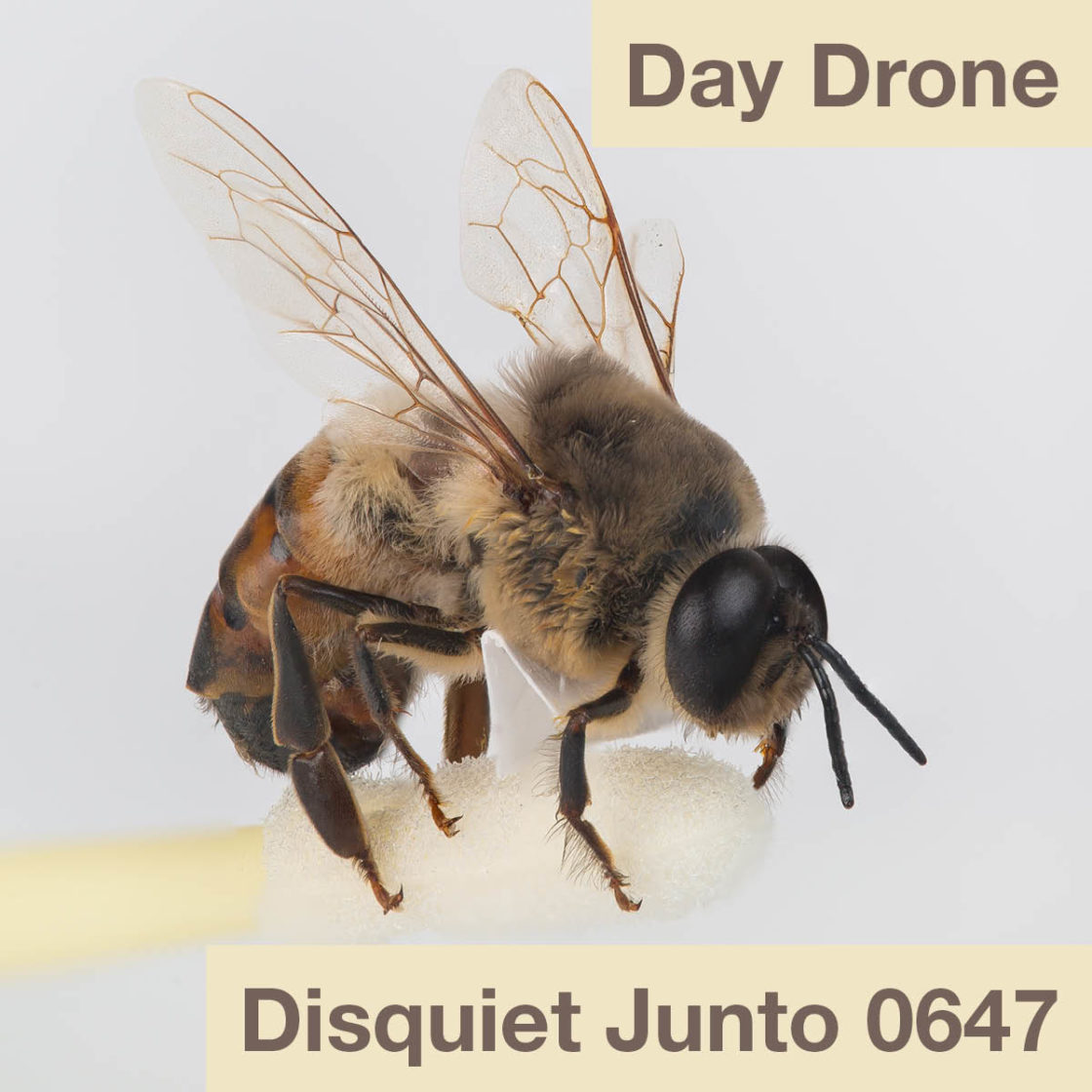
More on the 644th weekly Disquiet Junto project, Event Horizon — The Assignment: Record music for a party of your choosing — at https://disquiet.com/0644/

A Letter from Paul Auster

1947 - 2024

When I was an editor at the magazines, primarily Pulse!, published by Tower Records, I occasionally sought out writers other than professional critics to write for us, in particular musicians and novelists. The list of novelists who did wasn’t a long one, but it was a respectable one, including as it did Jonathan Lethem, Richard Kadrey, Geoff Nicholson, and the late David Bowman, among others. One who declined was Paul Auster, and in some ways I’m glad he did. Had he said yes to my invitation, I’d only have had an article. But because Auster said no, back in October 1993, I have this letter, postmarked from Brooklyn:

And if the script of his fountain pen is difficult to read, here is the text:

Oct. 6, ’93

Dear Mr. Weidenbaum:

Many thanks for your kind letter. I can’t tell you how touched I was by your invitation. Music is probably the most important thing in my life — more important even than books …

But how to write about it? I’ve tried to do it, but have never managed to say anything that made any sense. Perhaps the real power of music for me is that it resists the grasp of words — and therefore continues to renew itself, endlessly.

If anything ever comes to me for an article or story, I will let you know. But I’m afraid it’s not too likely; so, please don’t count on me. But I am enormously grateful to you for your thinking of me.

With warm regards

Paul Auster

Tasselmyer’s Gestures

Live sample processing

Another gorgeous live performance by Andrew Tasselmyer, who here runs four often though not entirely unidentifiable piano samples through various processes, yielding a piece at once cinematic and immediate, at once widescreen and obscure. Watch his hands as he manipulates the source material. Track motions to alterations, finger gestures to sonic morphing. And if you’re familiar with the central instrument, the Octatrack, then you’re no doubt thankful we don’t hear the familiar clack of those plastic buttons, which would be entirely out of place here. I especially appreciate how his index finger ends the performance with a single tap on the laptop’s touchpad. We’re long past the time of rampant doubt about what it is exactly a “laptop musician” is up to (and the associated “are they really performing?”). Here what we see is the same intimacy inherent in expertise that one might expect of a “traditional” (read: “acoustic”) instrument. Manual skills are manual skills, no matter the tools.