
I had the great pleasure recently of speaking with Tim Held for his long-running Podular Modcast, a series that takes its name from Held’s emphasis on modular synthesizers. (Yeah, that’s me on the right.) And I was honored that my episode turned out to be the show’s 250th. We had a fun and rangy chat about synths, the Disquiet Junto, online communities, instruments as works of art, field recordings, and many other topics. Our discussion is the majority of the episode, along with interspersed music performance and some gear overviews by Held. (I appeared once previously on the show, back in 2018, for the Podular Modcast’s ninth episode.)
Author: Marc Weidenbaum
Disquiet Junto Project 0592: Better Than One
The Assignment: Record the second third of an asynchronous trio.
Project-Specific Note: You may contribute more than one track this week. Usually Junto projects have a one-track-per-participant limit. This week you can do a second one. Please see additional details in Step 5 below.
Answer to Frequent Question: You don’t need to have uploaded a solo in last week’s project to participate in this week’s second phase of the trio sequence.

Each Thursday in the Disquiet Junto music community, a new compositional challenge is set before the group’s members, who then have just over four days to upload a track in response to the assignment. Membership in the Junto is open: just join and participate. (A SoundCloud account is helpful but not required.) There’s no pressure to do every project. It’s weekly so that you know it’s there, every Thursday through Monday, when you have the time and interest.
Deadline: This project’s deadline is the end of the day Monday, May 8, 2023, at 11:59pm (that is, just before midnight) wherever you are. It was posted on Thursday, May 4, 2023.
Tracks are added to the SoundCloud playlist for the duration of the project. Additional (non-SoundCloud) tracks appear in the lllllll.co discussion thread.
These following instructions went out to the group’s email list (at tinyletter.com/disquiet-junto).
Disquiet Junto Project 0592: Better Than One
The Assignment: Record the second third of an asynchronous trio.
Please note: While this is the second part of a three-part project, you can participate in one, two, or all three of the parts, which will occur over the course of three consecutive weeks.
Step 1: This week’s Disquiet Junto project is the second in a sequence intended to encourage and reward asynchronous collaboration. This week you’ll be adding music to a pre-existing track, which you will source from the previous week’s Junto project (disquiet.com/0592). Note that you aren’t creating a duet — you’re creating the second third of what will eventually be a trio. Important: Leave space for what is yet to come.
Step 2: The plan is for you to record a short and original piece of music, on any instrumentation of your choice, as a complement to a pre-existing track. First, however, you must select the piece of music to which you will be adding your own music. There are tracks by numerous musicians to choose from. The majority are in this playlist:
Any additional non-SoundCloud entries appear in the discussion:
https://llllllll.co/t/disquiet-junto-project-0591-the-loneliest-number/
(Note that it’s possible another track or two will pop up in or disappear from that playlist and discussion. Things are fluid on the internet.)
To select a track, you can listen through all those and choose one, or simply look around and select, or you can come up with a random approach to sifting through them.
Note: It’s fine if more than one person uses the same original track as the basis for their piece.
It is strongly encouraged that you look through the above discussion on the Lines forum, because many tracks include additional contextual information there.
Step 3: Record a short piece of music, roughly the length of the piece of music you selected in Step 2. Your track should complement the piece from Step 2, and leave room for an eventual third piece of music. When composing and recording your part, don’t alter the original piece of music at all, except to pan the original fully to the left if it hasn’t been panned left already. In your finished audio track, your new part should be panned fully to the right.
To be clear: the track you upload won’t be your piece of music alone; it will be a combination of the track from Step 2 and yours.
Step 4: Also be sure, when done, to make the finished track downloadable, because it will be used by someone else in a subsequent Junto project.
Step 5: You can contribute more than one track this week. Usually Junto projects have a one-track-per-participant limit. You can do up to two total. For the second, it’s appreciated if you try to work with a solo that no one else has used yet ( look at the project’s post on Lines, linked to in these instructions, or to the project playlist, which will be posted here once tracks start coming in). The goal is for many as people as possible to benefit from the experience of being part of an asynchronous collaboration. After a lot of detailed instruction, that is the spirit of this project.
Eight Important Steps When Your Track Is Done:
Step 1: Include “disquiet0592” (no spaces or quotation marks) in the name of your tracks.
Step 2: If your audio-hosting platform allows for tags, be sure to also include the project tag “disquiet0592” (no spaces or quotation marks). If you’re posting on SoundCloud in particular, this is essential to subsequent location of tracks for the creation of a project playlist.
Step 3: Upload your tracks. It is helpful but not essential that you use SoundCloud to host your tracks.
Step 4: Post your track in the following discussion thread at llllllll.co:
https://llllllll.co/t/disquiet-junto-project-0592-better-than-one/
Step 5: Annotate your track with a brief explanation of your approach and process.
Step 6: If posting on social media, please consider using the hashtag #DisquietJunto so fellow participants are more likely to locate your communication.
Step 7: Then listen to and comment on tracks uploaded by your fellow Disquiet Junto participants.
Step 8: Also join in the discussion on the Disquiet Junto Slack. Send your email address to [email protected] for Slack inclusion.
Note: Please post one track for this weekly Junto project. If you choose to post more than one, and do so on SoundCloud, please let me know which you’d like added to the playlist. Thanks.
Additional Details:
Length: The length is up to you. Stick to close the length of the track yours adds to.
Deadline: This project’s deadline is the end of the day Monday, May 8, 2023, at 11:59pm (that is, just before midnight) wherever you are. It was posted on Thursday, May 4, 2023.
Upload: When participating in this project, be sure to include a description of your process in planning, composing, and recording it. This description is an essential element of the communicative process inherent in the Disquiet Junto. Photos, video, and lists of equipment are always appreciated.
Download: It is always best to set your track as downloadable and allowing for attributed remixing (i.e., a Creative Commons license permitting non-commercial sharing with attribution, allowing for derivatives).
For context, when posting the track online, please be sure to include this following information:
More on this 592nd weekly Disquiet Junto project, Better Than One (The Assignment: Record the second third of an asynchronous trio), at: https://disquiet.com/0592/
About the Disquiet Junto: https://disquiet.com/junto/
Subscribe to project announcements: https://tinyletter.com/disquiet-junto/
Project discussion takes place on llllllll.co: https://llllllll.co/t/disquiet-junto-project-0592-better-than-one/
This Week in Sound: “The Silence Screamed, Terrible”
A lightly annotated clipping service

These sound-studies highlights of the week originally appeared in the May 2, 2023, issue of the Disquiet.com weekly email newsletter, This Week in Sound.
▰ GROUND SWELL: Absolutely fascinating: Listening to the earth — to soil — as a means of gauging biodiversity in a forest restoration: “With emerging sound recording technologies, ecological acoustic survey methods — also known as ‘ecoacoustics’ — are increasingly available. These provide a rapid, effective, and non-intrusive means of monitoring biodiversity. Above-ground ecoacoustics is increasingly widespread, but soil ecoacoustics has yet to be utilised in restoration despite its demonstrable effectiveness at detecting meso- and macrofauna acoustic signals.” (Thanks, Nicola Twilley!)
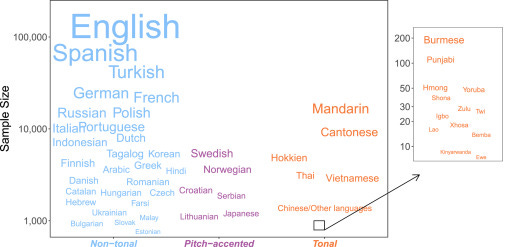
▰ TALK TALK: Fascinating research into how the language in which one is raised “shapes cognition,” per Courtney Hilton, a cognitive scientist at the University of Auckland in New Zealand, co-author of a study with Jingxuan Liu and others: “Speaking a native language that requires tones appears to boost perception of melody, but at the cost of rhythm.” (Thanks, Glenn Sogge!)
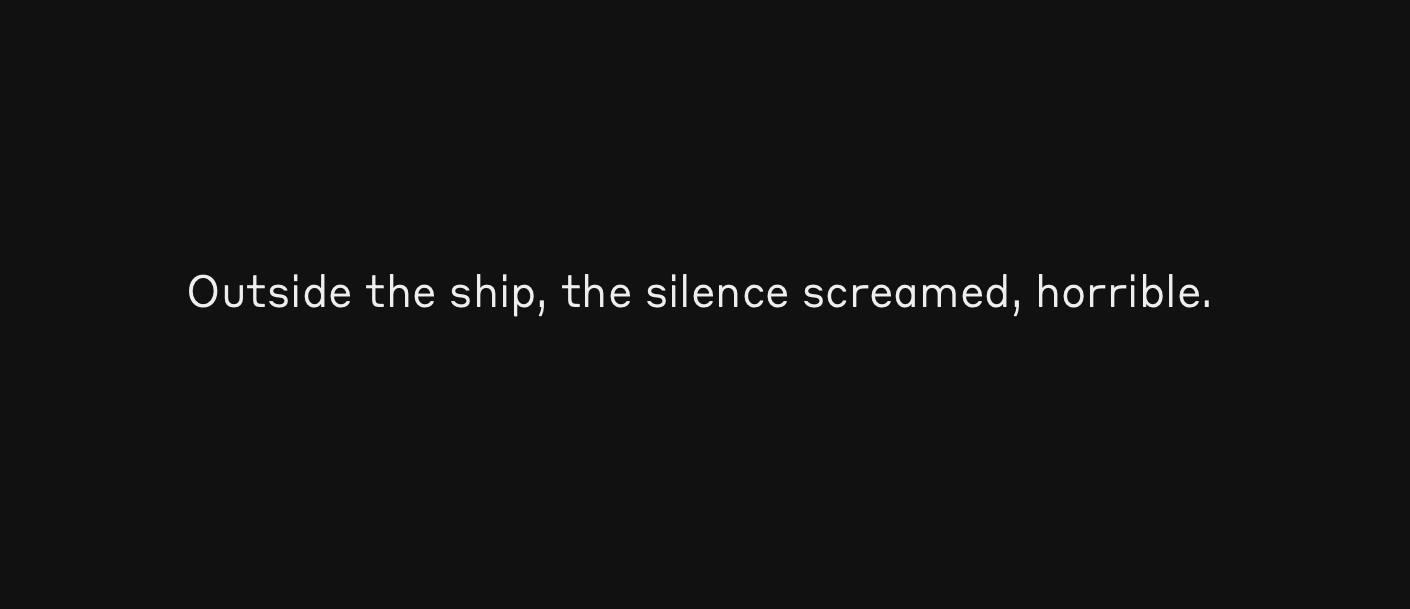
▰ SHIP SHAPE: Novelist Robin Sloan has a new album out under the name Cotton Modules, his collaboration with musician Jesse Solomon Clark. The album, titled The Greatest Remaining Hits, was created with AI-generated voices. The name of the album comes from a tragic short story, written by Sloan, that provides a sci-fi backdrop for the overall concept. It’s a quick read, and highly recommended. The story appears on the website ooo.ghostbows.ooo one phrase or sentence at a time. The main thing I want to highlight at this juncture is a particular sentence. It will make more sense after you read the story, but the point of it is that the silence outside the spacecraft — the silence of the void of space — is all the more harrowing when there is a deep, terrible silence inside the ship. This moment is exquisite.
▰ OLD SCHOOL: “On one side of the road, exposed rock the color of raw liver angles up the valley slope. Entombed within this stone are the ancestors of the insects that fly and sing around me. One of this fossilized swarm bears the earliest known sound-making structure of any animal, a ridge on the wing of an ancient cricket. This fossil is the oldest direct physical evidence of sonic communication,” writes David George Haskell, describing “The First Known Earthly Voice.” (An excerpt from his excellent book Sounds Wild and Broken.)
▰ VALLEY GIRL: “My quiet place is not always without sound: sitting on a dune at dusk, I hear the soft rustling of the wind against the grains of sand,” writes Yulia Denisyuk of Jordan’s Wadi Rum valley for Condé Nast Traveler. “Leaving my tent at sunrise, I notice the bellows of camels as they return from their daily excursions. A crackling of the fire fills the long pauses in the unhurried conversations at night. The presence of this silence is a salve that helps me connect to the core of who I am.”
▰ BATS, MAN: A new exhibit at the British Library, Animals: Art, Science & Sound, is the subject of the BatChat podcast, itself a service of the Bat Conservation Trust (bats.org.uk): “Hear the recordings of horseshoe bats made on one of the first commercially available bat detectors; the Holgate Mk VI and you can see this detector within the exhibition along with photographs of the waveforms it could make from recordings. It sits alongside other important works such as Ernst Haeckel’s Kunstformen der Natur (Artforms in nature) with the plate of bats on display.” (Thanks, Lotta Fjelkegård!)
▰ OUT THERE: Via SETI: “One of the world’s most powerful radio telescope arrays is joining the hunt for signals from other galactic civilizations. The National Science Foundation’s Karl G. Jansky Very Large Array (VLA), situated about 50 miles west of Socorro, New Mexico, is collecting data that scientists will analyze for the type of emissions that only artificial transmitters make, signals that would betray the existence of a technically accomplished society. … The new processing system for SETI is dubbed ‘COSMIC’ – the Commensal Open-Source Multimode Interferometer Cluster – and is spearheaded by the SETI Institute, in collaboration with the National Radio Astronomy Observatory and the Breakthrough Listen Initiative.”
QUICK NOTES: Balls Out: Soccer becomes truly multi-lingual in Mexico now that the games are broadcast in not one (as has been the case in the past) but seven languages, the other six being major native ones: “Maya, Nahuatl, Mixteco, Chatino, Zapoteco and Mixe” (fastcompany.com). ▰ Ears Have It: Google Pixel phones may “proactively displaying warnings for potentially harmful conditions like sleep apnea” (androidpolice.com). ▰ Night Time(r): YouTube Music has added a sleep timer (9to5google.com). ▰ Casting Change: Bernie Wagenblast, “the voice of NYC’s subways,” has come out as trans (wnycstudios.org). (Thanks, Mike Rhode!) ▰ Two Wheels Bad: News of a Belgian protest against motorcycle noise (brusselstimes.com).
Sound Ledger¹ (Superman, Noise, Silence)
Audio culture by the numbers
29: The number of fighting types represented by onomatopoeia found in the comic Superman: The Doomsday Wars comic
300,000: Penalty (in $US) for noise (and dust) pollution for the owner and operator of a scrap metal facility in Massachusetts
40: Percent of surveyed travelers who reported interest “in booking a silent retreat”
. . .
¹Footnotes: Superman: traverse.asia (Thanks, Mike Rhode!). Penalty: mass.gov. Retreat: cntraveler.com.
Junto Profile: Ethan Hein
From New York City: teaching technology and theory, sampling Thelonious Monk
This Junto Profile is part of an ongoing series of short Q&As that provide some background on various individuals who participate regularly in the online Disquiet Junto music community.
What’s your name? My name is Ethan Hein, which is also my online name; I have never been able to think of a good pseudonym for myself.
Where are you located? I was born in New York City, have lived here for pretty much all of my life, and have never really wanted to live anywhere else. You hear an incredible variety of music just walking down the street here; it makes all the noise pollution worthwhile.

What is your musical activity? I have been making music since I was a teenager, though I did not get serious about it (or good at it) until deep into my twenties. I play harmonica very well, guitar, ukulele and mandolin pretty well, and I hack around on synths and percussion and various other things. For the past decade, I have been making most of my music with Ableton Live and related software. I like funk, jazz and hip-hop, and most of my original stuff aspires to danceability.
What is one good musical habit? My best musical habit is to chase things down with dogged persistence over long spans of time. I find it hard to sustain my focus moment-to-moment, but I make up for it by coming back to ideas or techniques repeatedly over weeks or months. I will chew on some particular riff or rhythm or sample over and over and over, and the coolest things can unexpectedly pop out.
What are your online locations? My main online home is my blog, which has gone from feeling futuristic to charmingly retro. You can now also subscribe to it as a Substack newsletter, which is a thing some people prefer. I post all my music on Bandcamp. I love Bandcamp. I’m also active on Twitter, in spite of its chaotic evilness.
What was a particularly meaningful Junto project? It’s so hard to choose a particularly meaningful Junto project! It has been a formative influence on my musical practice, especially on my music teaching practice. I have Bandcamp compilations of my favorite Junto tracks and more of my favorite Junto tracks. Here are some standouts:
0052: This one just came out well, I think it goes really hard. It was remarkable to discover I could take samples of music by three people I had never heard of and make something that felt so much like me.
0100: I picked a couple of samples based on the fact that their titles mentioned phase transitions — “Boilin’ Water” by the Soul Stoppers Band and “Shuffle Boil” by Thelonious Monk. But then they ended up sounding great together, and I found a tea kettle whistle on freesound.org that played this lovely melody.
0315: This one is important because I spent less than ten minutes conceptualizing, recording, mixing and posting it, and it got the most vocally positive response of any of my Junto projects. It was a real revelation for a chronic overthinker like me.
You’ve mentioned the Junto has informed your teaching. You could talk about that topic a bit more, especially for other music educators who might be reading this interview? I teach music technology and theory. I think the best way to learn these things is by writing and producing original music. The Junto has been a huge inspiration for this approach. I love the idea of giving creative prompts with narrow conceptual parameters but that are otherwise wide open. Junto-style projects can accommodate students with a range of prior knowledge, preferred styles and genres, access to DAWs and instruments and so on. And I like the weekly project structure, too, it gets everybody used to pushing out lots of completed ideas without being too fussy about them.