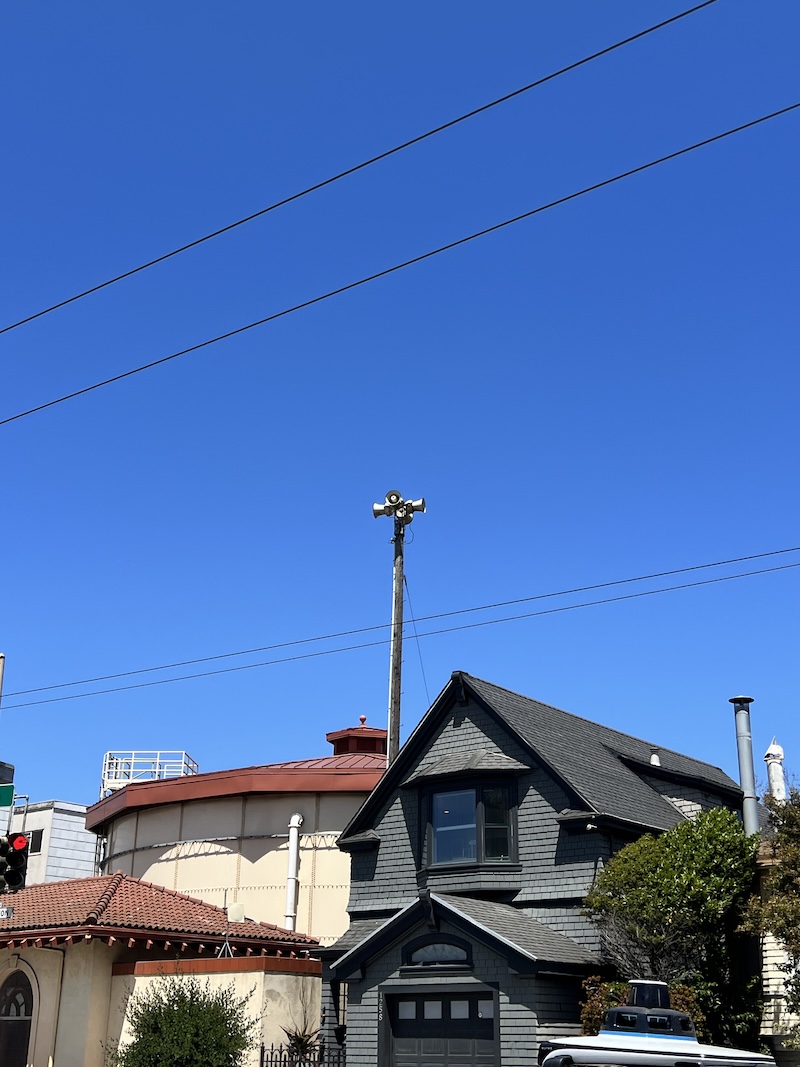
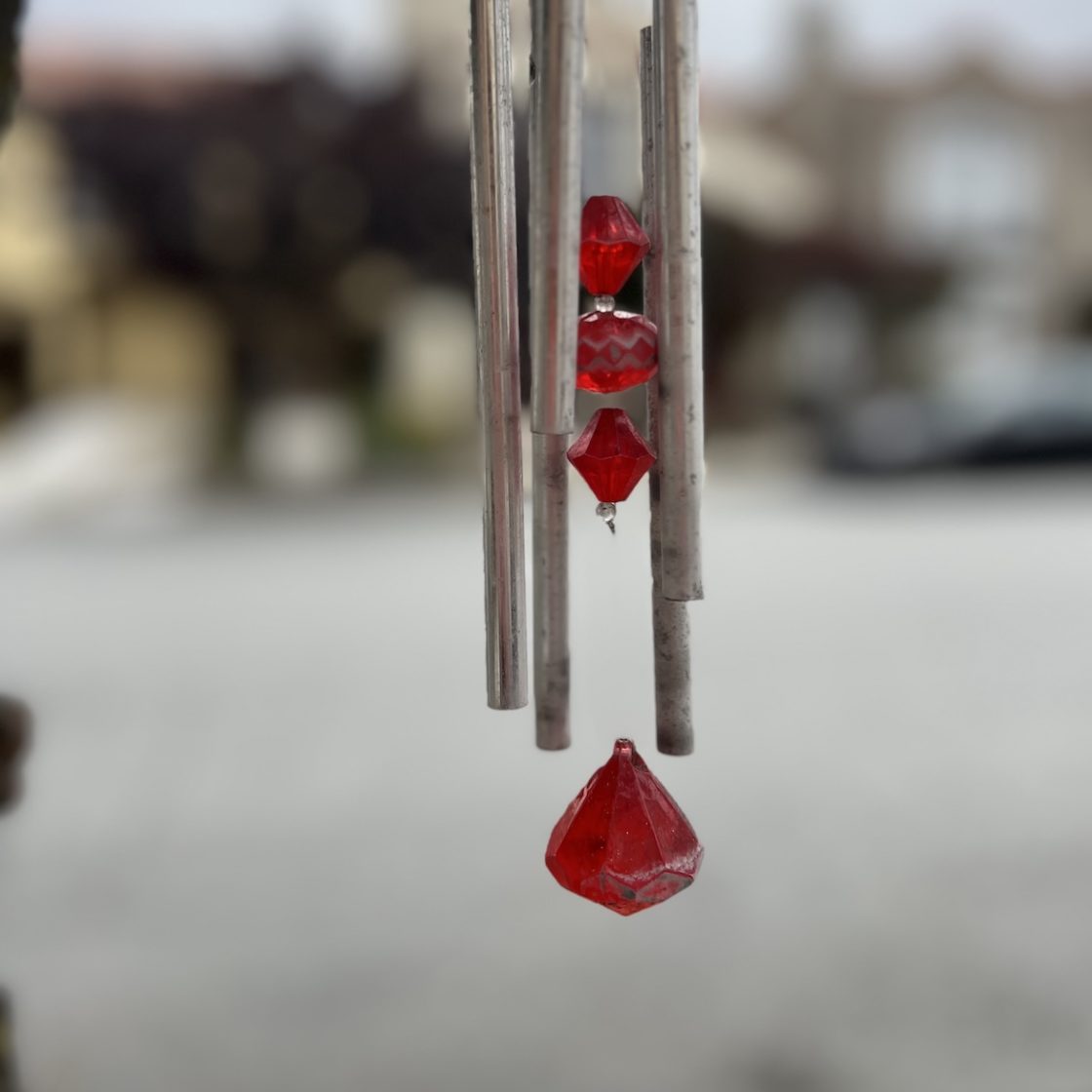
This sentry stands atop a hill in San Francisco. Not a sentry, really. One of the city’s many outdoor public warning system (OPWS) speakers. Except not speakers, really, either — because the speakers don’t function. They were turned off years ago in advance of being updated. Then the pandemic hit, and budgets got hit, and now the speakers are remnants of best laid plans. The recent floods in Texas are a reminder that as archaic as such systems may seem, they are an essential component of life — rural and urban alike. I’m hopeful the San Francisco OPWS will eventually get fixed, and that the Tuesday noon siren tests, which were silenced toward the end of 2019, will once again be part of our local soundscape.
A simple drone and I IV V progression, both from electric guitar, the latter part glitched thanks to a somewhat chaotic LFO, the former frozen from a single opening chord, the combination done live in VCV Rack over lunch. Very simple, a lot of fun.
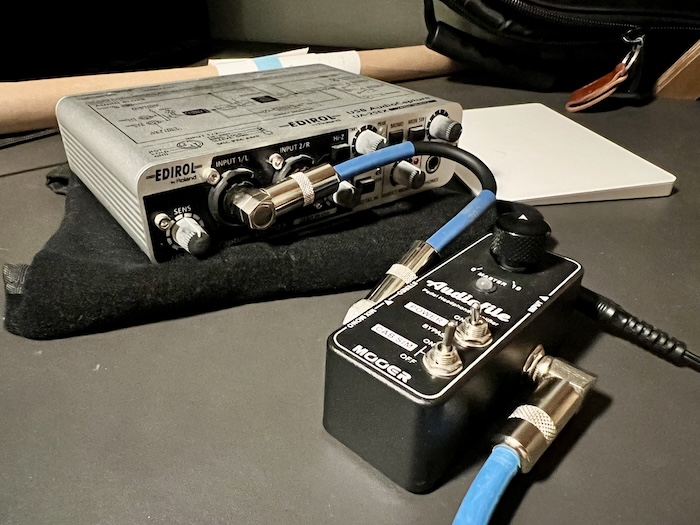
This setup has proved useful at the office. It’s an elegant way to get the guitar, via a simulated guitar amp cabinet, into the laptop:
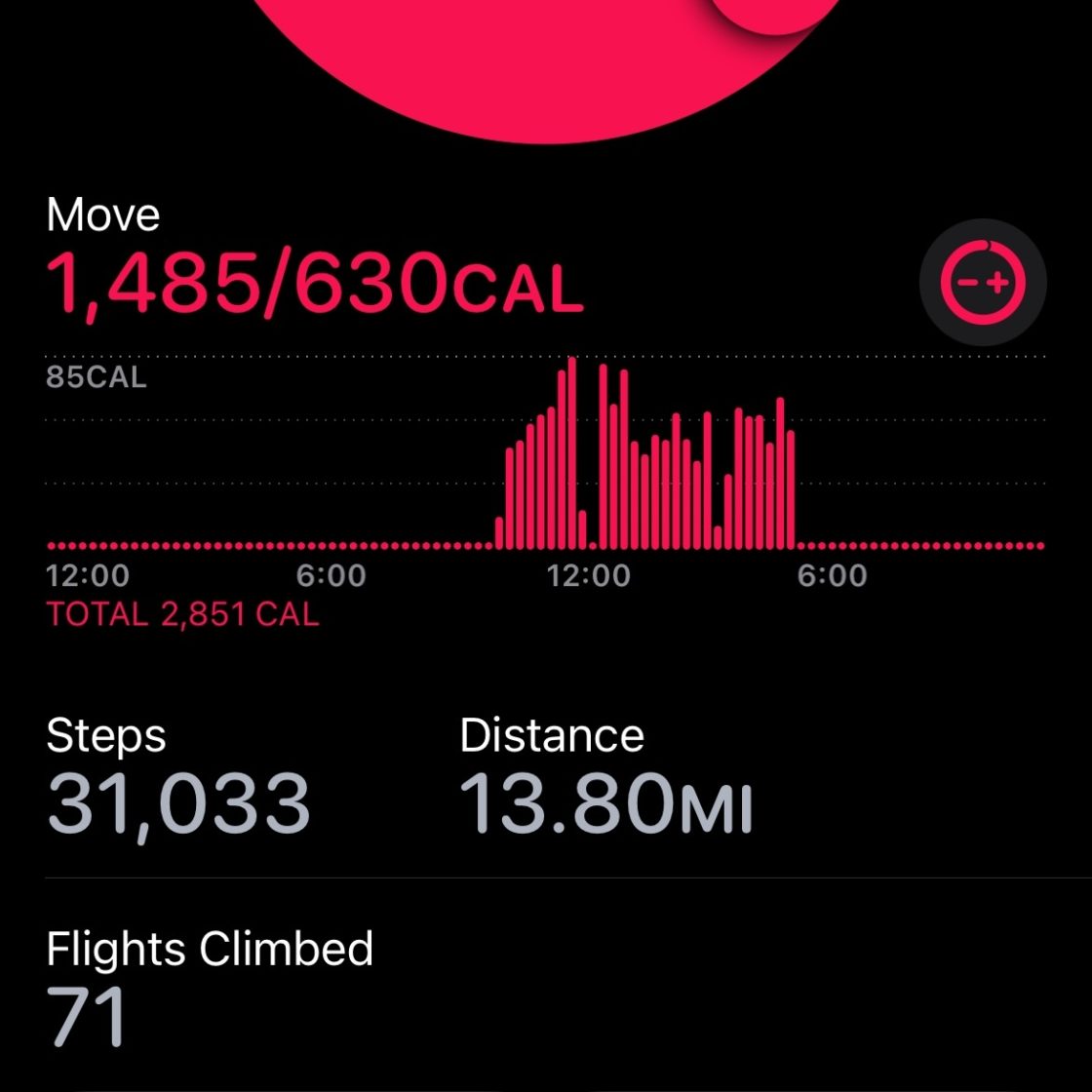
There’s little chance that Saturday didn’t amount to the longest continuous* walk I’ve undertaken, nearly 14 miles across San Francisco, from the southeast (Fort Funston, which had so many dogs walking their humans that you’d think you’d stepped into a chapter of Philip Pullman’s His Dark Materials) to the northwest (Pier 23, following a trail-ending descent of the twisty Greenwich steps).
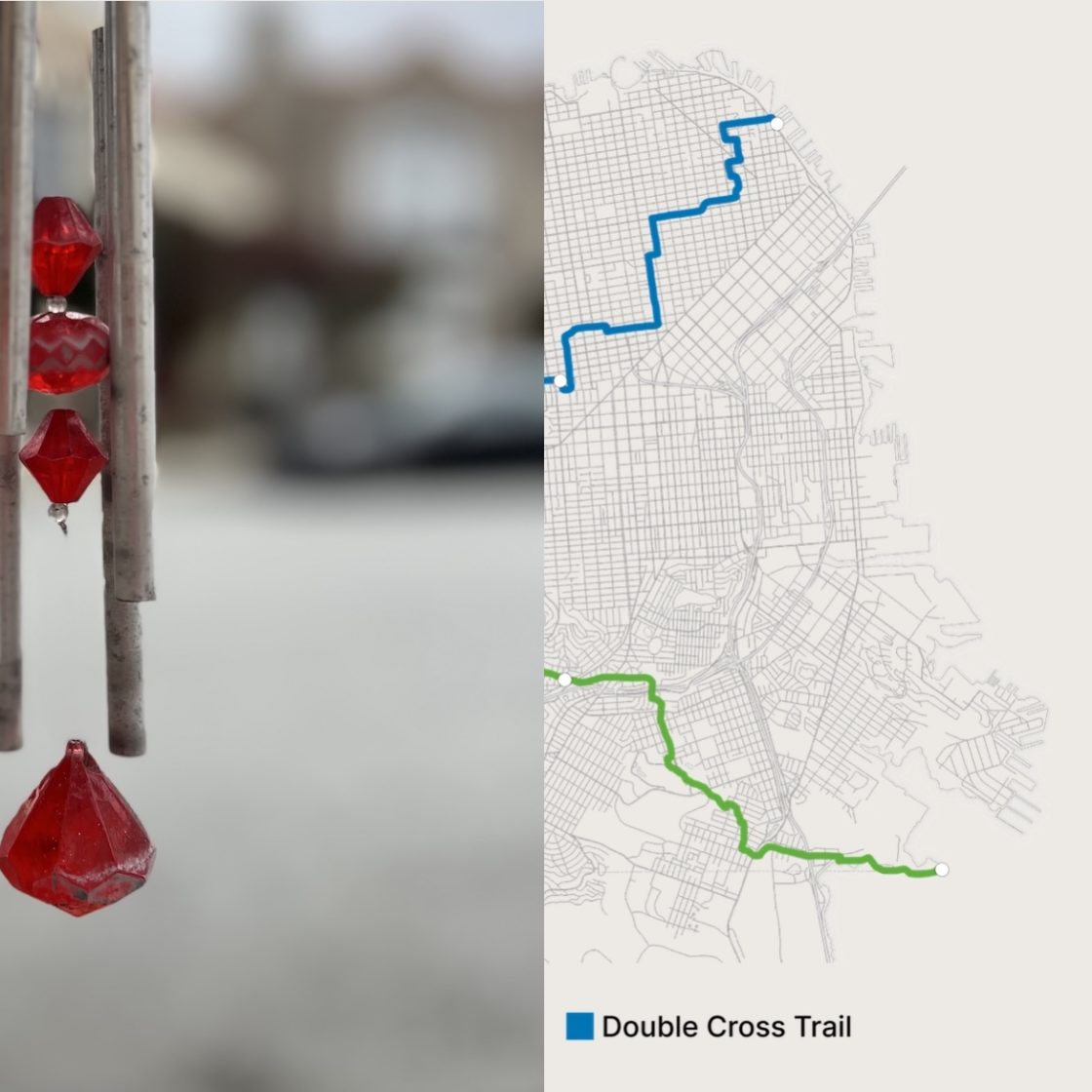
This route is called the Double Cross Trail, and it’s a twin to the Crosstown Trail, the two meeting atop Miraloma. By my iPhone’s telling — and these things differ by device generation, even by device, so I’ll note mine is an iPhone 13 Pro — the urban hike amounted to 71 flights and well over 30,000 steps. We started off at 10:41am and were done at 5:50pm, or just over seven hours. The trail is designed not for expediency but for green spaces and variety and vistas. It’s marked in blue in the image shown here: beginning at Fort Funston, then on to Lake Merced, then Stern Grove, then up through West Portal to Miraloma, up and down through Twin Peaks, Tank Hill, and Buena Vista Park, over to Alamo Square, then up Van Ness and over into Chinatown and North Beach, past Washington Square, up to Coit Tower, and down.
The next day I felt fine, though my calf muscles registered the impact. Two days later, I’m back to normal. Gonna try the Crosstown Trail next, likely starting in the southeast corner and continuing northwest, where it ends near where I live in the Richmond District.
I can’t recommend the Double Cross Trail highly enough. It’s fantastic to experience in one stretch of time not just a sense of the range of people and places here, but also how interconnected they are. I have never stood in Washington Square and thought, “Hey, let’s head over to the Embarcadero,” or driven down Sunset Boulevard and realized just how close Fort Funston is, even by foot. Long familiar landmarks, such as the statue of Juan Bautista de Anza at Lake Merced and the Painted Ladies alongside Alamo Square, took on new meaning as I thought of them not just as proximate to other areas, but as points along a greater, city-spanning itinerary.
I expected to take tons of photos and record lots of audio, but I only took a dozen or so of the former and one of the latter, this bit of a wind chime as we we approached West Portal. On the one hand, I can be disappointed when a sound can’t easily be isolated from apparent noise; on the other hand, I found myself reflecting on the combination of all the sounds, and how that correlated with the numerous connections (geographic, cultural, environmental) revealed over the course of the walk.
On Sundays I try to at least quickly note some of my favorite listening from the week prior — things I would later regret having not written about in more depth, so better to share here briefly than not at all.
▰ Chicago Underground Duo is Chad Taylor and Rob Mazurek, and they have their first album in over a decade due out, Hyperglyph. One track, “Click Song,” is already out. To me it sounds like if the children of the Master Musicians of Jajouka had enrolled at Northwestern University or the University of Chicago and hooked up with the local music scene.
▰ The guitarist Bill Orcutt and drummer Chris Corsano, a nearly 18-minute live recording. On the surface it’s wild, but if you give yourself over to it, it’s quite meditative:
At the end of each week, I usually collate a lightly edited collection of recent comments I’ve made on social media, which I think of as my public scratch pad. I find knowing I’ll revisit my posts to be a positive and mellowing influence on my social media activity. I mostly hang out on Mastodon (at post.lurk.org/@disquiet), and I’m also trying out a few others. And I generally take weekends off social media.
▰ Gonna start a noise band called Din DeLillo.
(I got some fun responses to this, most mentioning White Noise. My favorite suggested a producer: Thomas Punch-in.)
▰ I managed to crash the dictionary on my MacBook. That’s a first.
(I was searching for whether we spell it “labeled” or “labelled” in the U.S., and it’s the former.)
▰ Three men sitting silently in a barbershop while Rod Stewart sings “Hot Legs” on the stereo
▰ I had a dream, before Bill Viola died, that he’d film an Earth music video focused just on drummer Adrienne Davies
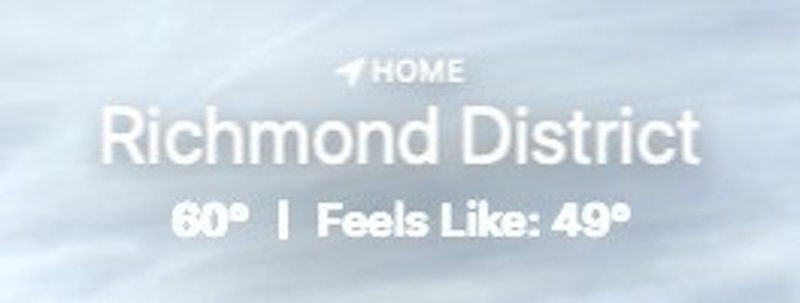
▰ Ah, summer in San Francisco.
In case it’s unclear, the temperature is 60º Fahrenheit. And it felt a lot colder.
▰ I now recognize my best use of a large second screen (that is, when I’m at my desk) is not as a larger version of my laptop screen, but as a digital cork board for various smaller windows: notes, audio player, messages apps, browser windows, etc. I just keep working on my laptop as usual, and the large screen plays a supporting role.
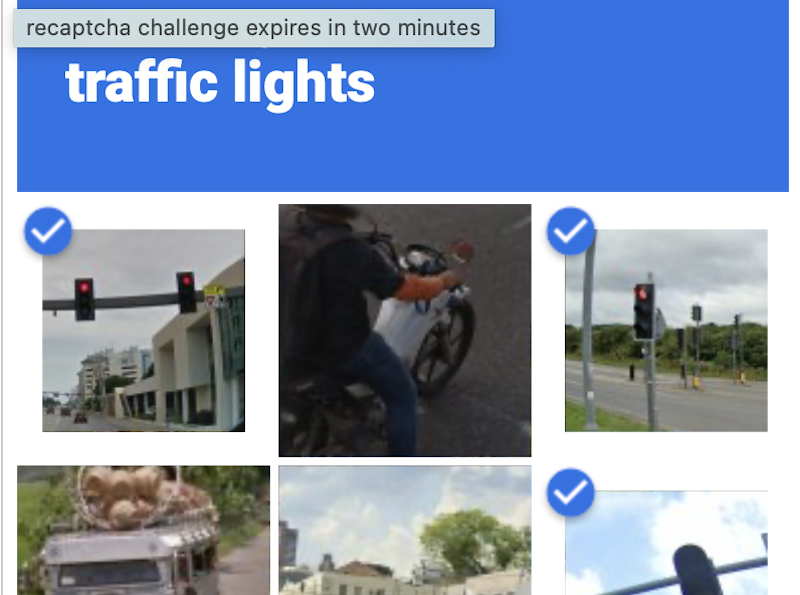
▰ Either a funny choice or a modern absurdity, this is a captcha I had to do when trying to fill out some forms on the DMV (Department of Motor Vehicles) website to renew my driver’s license:
▰ It occurs to me there isn’t a day of the week I don’t spend with the Disquiet Junto. From Thursday to Monday there are new tracks arriving. Tuesday is for listening to the final tracks that appeared overnight. Wednesday is prepping the next project. And then it begins all over again.
▰ I finished reading one novel this week, Sandro Veronesi’s The Hummingbird. I enjoyed how it jumped around in time and employed lots of different formats, including email and letters. I posted, earlier this week, a list of the dozen novels I finished reading during the first half of 2025.
▰ And this week in #dronescrolling — i.e., stuff other people posted: Woshibai, based in Shanghai, China, is one of my favorite comics artists working today. Check out this piece, posted on Threads, about tinnitus. You can easily translate the brief captions using Google Translate or a similar service. I’d reproduce the rough English translations here, but I’d say part of the pleasure for me of reading Woshibai’s comics is the time that it takes for me to copy and paste. In an age of constant and immediate media, I’ve come to appreciate the pace required to select an individual caption at a time, paste it into a browser window, and wait to see what is revealed. Much of Woshibai’s work feels fractured and elliptical. This one, titled “Tinnitus” (“耳鸣”), is especially tight, and it closes expertly. ▰ Mode Exchange is new to me. It’s a venue (or maybe a promoter?) of sound work in Tokyo. The aesthetic and line-up are aces. Check it at instagram.com/mode.exchange. ▰ I love how a local used record store, Noise, one of two that are walking distance from where I live, fills its Instagram with photos of people and the vinyl albums they’ve purchased. This occurs on Instagram. Here’s a recent set of 10 such images.