
The cacophony rises quickly, from street noise (dogs panting, carts wheeled by) to a spiraling flurry of vocal exhortations, circling like some messianic ritual on overdrive. This is not a religious tradition, however. It is a sound installation, titled Å uillakku and created by Italian artist Roberto Cuoghi. Å uillakku, informed by Cuoghi’s historical and metaphysical research into the ancient origins of the Middle East, is on display from October 14 through November 23 of this year at the London museum ICA, which has admirably included a two-and-a-half-minute excerpt of the installation’s sonic element as a downloadable file on its promotional webpage (MP3). More details and information at ica.org.uk/cuoghi. According to the ICA site, the exhibit’s curator is Marcella Beccaria, and it originated at the Castello di Rivoli, Museum of Contemporary Art, Rivoli-Turin.
Panel Discussions at APE in San Francisco, November 1
 This coming Saturday, November 1, I’ll be talking at the annual Alternative Press Expo (aka APE) in San Francisco with comics artists Matt Madden and Jessica Abel (pictured at left, in their dual self-portrait) on panels dedicated to their work.
The Madden panel is from 12:30 to 1:15 and the Abel one is from 2:15 to 3:00. Both artists contributed to the decade-long series of comics inspired by music that I edited in Pulse! magazine. (I did a similar one-on-one panel at Comic-Con in San Diego this past summer with Adrian Tomine, another Pulse! contributor.) Also appearing, by coincidence, at APE this year are several other cartoonists whose comics I edited in Pulse!, including Megan Kelso and Chris Ware. More info on APE 2008, to be held at the Concourse (620 7th Street, San Francisco), at comic-con.org/ape.
 Among the earliest entries on Disquiet.com is an essay (“Home Decorating in the Age of Mechanical Reproduction”) that I wrote for Jeff LeVine’s magazine Destroy All Comics about a Madden comic, titled “House Music,” that appeared in Pulse! in 1995. The essay includes the full image of the comic, as well as the full image of an early draft of the comic. At right is the first panel of the six-panel comic, which has heavy echoes of John Cage’s theories on the silence-ness of silence, and of Erik Satie’s interest in “Musique d’ameublement,” or of sounds emitted by common, everyday household objects.
Images of the Week: Ikeda’s Mathic Region
Two promotional shots from sound artist Ryoji Ikeda‘s exhibit V ≠L, created with mathematician Benedict Gross at Le Laboratoire in Paris.

 
It runs from October 11, 2008, through January 12, 2009. More information at lelaboratoire.org.
Quote of the Week: Lessig’s Sousaphone
 This is band leader and composer John Phillip Sousa criticizing recorded music at the start of the last millennium:
“When I was a boy … in front of every house in the summer evenings you would find young people together singing the songs of the day or the old songs. Today you hear these infernal machines going night and day. We will not have a vocal chord left.'”
That is Sousa as quoted by Lawrence Lessig in his new book Remix: Making Art and Commerce Thrive in the Hybrid Economy, as quoted in M.J. Stephey‘s review of the book in Time (time.com).
Stephey goes on to quote Lessig in regard to the famous Sousa statement, wherein Lessig separates its philosophical concern from its technophobic context: “Sousa was not offering a prediction about the evolution of the human voice box. He was describing how a technology … would change our relationship to culture. These ‘machines,’ Sousa feared, would lead us away from … ‘amateur’ culture. We would become just consumers of culture, not also producers.”
I haven’t read Remix yet, so I don’t know the extent to which Lessig quotes Sousa, but for what it’s worth, Sousa did, in fact, predict the evolution of the human voice box; most citations of Sousa’s comment include the following sentence: “The vocal chord will be eliminated by a process of evolution as was the tail of man when he came down from the ape.” What Lessig does, though, is recognize Sousa’s hyperbole as metaphor, and in the process remixes the material himself.
More on Lessig’s book (including, soon enough, a freely downloable copy) at remix.lessig.org.
Pseudónimo’s Sour-Syrupy Pop MP3s
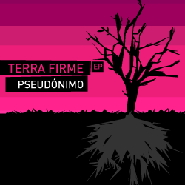 The little snippet of clicky static that opens “A Rosy Wisp of Cloud” (MP3), the middle track on the EP Terra Firme by Pseudónimo, may or may not be an actual needle hitting actual vinyl. There’s a bounce to it that suggests as much — it has that familiar feel of a sharp object finding its groove — but the collection overall is such a feat of succulent artificiality, one finds it preferable to imagine that the little buzzy clack at the start is no more a real, physical needle than the percussion that comes later on was played with actual drums — especially after the sad-robot vocoder vocal kicks in.
This is a collection of sour-syrupy melodies played a note at a time above cereal-box-trinket beats. The loungey melody that plinks through “Estória dos Dias Curtos” (MP3) could be the score to a dating-sim video game — certainly a more likely situation than it being played at a meatspace club where human beings interact — and that’s very much to its credit. Get the full set at the releasing netlabel, broque.de.