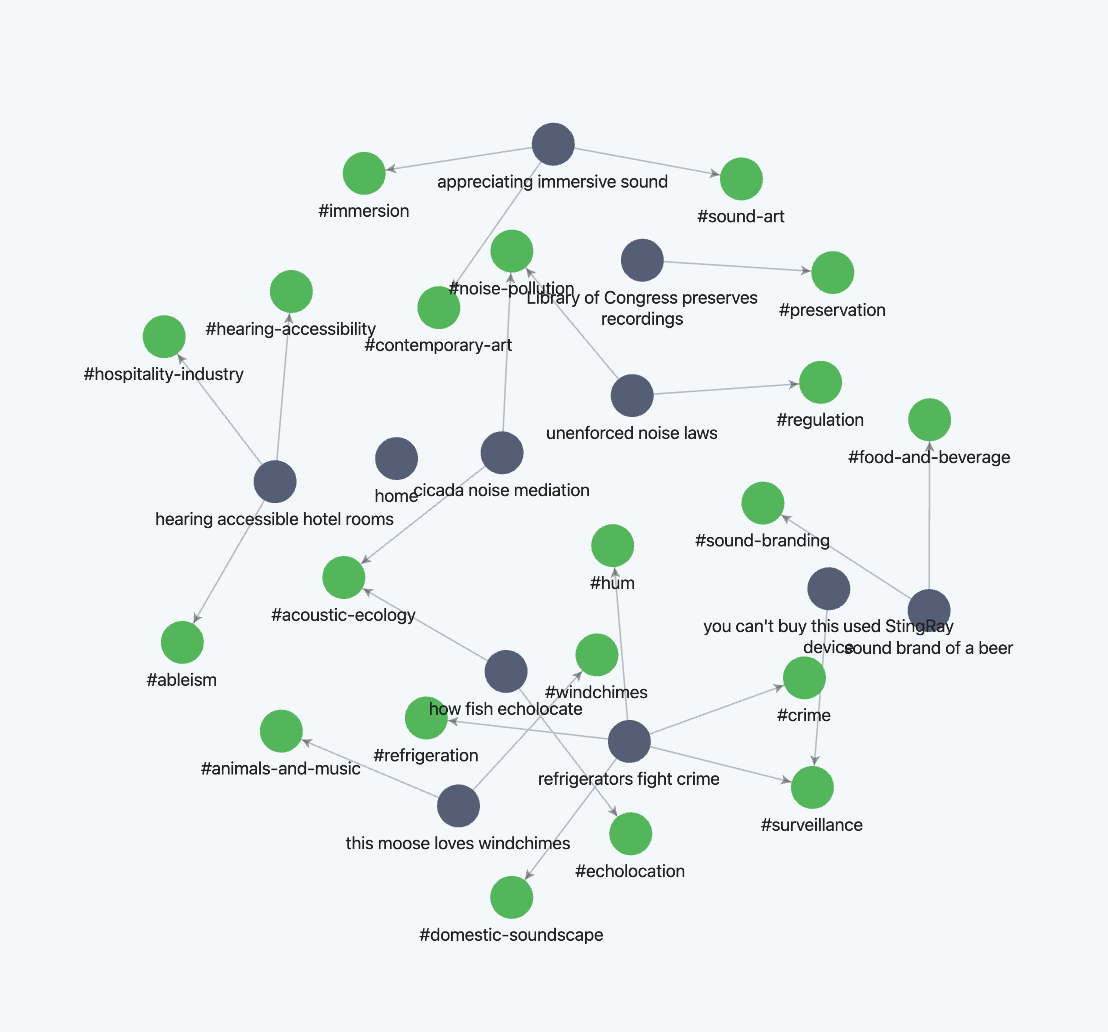
One last note before going quasi-offline for the weekend: I finally found utility in the Obsidian feature called “graph view,” which is that I put a ton of my recent sound studies news items in and I tagged ’em, and that helped me locate clusters of related information by visualizing connections for my This Week in Sound email newsletter. Those examples shown here, by the way, are not from this week’s issue but instead from the previous issue.
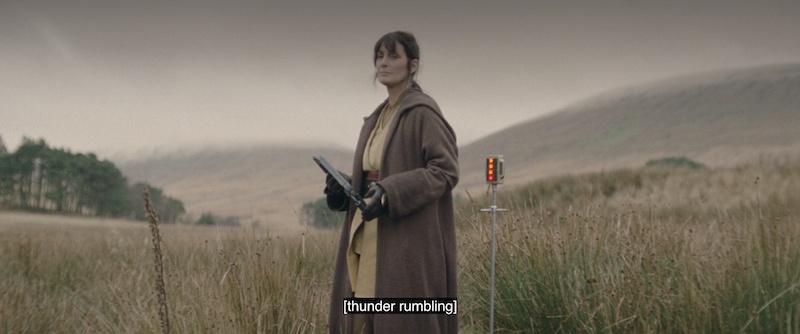
As you can tell from the piece on the TV series Sunny in this week’s issue, I’m experimenting with format. I want the newsletter to feel less like I’m offloading homework onto the reader. Much as I like being fairly upstream with news, much as I like observing topics coalesce over weeks and years, data points not necessarily evident as a through-line except in retrospect, I think there’s value in my clustering these sound studies findings. Thus in this issue I have, among other things, a “lead” story about digital voices in Sunny, followed by a variety of other current stories that engage with voice, technology, assistants, and culture but that have no direct ties to Sunny. It’s an experiment.
The Assignment: Interpret a graphic score by Franziska Baumann.
/ By Marc Weidenbaum
Each Thursday in the Disquiet Junto music community, a new compositional challenge is set before the group’s members, who then have five days to record and upload a track in response to the project instructions.
Membership in the Junto is open: just join and participate. (A SoundCloud account is helpful but not required.) There’s no pressure to do every project. The Junto is weekly so that you know it’s there, every Thursday through Monday, when your time and interest align.
Tracks are added to the SoundCloud playlist for the duration of the project. Additional (non-SoundCloud) tracks also generally appear in the lllllll.co discussion thread.
Disquiet Junto Project 0654: Just Notation The Assignment: Interpret a graphic score by Franziska Baumann.
This project is the second of three that are being done over the course of as many months in collaboration with the 2024 Musikfestival Bern, which will be held in Switzerland from September 4 through 8 (details at musikfestivalbern.ch). We are working at the invitation of Tobias Reber, an early Junto participant, who manages the festival’s educational activities. This year is the sixth in a row that the Junto has collaborated with Musikfestival Bern.
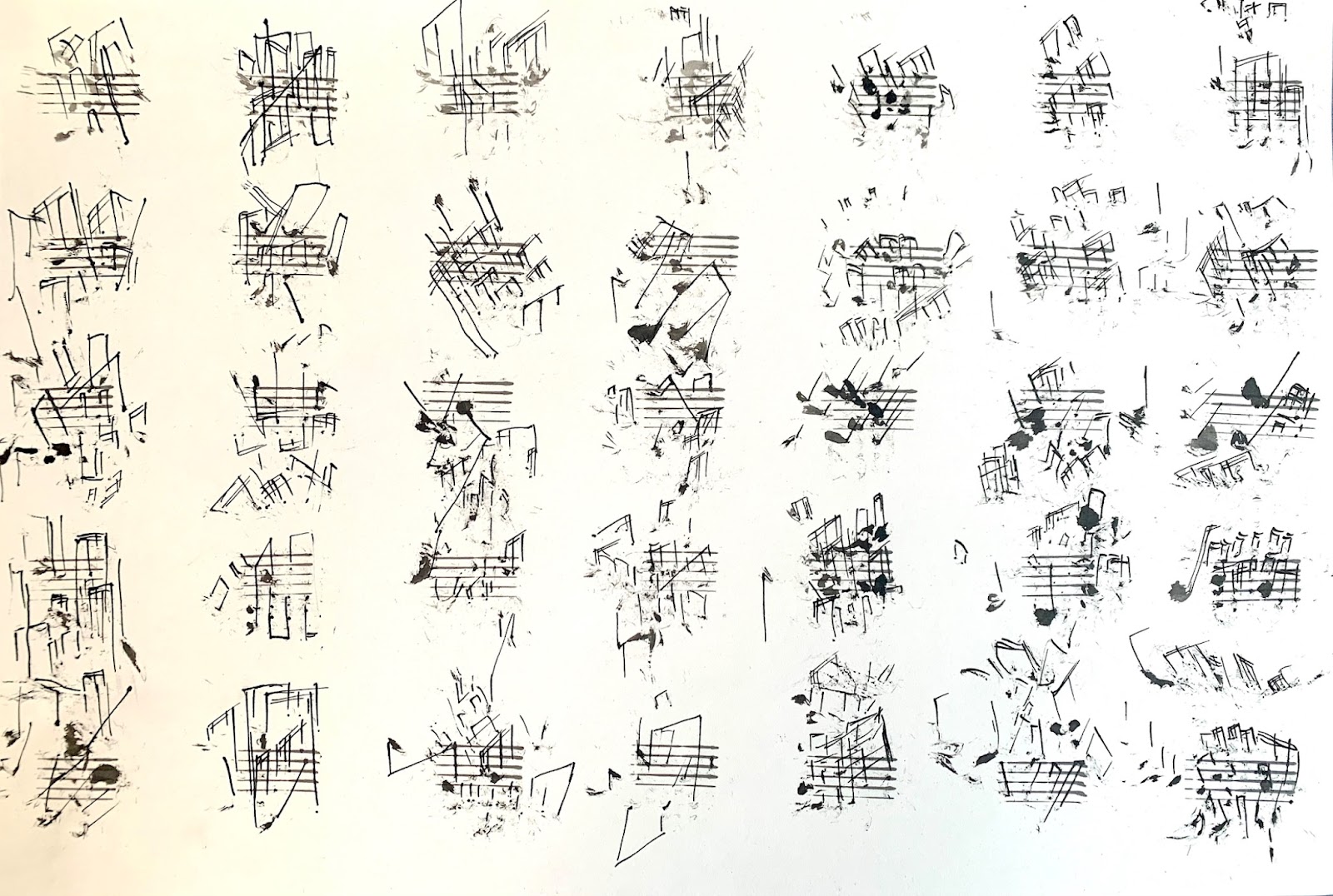
Step 1: Spend time observing this graphic score by Franziska Baumann, the Swiss composer and musician who is part of this year’s Musikfestival Bern. It is titled True Glimpses 1. There is a larger version available for download. More on Baumann at franziskabaumann.ch.
Step 2: Consider how the image in Step 1 can be interpreted as a graphic score. (If you’re unfamiliar with the concept of graphic notation, read up and join the conversion at the llllllll.co link below.)
Step 3: Record a piece of music that interprets the graphic score from Step 1.
Tasks Upon Completion:
Label: Include “disquiet0654” (no spaces/quotes) in the name of your track.
Upload: Post your track to a public account (SoundCloud preferred but by no means required). It’s best to focus on one track, but if you post more than one, clarify which is the “main” rendition.
License: It’s preferred (but not required) to set your track as downloadable and allowing for attributed remixing (i.e., an attribution Creative Commons license).
Please Include When Posting Your Track:
More on the 654th weekly Disquiet Junto project, Just Notation — The Assignment: Interpret a graphic score by Franziska Baumann — at https://disquiet.com/0654/
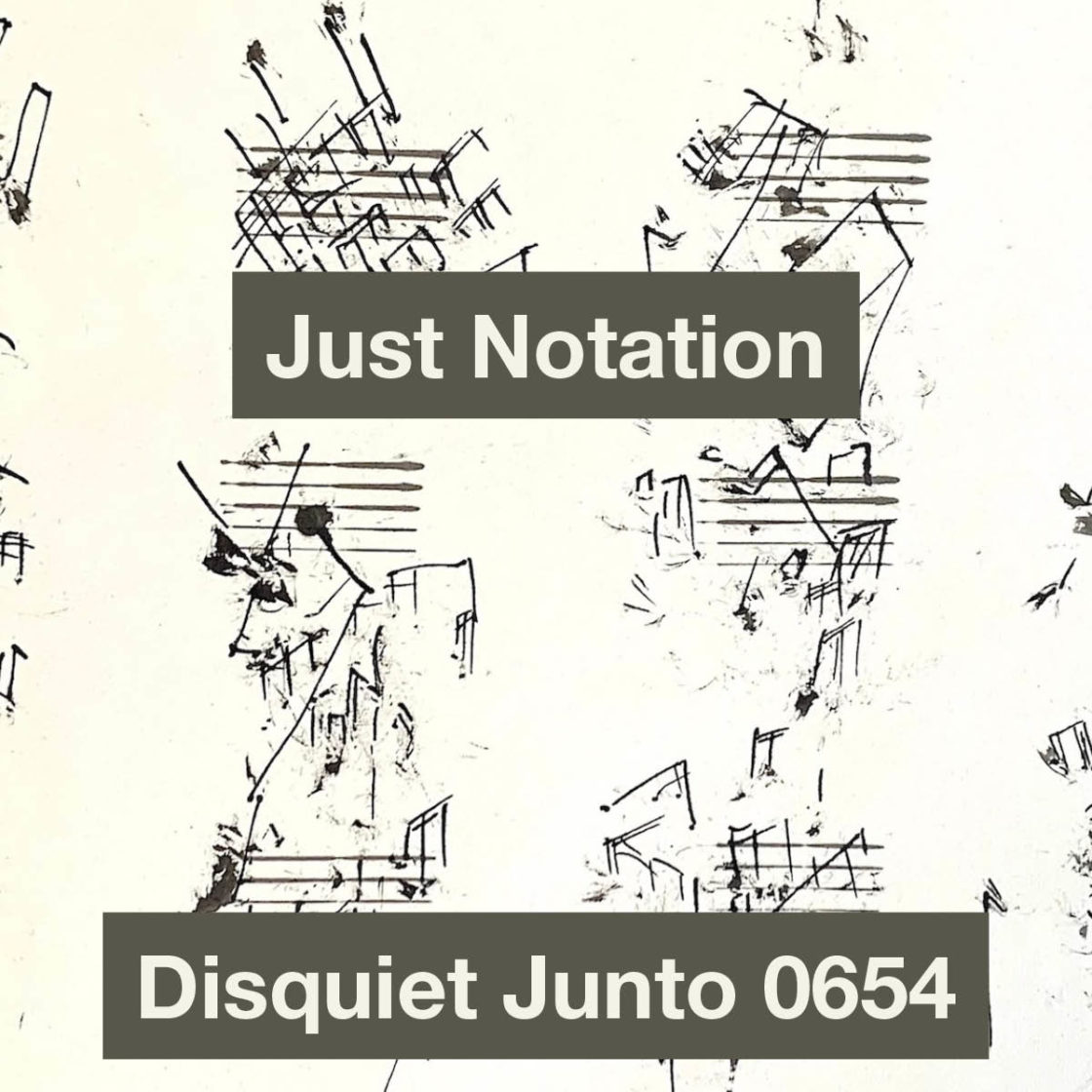
The cover image for this project is a detail of a graphic score, titled True Glimpses 1, by Franziska Baumann, used with her permission and the support of Musikfestival Bern. More on Baumann at franziskabaumann.ch.
I spend a solid amount of time on social media — regulated time, meaning not before breakfast or after dinner, and generally not on the weekend. For all the time I do put in, I find myself referencing things from what I’d call the “Twitter mode” (e.g., Mastodon, Threads, Bluesky) more often than I do what I’d call “forum mode.” That doesn’t reflect my activity, more a sense that the former is more public and the latter more private. I thought I’d collect some thoughts about forums (e.g., those on Discourse, Slack, Discord). I’m on too many of each to list in detail, but if you think there’s one I might appreciate knowing about, do lemme know. Thanks.
Discourse is like if the BBS I remember from the proto-Internet mid-1980s had upgraded along the way to a vaguely graphic interface — but not gone so far that it couldn’t wind the clock back to pure text, should it ever want to. Which is to say, Discourse is my favorite online mode; it’s the platform on which I feel most at home. Discourse (mothership: discourse.org) provides simple tools to simplify your engagement. You can opt to just not follow individual threads, and then that little alert number disappears. You can even opt to full-on mute a discussion, which means it doesn’t just go quiet; it disappears from your view entirely — henceforth you’ll have no idea if people are arguing about a topic you have no (or too much) interest in. A signifier of Discourse’s casual tone is that you may very well be on Discourse already and not even know it. It’s a platform, yes, but it’s routinely accessed from another URL entirely. I spend a lot of times at llllllll.co. The VCV Rack forum is on Discourse, as is the Elektronauts board.
Slack is like if social media became an office job — with the ugliest carpet ever. It’s best to set your hours (mothership: slack.com). Don’t participate in everything, just what’s essential and what you feel strongly connected to. Leave channels with ease, or at least turn off notifications. And foremost: feel comfortable changing notifications to just @ mentions, so you only get alerted when someone pings you that you may be missing out.
Discord is like if Slack was a factory job — on the floor of a Las Vegas casino. It is essential, at least for me, to do everything I can to tone it down. My favorite option is to click on a folder and hit “Mark as Read,” which just clears everything out. I assure you, in most Discourses, that won’t last long (mothership: discord.com). For some time, I had folders of all the various Discords I’m in carefully sorted by category. They were very organized, but something felt off. What helped, I figured out, was creating an additional folder of just the main Discords I want to pay attention to. In other words, “places where I actually want to hang out” is an entirely valid typology classification.