Each Thursday in the Disquiet Junto music community, a new compositional challenge is set before the group’s members, who then have five days to record and upload a track in response to the project instructions.
Membership in the Junto is open: just join and participate. (A SoundCloud account is helpful but not required.) There’s no pressure to do every project. The Junto is weekly so that you know it’s there, every Thursday through Monday, when your time and interest align.
Tracks are added to the SoundCloud playlist for the duration of the project. Additional (non-SoundCloud) tracks also generally appear in the llllllll.co discussion thread.
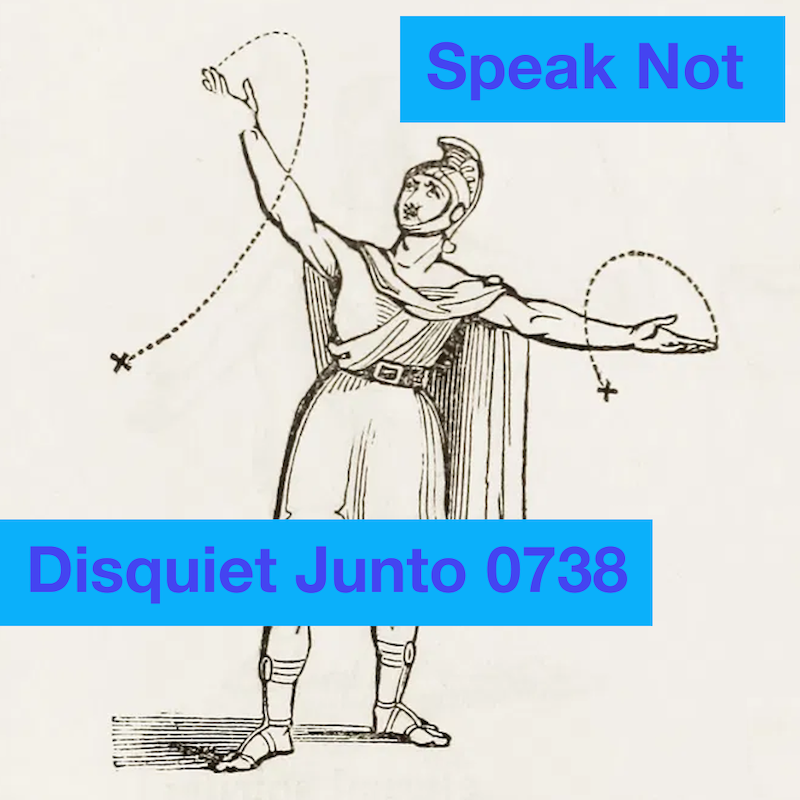
Disquiet Junto Project 0738: Speak Not
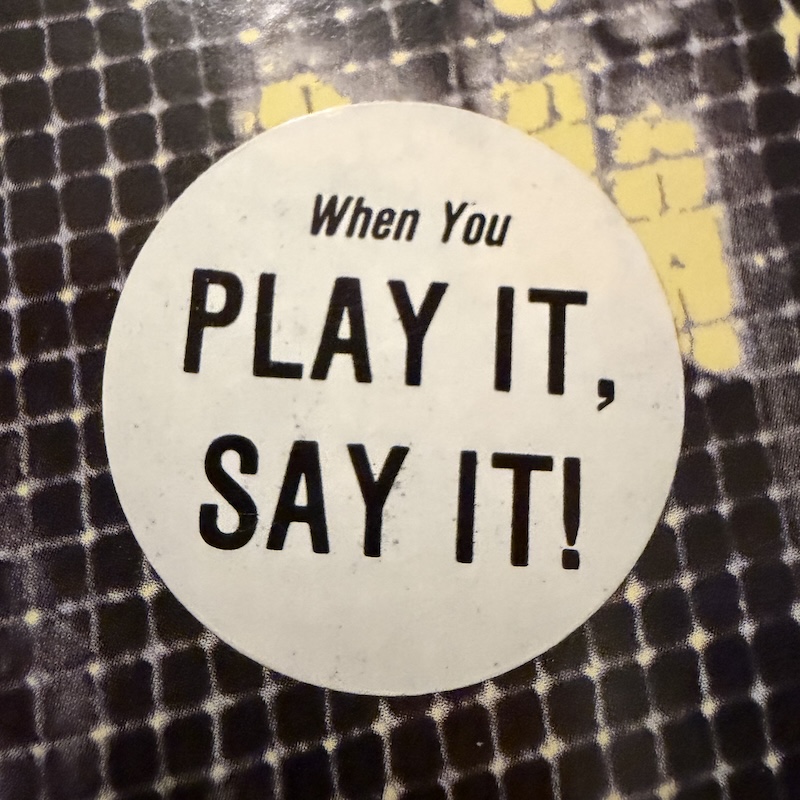
The Assignment: Saying something without saying it.
Step 1: Think of something you want to say — an expression of affection, a statement of dissent, a story, a bit of personal history, a joke, a complaint.
Step 2: Say what you want to say by recording a piece of music that employs only instrumental/non-verbal sounds. Use no words, not even transformed speech.
Background: Among the foundational concepts of the Disquiet Junto is an exploration of the commonplace idea that music is a universal language. The working theory is that while that statement holds some truth, music is a language perhaps most clearly spoken between musicians. Underlying all Junto projects is the idea that we are exploring a given project’s concepts by using music, rather than discussing the project’s concepts with words. (Of course, we do some of the latter in discussion threads, but that comes after the music, not before it.) This week’s project simply takes that overarching approach literally, so to speak.
Tasks Upon Completion:
Label: Include “disquiet0738” (no spaces/quotes) in the name of your track.
Upload: A person participating in the Disquiet Junto should post only one track per weekly project (SoundCloud account preferred but not required). If on occasion you feel inspired to post more than one track (whether to a single account or across multiple accounts), you should clarify which is the “main” rendition for consideration by fellow members and (if on SoundCloud) for inclusion in the SoundCloud playlist.
Share: Post your track and a description/explanation at https://llllllll.co/t/disquiet-junto-project-0738-speak-not/
Discuss: Listen to and comment on the other tracks.
Additional Details:
Length: The length is up to you. How much do you have to say?
Deadline: Monday, February 23, 2026, 11:59pm (that is: just before midnight) wherever you are.
About: https://disquiet.com/junto/
Newsletter: https://juntoletter.disquiet.com/
License: It’s preferred (but not required) to set your track as downloadable and allowing for attributed remixing (i.e., an attribution Creative Commons license).
Please Include When Posting Your Track:
More on the 738th weekly Disquiet Junto project, Speak Not — The Assignment: Saying something without saying it — at https://disquiet.com/0738/