
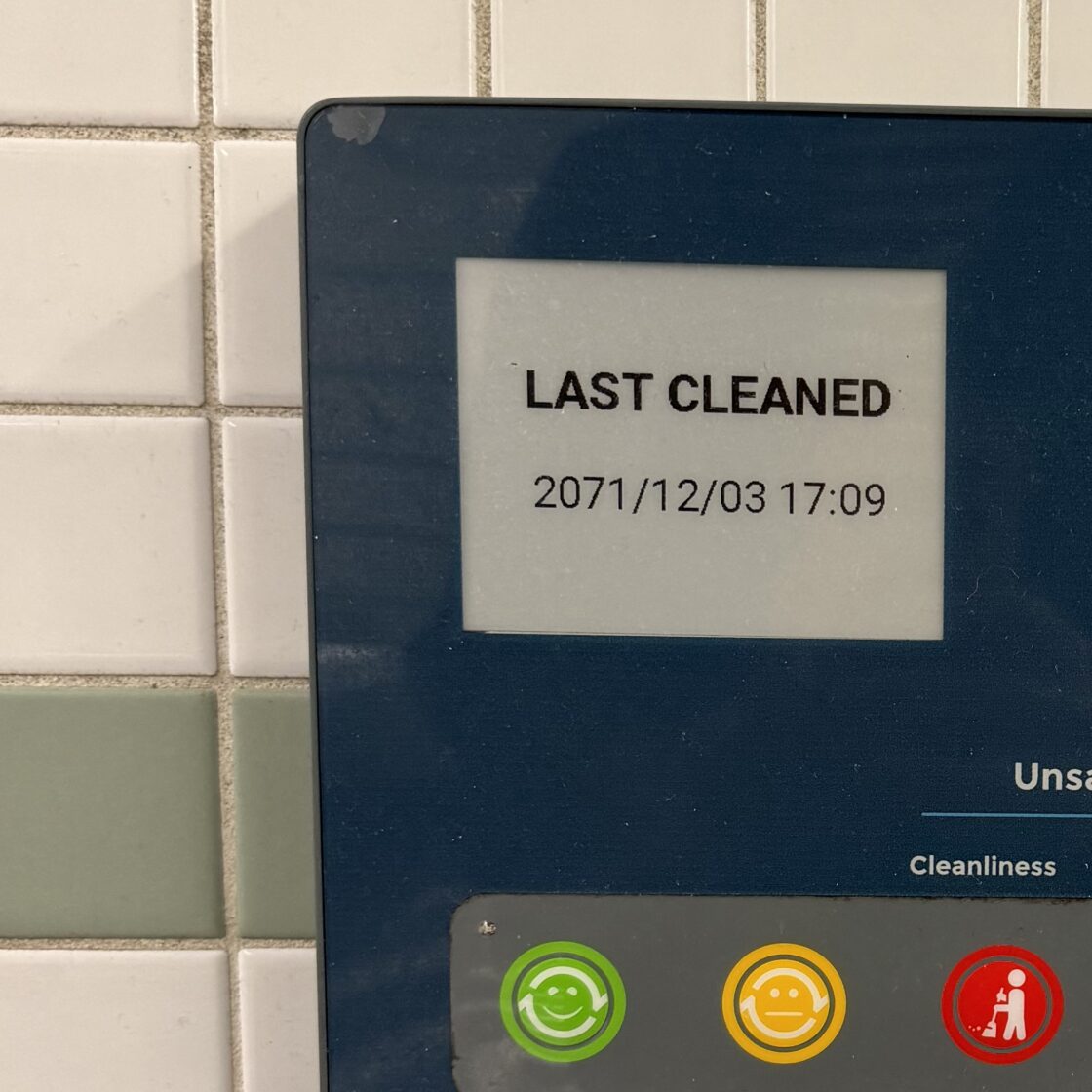
Apparently this bathroom was cleaned … in the future
News, essays, reviews, surveillance
Apparently this bathroom was cleaned … in the future
At the end of each week, I usually collate a lightly edited collection of recent comments I’ve made on social media, which I think of as my public scratch pad. I tag on what books I may have finished reading. Knowing I’ll revisit my social media posts, I’ve found, serves as a positive and mellowing influence on my online activity. I mostly hang out on Mastodon (at post.lurk.org/@disquiet), and I’m also trying out a few others. And I generally take weekends off social media.
Another light week. Been busy.
▰ Slightly distracted during the How to Rob a Bank trailer because I became convinced that the Zoë Kravitz character’s apartment is the same one a different Kravitz character lived in in the Soderbergh movie Kimi. (Different windows, as it turns out.)
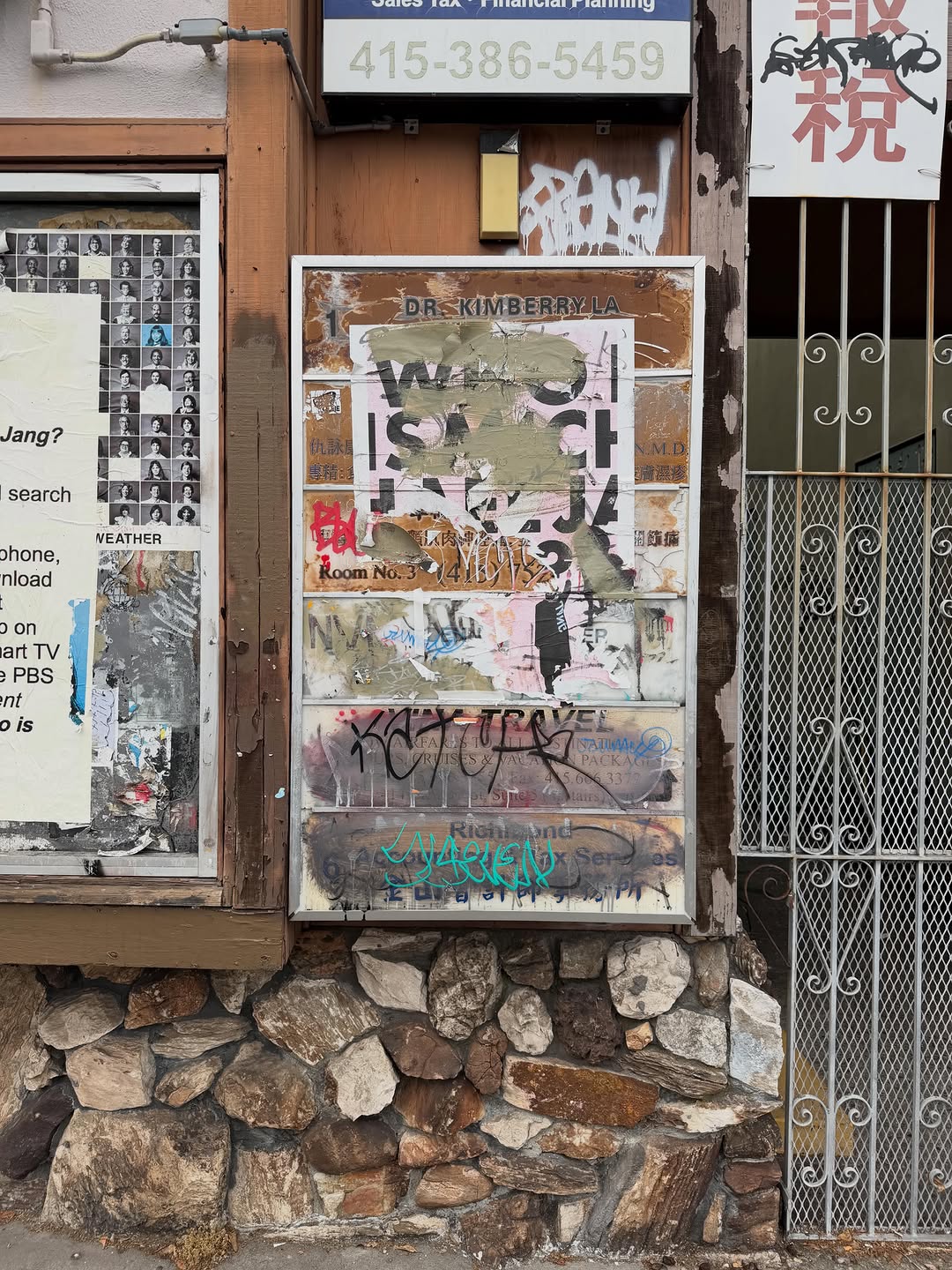
▰ The great Michael Jang has my aesthetic number. Which is to say, that’s not my actual number up there, but this fine slice of Clement Street made my week.
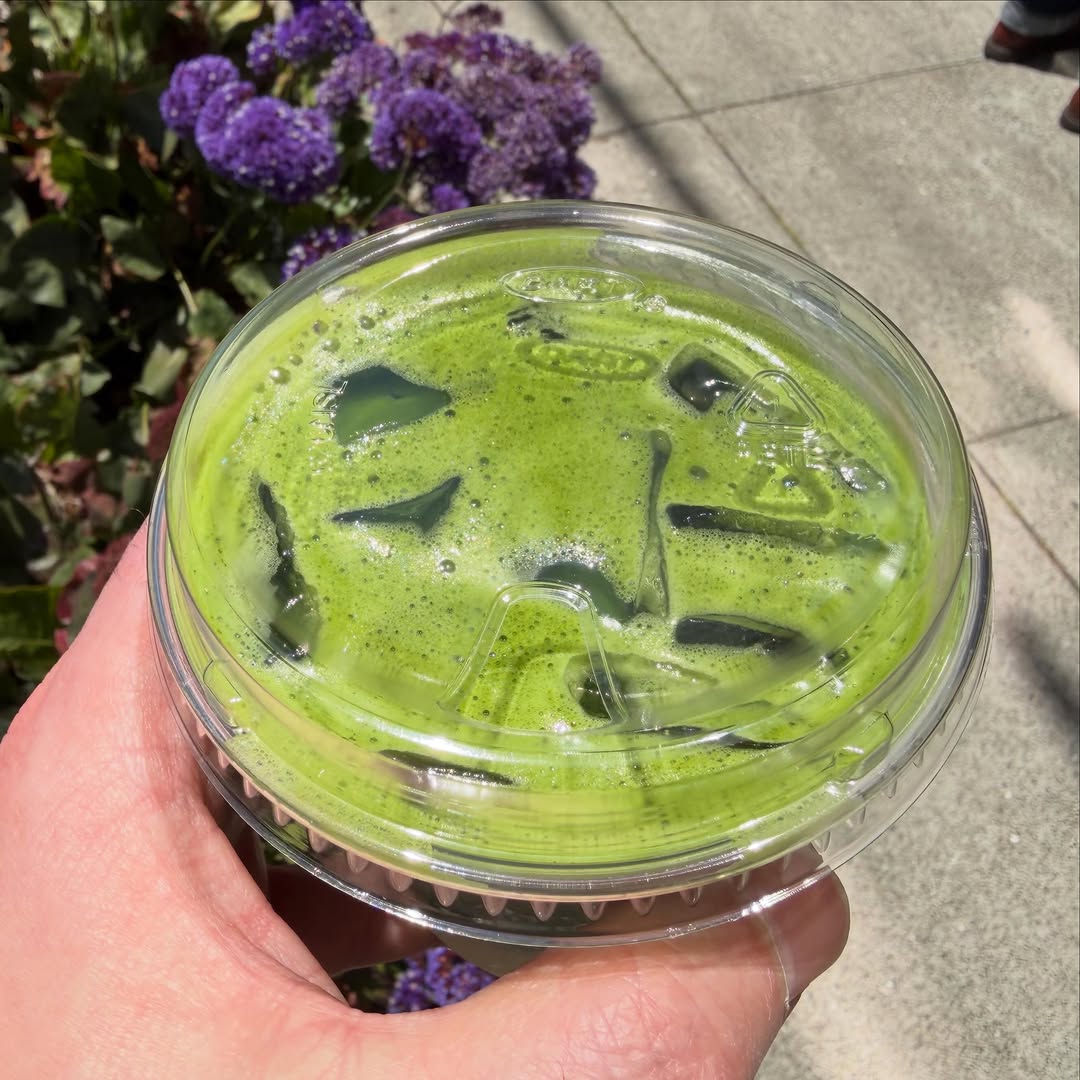
▰ I don’t think I’ve had freshly ground matcha before. Very tasty, and the green is hyperreal. Welcome to the neighborhood, Constance Tea.
▰ I’d like the e-ink Boox Go 7 to get popular enough that someone makes a slim keyboard case for it. I upgraded to it from my Kindle Paperwhite. The tablet/reader hybrid works well with Obsidian, and since the last page you look at remains (in most cases, though not all) as the sleep screen, the device has quickly become (as had been my test-case intent/hope) a small project white board (slash to-do list).
▰ I finished reading two manga tankobon (aka paperbacks) this week: Mohiro Kitoh’s Bokurano Ours volume one (2003), which I read some of in the past but never finished, and Time Killers (2000), the standalone collection of one-shots (aka short stories) by Kato Kazue (she’s best known for the long-running, and ongoing, Blue Exorcist).
Having listened at length to — though by no means for the full extent of — the 10 hours of underwater ambience extracted from the video game Subnautica 2, I can state that there is not a lot of variety, at least not of the sonic sort. I also jumped around the timeline, and perhaps like the non-digital ocean itself, the gargantuan gurgling immersive space of it is pretty consistent: low rumble, the vibration of passing bodies, plus odd little sounds, perhaps vocalizations, that pop up. The video does vary its visual setting, tracking presumably the course of the day, though there may be more to the sequence than that, since the shifts between light and dark can be quite stark and sudden. All of which is a reminder that gamer ASMR videos like this are as much video as audio, and it’s the combination that draws many viewers (though I was just the 30th or so here, as this one is quite new) and likes (3 as of this post). Another reminder: popularity in one medium doesn’t immediately translate to another. This video with 37 views, as of this writing, is from a brand new game that sold two million copies within the first half day of its release, the middle of last month.
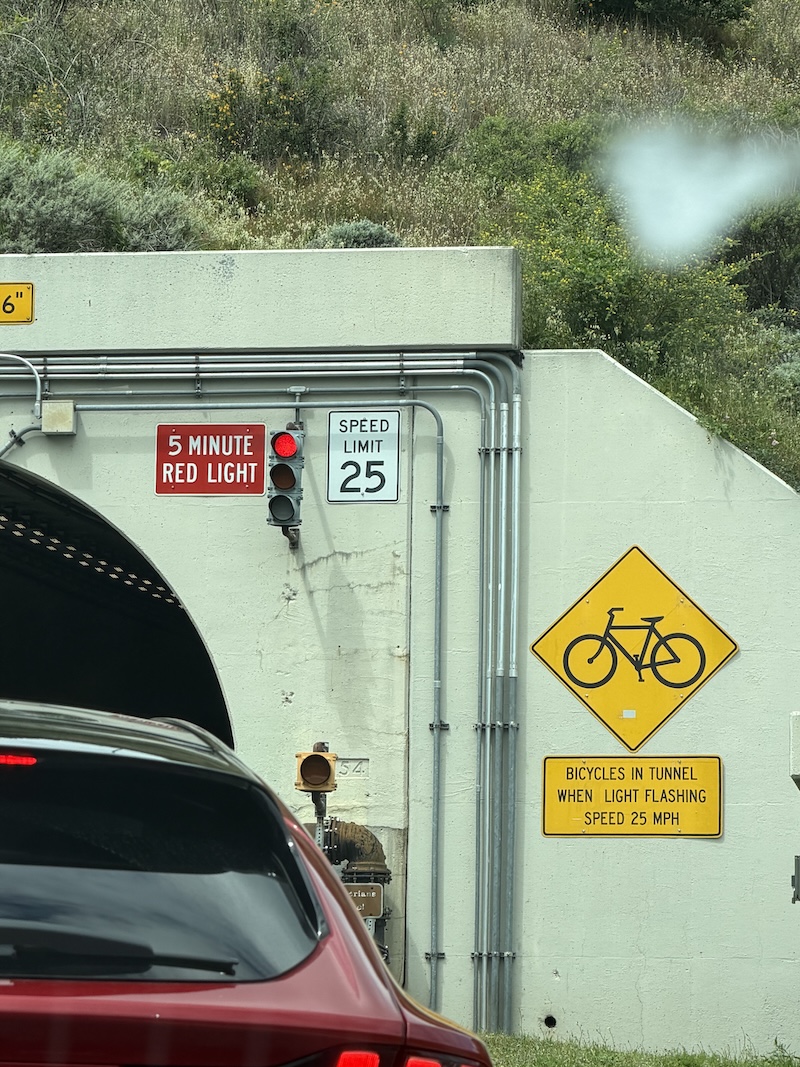
It’s pretty common that when I’m talking with someone about the Disquiet Junto, the weekly music community I have moderated since January 2012, the question arises as to where Junto projects come from — how is it that the ideas originate, week after week, some 753 in a row as of this writing. I’ve answered this question various ways over the years, and one key explanation is that the Junto projects rarely if ever originate because I’m trying to come up with an idea. I have a huge backlog of potential projects. Most projects originate instead based on an observation, one that is then turned into a kind of interrogative, flipped from something that is or seems to something that might be. For example, the third Junto took the origin of the Junto itself, as inspired by Benjamin Franklin, and tried to imagine what one of his inventions, the glass harmonica, might sound like today. The 120th project came about because I saw reproductions of the heartbeart of artist Marcel Duchamp and wondered how musicians might interpret it. This week’s project, which launches tomorrow, June 4, came about, as did one a couple of weeks ago involving a snail, because of signs I saw on a day trip to the Marin Headlands. The above photo inspired tomorrow’s project, which explores the concept of “outdoors hold music.” We’ll see what comes of it.
On Sundays I try to at least quickly note some of my favorite listening from the week prior — things I would later regret having not written about in more depth, so better to share here briefly than not at all.
▰ The Jeff Parker ETA IVtet, a jazz foursome, posted a full video recording of a live set, doing their new album, Happy Today, co-released May 15 by the International Anthem and Nonesuch labels — heavy on atmosphere and exemplifying a rich sense of ensemble:
▰ SML, a jazz quintet, revs percolating minimalism into virtual Afrobeat in this first available track from their forthcoming live album, Spontaneous Music Live, due out June 26, also on International Anthem:
▰ Glitch/IDM producer Loraine James works with vocalists a lot lately — introspective rap, sultry soul, stream-of-consciousness spoken word — and her excellent recent album, Detached from the Rest of You, released May 8 on Hyperdub, exudes artful anxiousness: