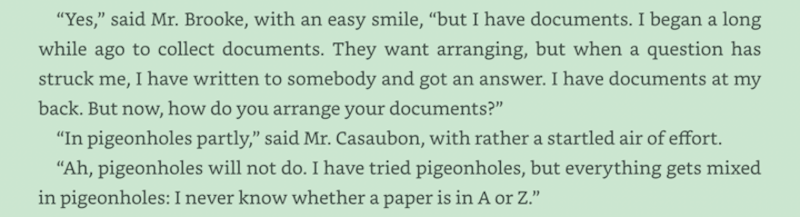
That is from Middlemarch, George Eliot’s novel, back in 1871. This will either be the last novel I finish reading in 2024 or one of the first I finish reading in 2025.
Note: when I first posted this, I had the digits reversed, so it said 1817 instead of 1871.
The Assignment: Make music inspired by a children's toy or game.
/ By Marc Weidenbaum
Each Thursday in the Disquiet Junto music community, a new compositional challenge is set before the group’s members, who then have five days to record and upload a track in response to the project instructions.
Membership in the Junto is open: just join and participate. (A SoundCloud account is helpful but not required.) There’s no pressure to do every project. The Junto is weekly so that you know it’s there, every Thursday through Monday, when your time and interest align.
Disquiet Junto Project 0677: Jeux d’enfants The Assignment: Make music inspired by a children’s toy or game.
Step 1: In the early 1870s, the composer George Bizet wrote a suite of short pieces, each inspired by one or another toy or game beloved by children. The first in the series, “L’escarpolette,” suggested a swing, and another, “La toupie,” a spinning top. There were pieces for soap bubbles and leap-frog, as well. Read up on and listen to Bizet’s suite, which was titled Jeux d’enfants, or Children’s Games.
Step 2: Choose a suitable toy or game, perhaps one from your own childhood, or perhaps something even more modern.
Step 3: Record a short piece of music inspired by the subject you selected in Step 2.
Tasks Upon Completion:
Label: Include “disquiet0677” (no spaces/quotes) in the name of your track.
Upload: Post your track to a public account (SoundCloud preferred but by no means required). It’s best to focus on one track, but if you post more than one, clarify which is the “main” rendition.
License: It’s preferred (but not required) to set your track as downloadable and allowing for attributed remixing (i.e., an attribution Creative Commons license).
Please Include When Posting Your Track:
More on the 677th weekly Disquiet Junto project, Jeux d’enfants — The Assignment: Make music inspired by a children’s toy or game — at https://disquiet.com/0677/
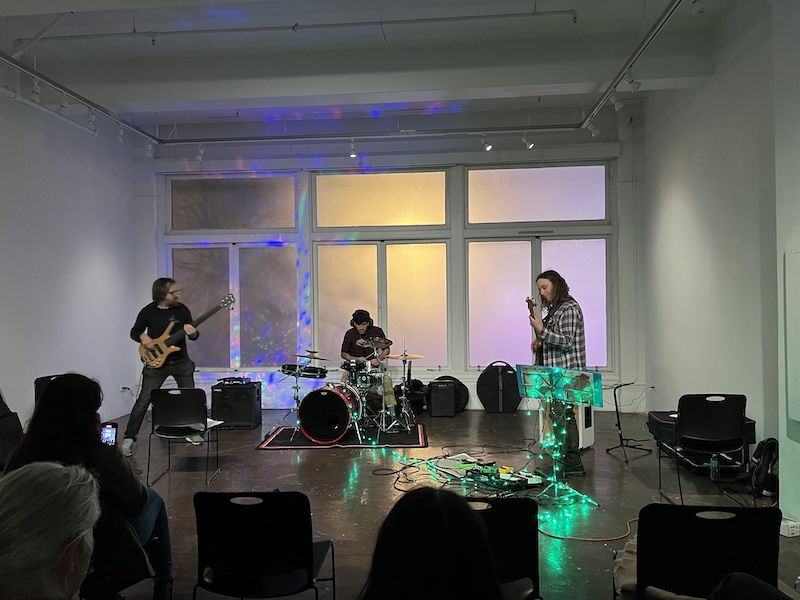
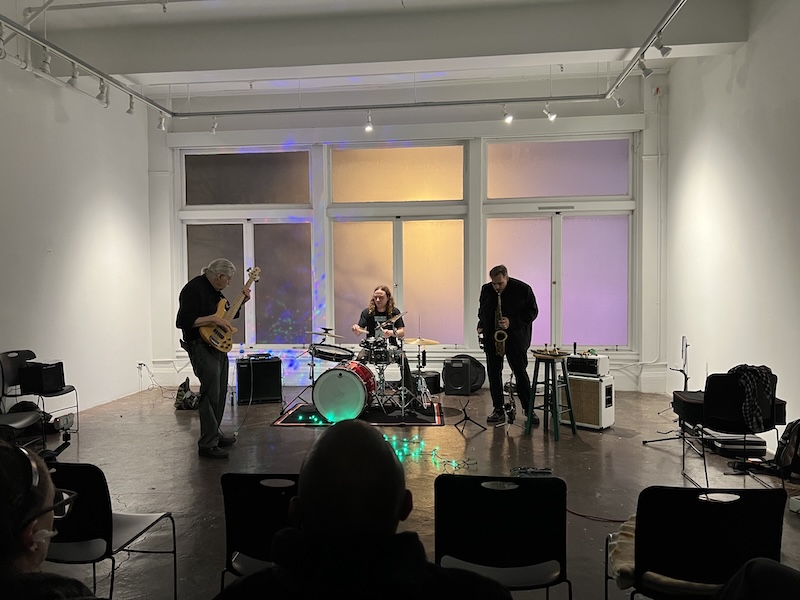
I don’t know if tonight was the final night of the Luggage Store Gallery Music Series, which Rent Romus has run or co-run for the past 22 of its 30 years. I think there’s one more concert, on January 8, but if I understood correctly, there may not be, something about a possible cancellation, but I may have misunderstood. In any case, if tonight was the last night, it was a great one to go out on. Two bands, both trios, a musician shared between them, first on guitar as the leader, then as the youngest member of a group in which he played the drums. That would be Inkwells Trio (Lorenzo Arreguin, guitar; Elijah Pontecorvo, six-string fretless bass; Christian Arriola, drums) followed by saxophonist Romus’ long-running (since 1995) group with a shifting lineup, Lords of Outland (tonight: him; Ray Scheaffer, five-string bass; Arreguin, drums). Both bands played out, the Inkwells a loud jazz metal, with Arreguin calling out directions with a combination of cards and hand signals, and Outland a keening, spirited free jazz. The gallery building, here in San Francisco, on Market Street, around the corner from 6th Street, is due to be sold.
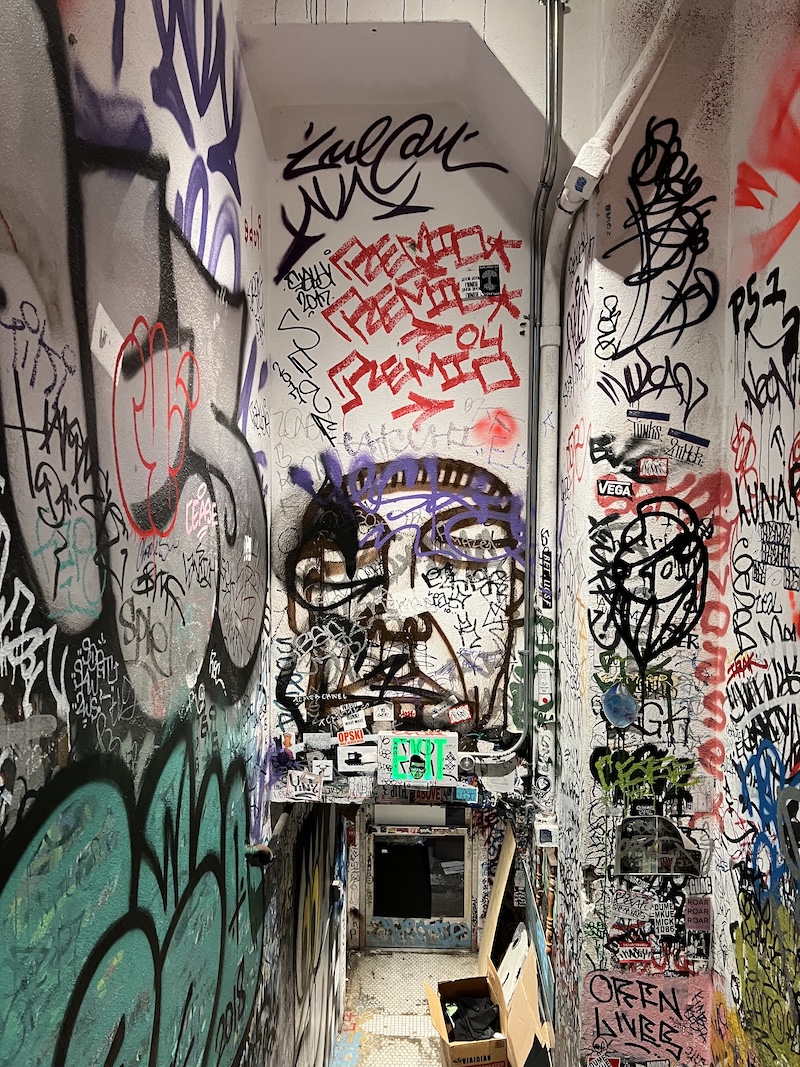
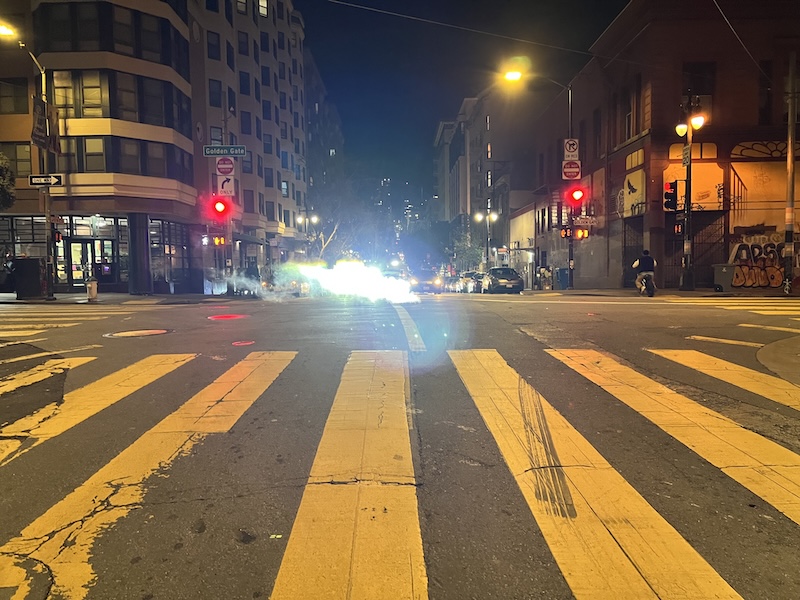
And the city smiled for its close-up on my way home:
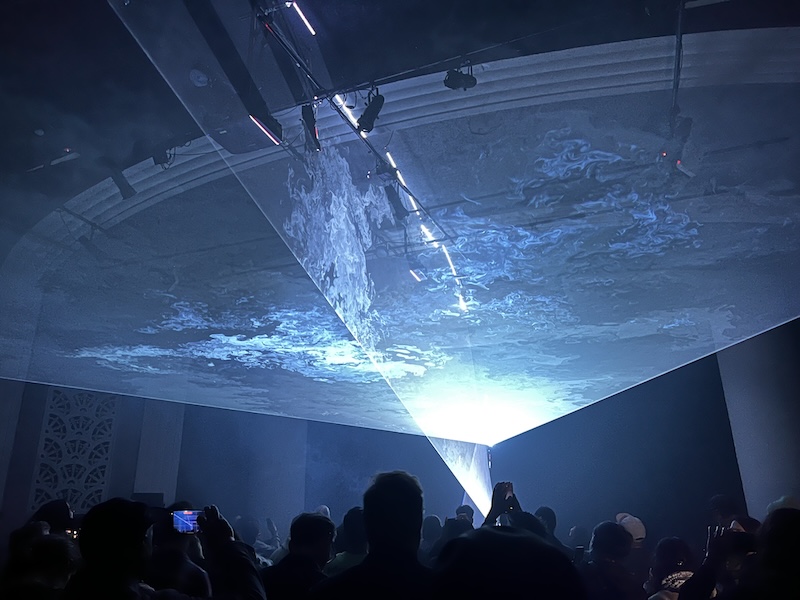
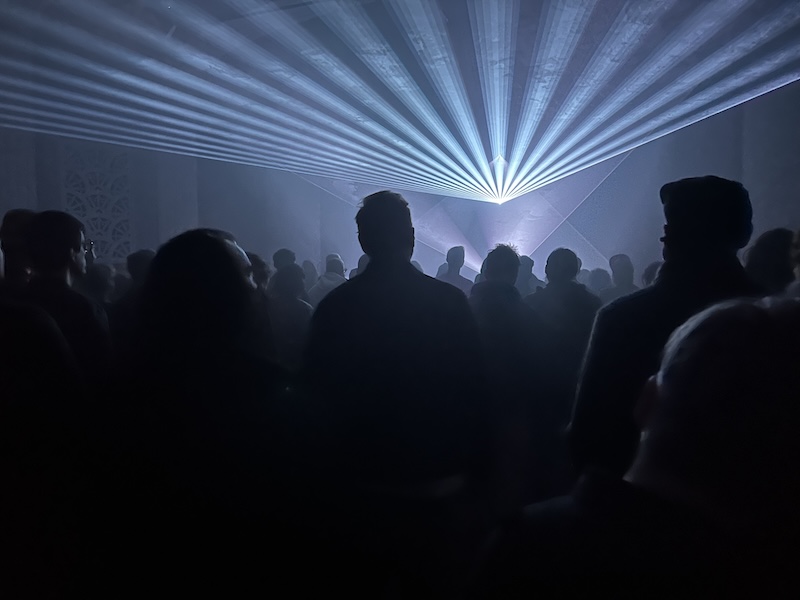
Did I mention* I attended one night of the Recombinant Media Labs festival this month? There were lasers, courtesy of Robin Fox, as part of Triptych, a tribute to Polish audio-visual artist Stanislaus Ostoja-Kotkowski. The accompanying sharp, somehow sparse yet tightly packed techno was not just perfectly aligned with the ever-shifting images; it was so exhilarating that I found myself closing my eyes just to listen, which was sort of exactly the opposite of the concept, but so be it. A great night at Gray Area, courtesy of impresario Naut Humon.
A quick lunchtime experiment. The Music Thing Workshop System (the device here dressed in black) does, indeed, supply sufficient power to run the KOMA Elektronik Field Kit (the device here dressed in white), which means I can easily run the randomly sampled FM radio from the latter into the modulated filter in the former. I imagine someone will recognize some of what is being sampled in realtime, but I certainly can’t. I wrote a story for The Wire magazine a few years ago about musical instruments that contain radios, and during the research phase I learned from KOMA that the radio portion of the Field Kit might someday become a standalone module, and that happened recently (though just the FM reception, not the AM or shortwave). Anyhow, much exploring ahead.