
The title track on Drone Positions by the Gothenburg, Sweden, group Trio Ramberget is a promising taste of the full set, which is due out on September 29. The ensemble consists of three horn players: Gustav Davidsson, trombone; Johanna Ekholm, double bass; and Pelle Westlin, bass clarinet. They are joined on the album by a half dozen guests playing, among other things, piano, guitar, vibraphone, and a tape deck, as well as singing. “Drone Positions” is a luxurious descent into deep deep timbre. The sounds are dense and glottal, rich and vibrant. There is an earthy sibilance throughout, and a steady — if glacial — sense of melodic development. It’s wondrous.
Rewinding Tape Recording
Getting enjoyably lost in the magazine's online archive
In 1965, a magazine publisher named Richard Ekstract — a Brooklyn-born army veteran — loaned a piece of recording equipment to the artist Andy Warhol. The device, a prototype of a Norelco video camera, appealed to Warhol’s ongoing interest in working with moving pictures as a tool of artistic expression. (The Norelco wasn’t Warhol’s only recording device, not by a long shot. He famously was known to frequently carry a tape recorder with him.) The mention of Ekstract’s history (in an obituary by Penelope Green in the New York Times, following his death on August 7) led me to far less productive ends, unless spending a lot of time down a rabbit hole counts as productive.
I went searching — online — for reproductions of some of Ekstract’s magazines, which included a weekly trade journal titled Audio Times and another print publication, Tape Recording. The internet is good at many things and one of them is making ephemera from the past readily available with the click of a button. It’s no surprise that what appears to be roughly half of the run of Tape Recording, from its first issue, in December 1953, through Volume 17. No. 6 in 1970, is available at an old-school website called worldradiohistory.com.
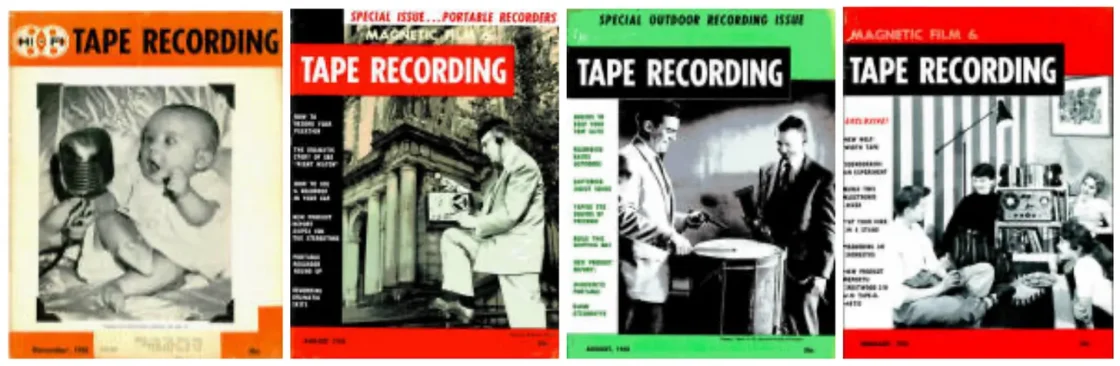
To flip — figuratively — through the PDFs of Tape Recording on the World Radio History website is to watch home audio become part of everyday life as time passes. The first issue promises, on its cover, to help the reader “Add Sound to Your Christmas Movies.” Gear fetishism took a while to come to the fore, as the image on that issue is simply of a smiling young woman. By June 1954, however, we see a different woman on the cover, dressed formally, holding a wired microphone up to the face of her puppy, as if to record its bark.
That 1954 issue, like all of them, is filled with advertisements that promise fidelity in the audio sense, and also to modernize and enrich your home and cultural life:
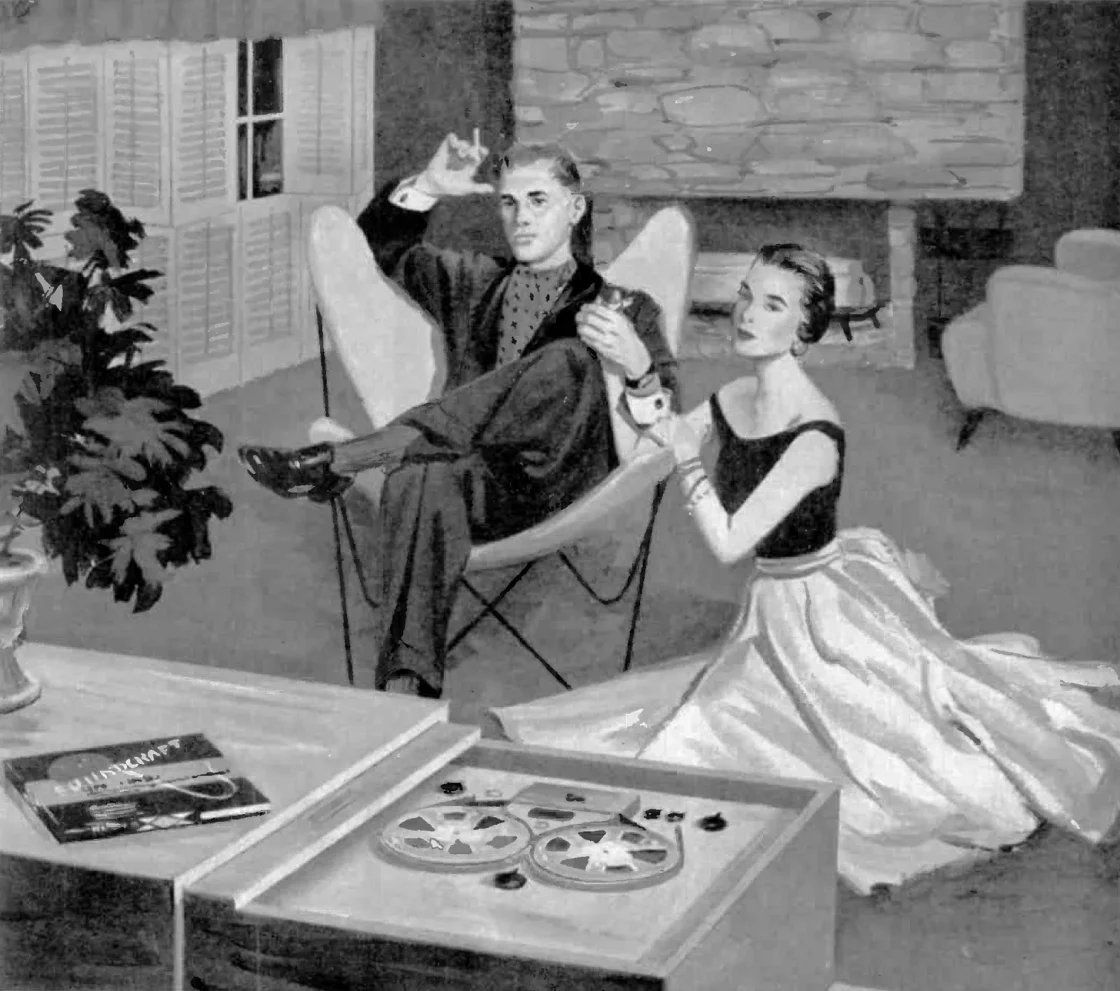
The product taglines vary in their ad copy premises. The “Podium Presence” tone of Ampro Corporation technology lets you “Hear music as the maestro hears it.” Other items are more prosaic in their self-description: the Tandberg, we’re told, “Combines HiFi Quality with Long-Play Advantage of Slow Speeds.”

And each issue has plenty of editorial coverage, from tips on starting a tape collection, to reviews of recent recordings, to an explanation of what “decibels” are. One article recommends that students record themselves performing the dialog from comic books: “each can take one or a handful of parts in domestic dramas from the Dagwood family circle to Terry and the Pirates and Orphan Annie.” The cover to the October 1956 issue shows stuffed animals — one a donkey, the other an elephant — to promote a lead article on how tape recorders are used by news media to cover political conventions. It opens:
The two hottest spots in the world for tape recording last month were Chicago, Illinois, and San Francisco, California, where the nation’s two great political parties convened to name their choices for president and vice president of these United States.
More than a quarter of a million feet of tape — nearly 500 miles of it — rolled through hundreds of recorders, day and night, to bring to the American people a more detailed, dramatic and documented account of democracy in action.
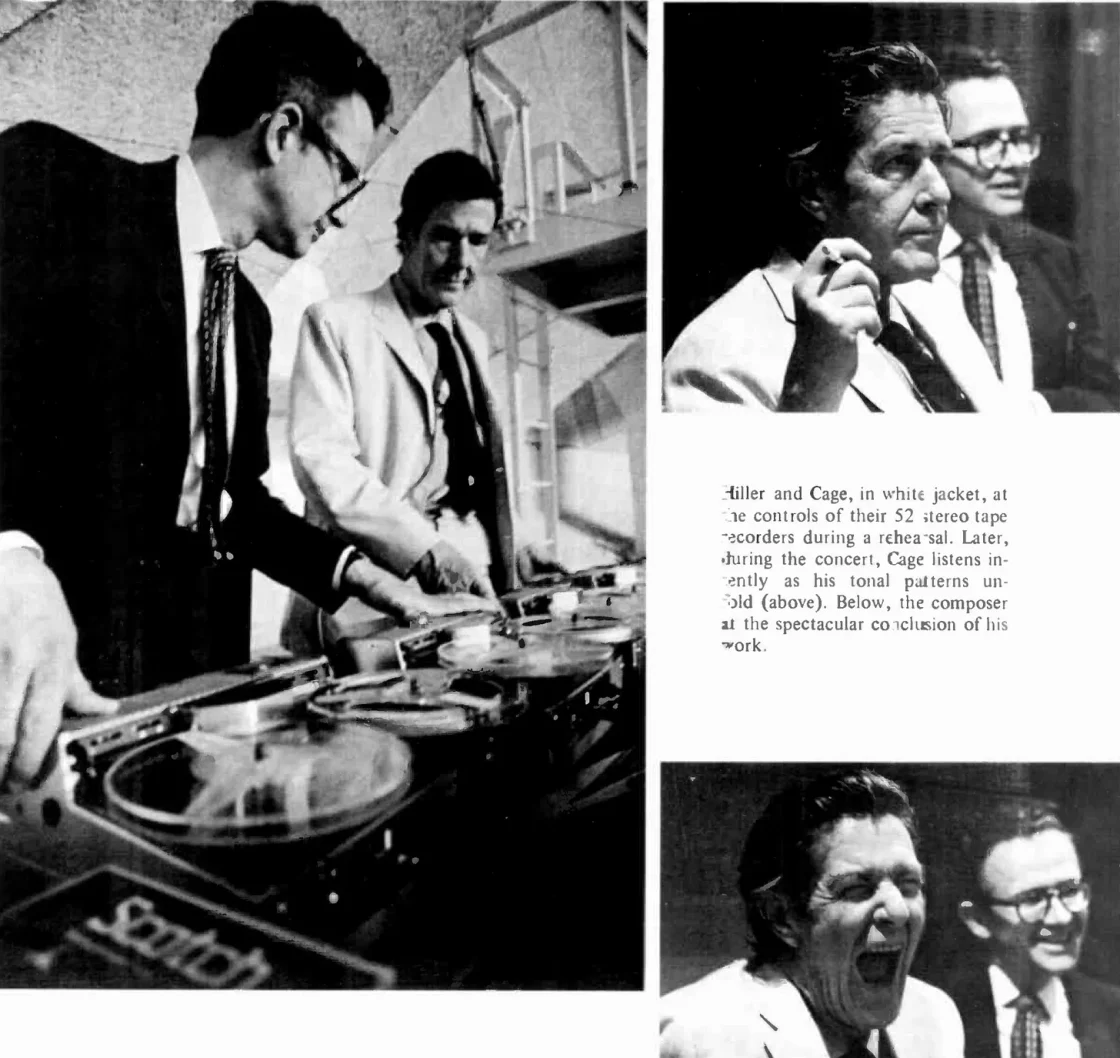
Fast forward to 1970, and the magazine has expanded its scope: The cover is about slideshows, and the first story is about video cameras. Nor is the coverage purely practical. That same issue has a lengthy photo essay about composer John Cage using 52 tape recorders (“concealed backstage and operate by Cage and an associate, Lejaren Hiller”) for HPSCHD, a work for harpsichordist Antoinette Vischer: “Cage recorded Miss Vischer at the keyboard. Then by dubbing from one recorder to another, the composer was able to build up tonal patterns unlike anything live musicians could possibly imitate.” And yet, this being Tape Recording magazine, there’s still the benefit of a technical angle: “By using Scotch 201 low-noise tape, the composer kept tape hiss to a minimum during the repeated dubbings.”
RIP, Charles Gayle (1939-2023)
NYC 1988
It’s good to get these memories down, better at the time, but time has its own way of filtering information, so perhaps collecting and collating long after the fact has a unique value, too. Retrospect. Rashomon. Revisiting. Revising. Something.
In any case, the great jazz saxophonist Charles Gayle died this week, age 84. He was a powerful player, born in upstate New York in 1939. When I moved to Manhattan in 1988, a couple weeks after graduating from college with an English degree and a desire to write about music professionally, I was already used to visiting the Knitting Factory. Soon enough, by the end that year, I’d live a couple blocks away from the Knitting Factory’s Houston Street location, thanks to my then boss at a graphic design firm on Broadway, a few blocks north of Houston, having an empty bed in an alcove in his under-heated Crosby Street loft apartment, a couple blocks south (a stretch you’ve seen if you’ve seen Martin Scorsese’s film After Hours, released three years prior). That was in the autumn, when most of the New York sublets had dried up because their inhabitants had returned from summer in Europe, or at the east end of Long Island, or some other locale.
I’d heard word of this fantastic player, Gayle, who was reportedly homeless. Folks like the late Irving Stone (for whom John Zorn’s eventual club, the Stone, would be named) and his cheerful wife, Stephanie, who always had candy in her purse, would talk about Gayle at Knitting Factory concerts before and between sets. (Since I’m down Memory Lane, I might as well add that there was a guy we’d sometimes sit with who sold tape cassettes in Washington Square Park of Jack Kerouac readings and bootlegged jazz concerts. Maybe he’s still out there. If so, hello.)
One day I saw a little photocopied flyer affixed to a telephone pole. I can’t recall exactly where the show it advertised was, but it was on the east side of town, below 14th and above Houston. When I got to the address, the sun had long since set, and far as I could tell this was an abandoned building, undergoing on-and-off re-construction toward some indecipherable new purpose. Maybe I had the address wrong. Maybe the flyer did. Maybe the concert was canceled. Or had already ended.
The entrance was boarded up, but there was, somehow, a way in — light, sound, promise; dim, muffled, ambiguous. The interior was at first narrow, and everything was covered with dusty drywall. I handed a little cash to someone near the door (or “the door”), and made my way back. If memory serves — a big if — the only illumination was from bright bulbs connected to long, tangled extension cords. Gayle was already playing when I got there. What I had mistaken for normal boisterous New York City street noise was, in fact, his band — a trio, unless I’m mistaken, which is clearly quite possible — bleeding onto the street from the deep, windowless, interior space.
I no doubt later saw Gayle again at the Knitting Factory proper, but that show, at what I took to be a squat, was the first — and clearly most memorable — time I had the pleasure. He was in full force, playing free, with a ferocity that suggested John Coltrane channeling a hurricane, or Eric Dolphy at his least congenial. In many ways, I feel like I’ve been trying, ever since, to recreate — to relive, or in the context of the Disquiet Junto music community, to encourage — that specific concert-going experience the remainder of my life. It’s part of the reason that the graffiti-strewn steps at the Luggage Store Gallery performance space in San Francisco feel so welcoming. It’s part of why when I discovered a (now defunct) club in the Sendagaya neighborhood of Tokyo that was behind a building (and down some stairs) I felt so at home. And it’s part of why whenever I travel I seek out small spots and keep my eyes out for little flyers.
Scratch Pad: Roden, Gayle, Space
From the past week
I do this manually at the end of each week: collating most of the recent little comments I’ve made on social media, which I think of as my public scratch pad. I mostly hang out on Mastodon (at post.lurk.org/@disquiet), and I’m also trying out a few others. And I take weekends off social media.
▰ Losing both Charles Gayle and Steve Roden on the same day hits really hard. So much music reverberates in their respective wakes.
▰ There’s a special irony to electronic musician Steve Roden and free jazz saxophonist Charles Gayle dying on the same day. I’m spending the day after listening back to their music — some of the quietest ever and loudest ever, respectively.
▰ A previously unreleased Autechre album has been discovered by astronomers at the European Southern Observatory in the Chilean Andes. “Its light has taken more than 11 billion years to reach us: we see it as it was when the Universe was just 2.5 billion years old.”

▰ Anyone out there use Obsidian (the note-taking app) and, within it, use “graph view”? I use Obsidian a lot. The “graph view” is neat and all, but I’m not sure I have any sense of what I’d use it for.
Feel free to ignore this message if you have no idea what I’m talking about.
ABAB
An ongoing series cross-posted from instagram.com/dsqt
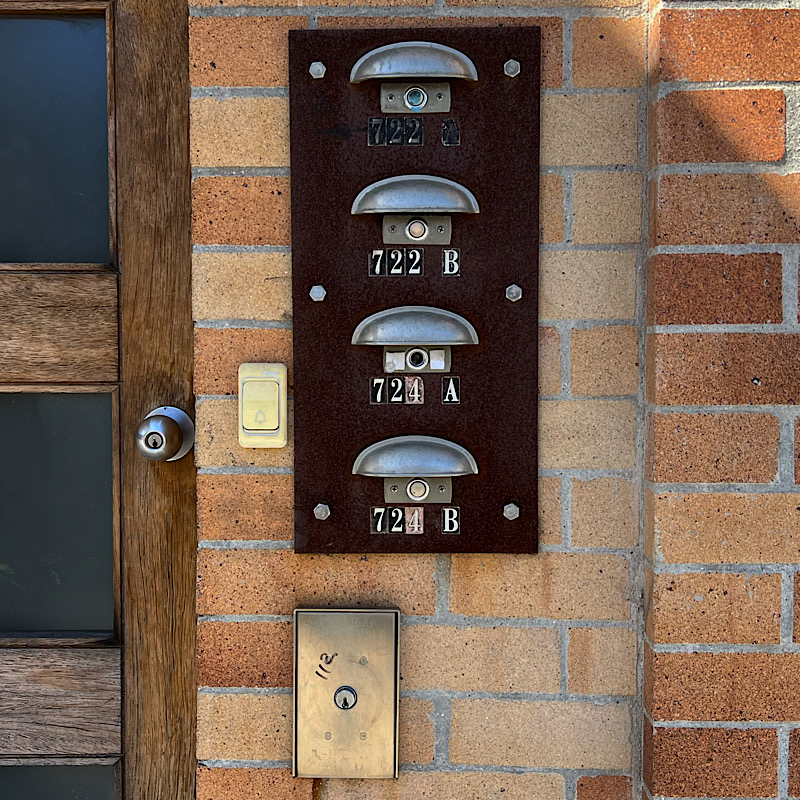
Very much a fan of ABAB form