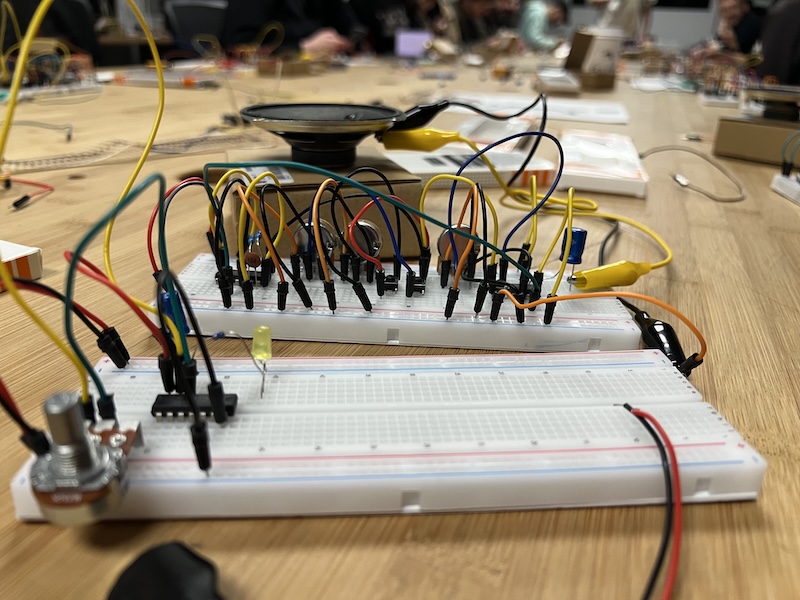
I hope to write about this more in the near future, but in the meanwhile, here’s a photo from a two-day course I took this weekend in electronics breadboarding. On day one, we made the rear item, which is a VCO, or voltage-controlled oscillator, with a three-button keyboard that allowed it to emit a variety of pitches. The breadboard in the foreground is shown when still under construction. It would eventually become an LFO, or low frequency oscillator, that would introduce variation to the VCO. Several other stages followed. I think I only destroyed one integrated circuit and one potentiometer in the process.
I do this manually at the end of each week: collating lightly edited recent comments I’ve made on social media, which I think of as my public scratch pad. I find knowing I’ll revisit my posts to be a positive and mellowing influence on my social media activity. I mostly hang out on Mastodon (at post.lurk.org/@disquiet), and I’m also trying out a few others. And I generally take weekends off social media.
And this is the final Scratch Pad entry of the year, since as of of yesterday afternoon, I’m off social media until the first week of January 2025.
▰ I often take time off social media between (our American) Thanksgiving and the end of the (Gregorian calendar) year. Not sure I did last year, but I think I will this year. Maybe hit pause the end of this week. I can feel the year winding down.
▰ When there’s a new Scottish TV show you want to see, and you turn it on — and the subtitles aren’t available yet, so you cannae watch it
▰ The clothes dryer plays a little jig at the end, like an old-school performance of a Shakespeare play at the Globe
▰ Each Thursday in the Disquiet Junto music community, a new compositional challenge is set before the group’s members, who then have five days to record and upload a track in response to the project instructions.
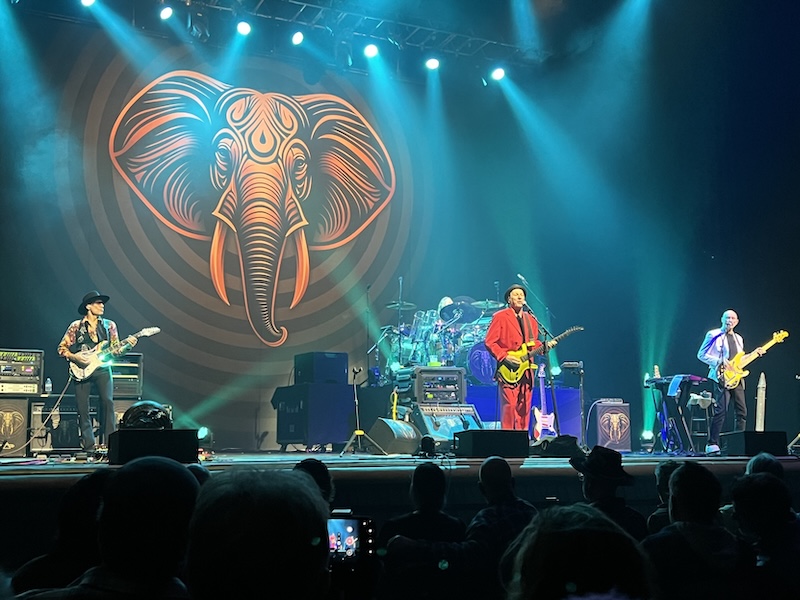
▰ Caught the King Crimson quasi-reunion tour last night, aka the Beat tour, with Adrian Belew and Tony Levin from the classic ‘80s trio of albums, and Steve Vai in Robert Fripp’s seat (except he stood) and Danny Carey in Bill Brufford’s. It was a lot of fun, especially the second set.
▰ I get literally 100s of music releases each week. I download what strikes my interest, or I listen online, or both. The things that stick with me, I write about. It’s just about that simple. And I can’t reply to all the inbound requests for coverage. That time simply doesn’t exist.
For some reviewers, it may feel important to be on top of releases other people are talking about. I think they might be convincible that something is topical, and for that reason worthy of review consideration. That thinking plays about 1% of a role in my decision-making, but that’s just me.
It’s a bit of a mystery to me, how my ears work. I just pay attention to what they tell me.
▰ New microwave. New drones. New beeps.
▰ If you’re on the Disquiet Junto project email announcement list and didn’t receive the one that went out on Thursday, November 21, could you let me know? Thanks.
▰ Me: I’m taking my annual social media break starting November 22 and through the end of the year.
Friend: Do you find that difficult?
Me: What I find difficult is locating all the different ways required to turn off notifications I hadn’t even realized were on.
▰ I think about how hitting the record button when making a field recording focuses my hearing. As I near the juncture when I take a long holiday break from social media, I get a similar sensation — of the world both closing in and opening up. I don’t foresee giving up social media, but these long breaks do remind me of a different way of being present.
“The salamander lives in the fire because it has forgotten how to live any other way.”
I was reading Nick Harkaway’s new novel, Karla’s Choice (which involves George Smiley, the legendary character created by Harkaway’s father, John le Carré), over breakfast earlier this week, and I was thinking about the breaks I take from social media (evenings, weekends, end of the year), and then I arrived perchance at the above sentence. To say it registered with me would be an understatement.
To wit: Right on schedule, as we gear up for Thanksgiving, I’m off social media (Mastodon, Bluesky, Threads, Instagram, Facebook) and for the most part Slacks and Discords and Discourses and so forth through at least January 2, 2025, and likely January 7, the first Tuesday of the new year. I’ve also paused several email discussion groups I’m in (groups.io, for one, makes this quite easy).
I’m fully aware I’ll inevitably end up peeking, because something I’m doing — writing, music-making, coding, gaming, reading — will lead to me identifying that the best available resource is, in fact, a thread in some useful corner of the Miasma (if you made it through Neal Stephenson’s Fall; or Dodge in Hell, you get the reference). I won’t, however, be actively engaging. It’s time to take some time off: digital social life on pause.
I’ll still be typing away here at Disquiet.com (my website turns 28 years old on December 13, 2024) and in my newsletter, and the Disquiet Junto music community (which turns 13 years old on January 2, 2025, the first Thursday of the new year) will continue weekly.
I’l have my social media notifications turned decidedly off throughout. I dream of taking an email break, as well, but I don’t see that happening anytime soon.
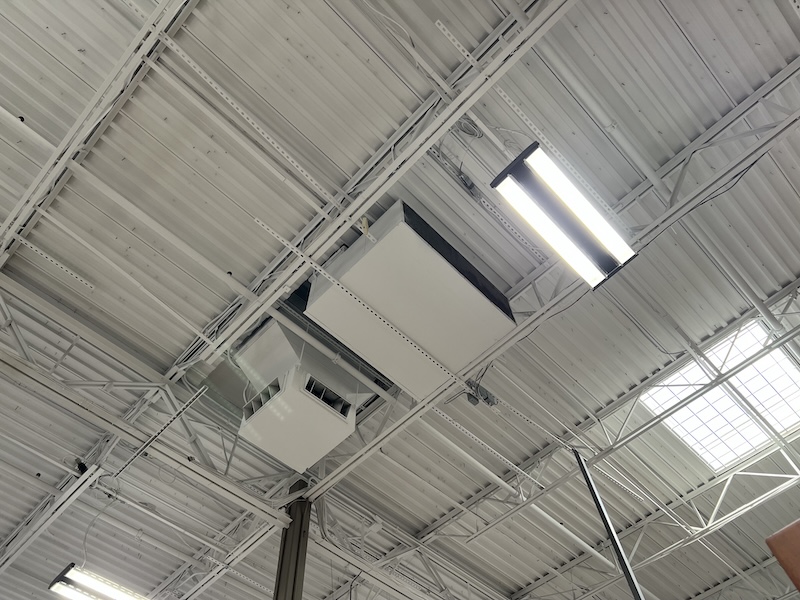
The ceiling at this big box store always makes me feel like I’m on a spaceship in a Star Wars movie. The beeping and overall drone of the room tone support this impression.
The Assignment: Make the quiet part loud, and vice-versa
/ By Marc Weidenbaum
Each Thursday in the Disquiet Junto music community, a new compositional challenge is set before the group’s members, who then have five days to record and upload a track in response to the project instructions.
Membership in the Junto is open: just join and participate. (A SoundCloud account is helpful but not required.) There’s no pressure to do every project. The Junto is weekly so that you know it’s there, every Thursday through Monday, when your time and interest align.
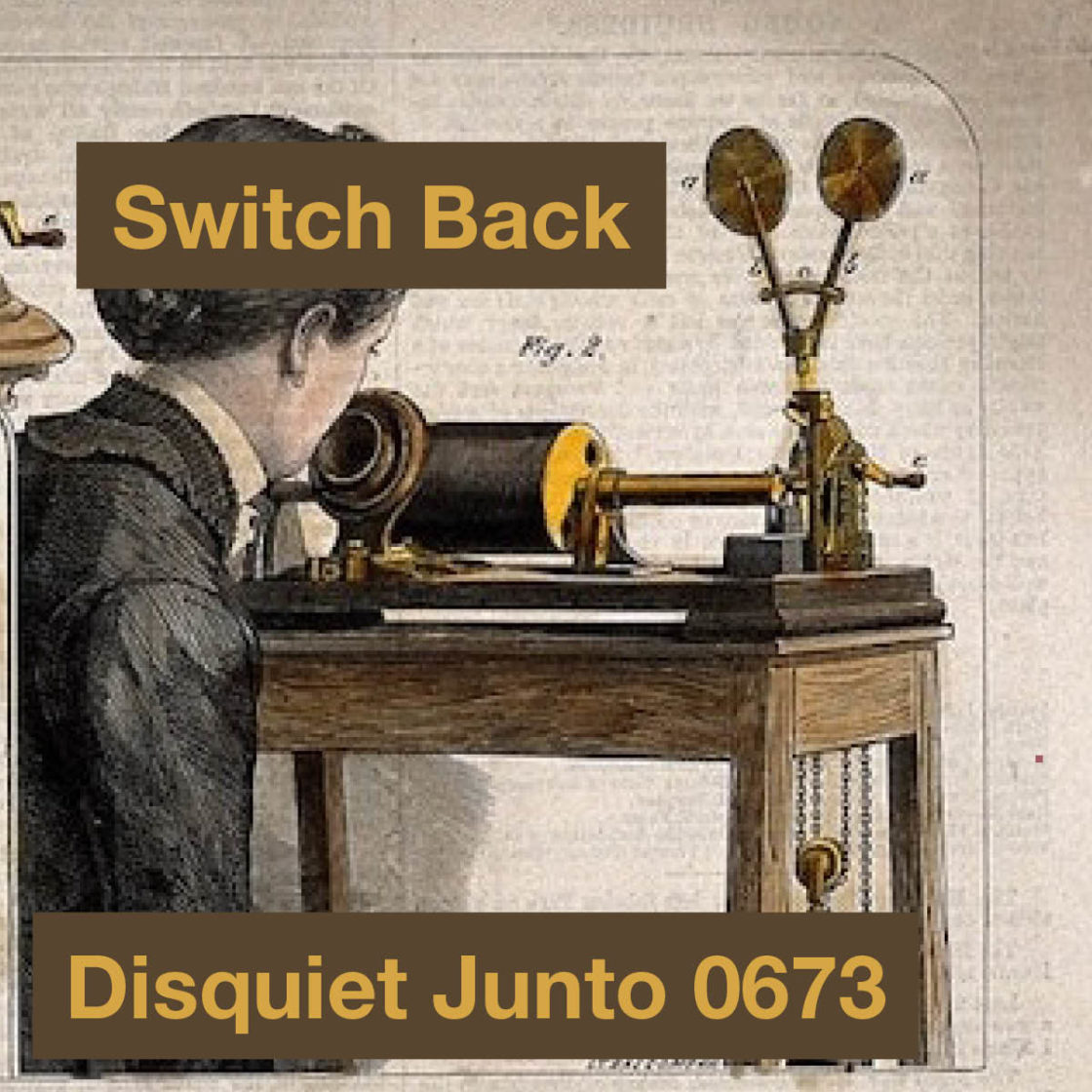
Disquiet Junto Project 0673: Switch Back The Assignment: Make the quiet part loud, and vice-versa.
Just one step this week: Record a piece of music in which you make loud that which is usually quiet and quiet that which is usually loud.
Tasks Upon Completion:
Label: Include “disquiet0673” (no spaces/quotes) in the name of your track.
Upload: Post your track to a public account (SoundCloud preferred but by no means required). It’s best to focus on one track, but if you post more than one, clarify which is the “main” rendition.
License: It’s preferred (but not required) to set your track as downloadable and allowing for attributed remixing (i.e., an attribution Creative Commons license).
Please Include When Posting Your Track:
More on the 673rd weekly Disquiet Junto project, Switch Back — The Assignment: Make the quiet part loud, and vice-versa — at https://disquiet.com/0673/