
The word “stillhet,” I’ve been informed by Google Translate, means “calm” in English. The correlation isn’t much of a surprise, not given its first four letters — or its application as the title to three tracks released by Sweden-based cellist Henrik Meierkord. The collection is a gorgeous exploration of stillness — the cello echoed and layered, as likely to drift in the background as soar overhead, and more to the point to do so simultaneously, along with other iterations, often transformed by gentle electronic effects into something placid, ethereal, and introspective. The set is absolutely beautiful, though like so much stillness, underneath lurks a certain current of gravitas.
Author: Marc Weidenbaum
Replenishment
An ongoing series cross-posted from instagram.com/dsqt
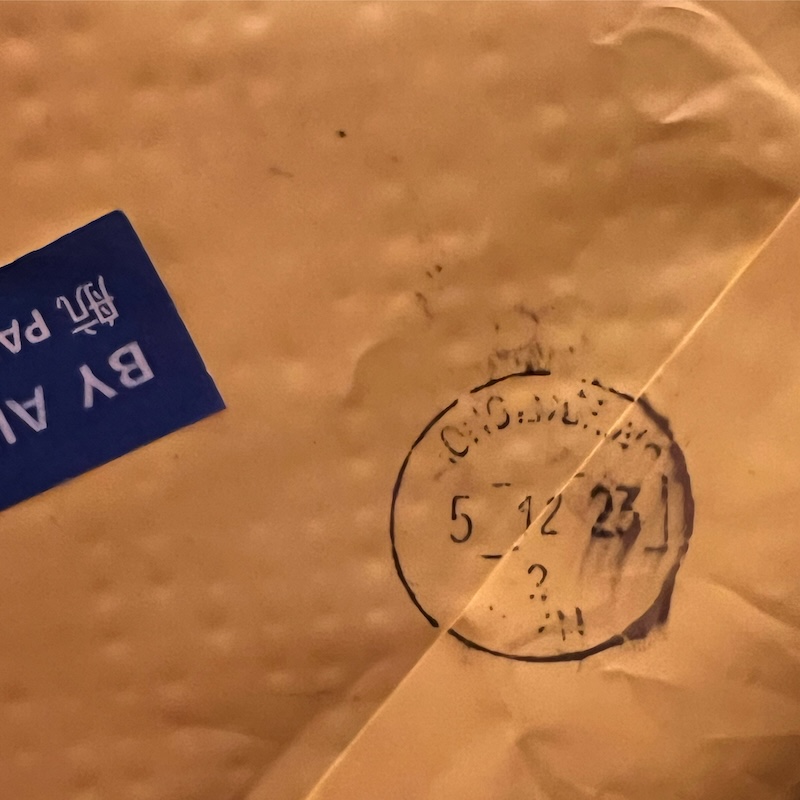
May have received a couple more Buddha Machines
Look Up
An ongoing series cross-posted from instagram.com/dsqt
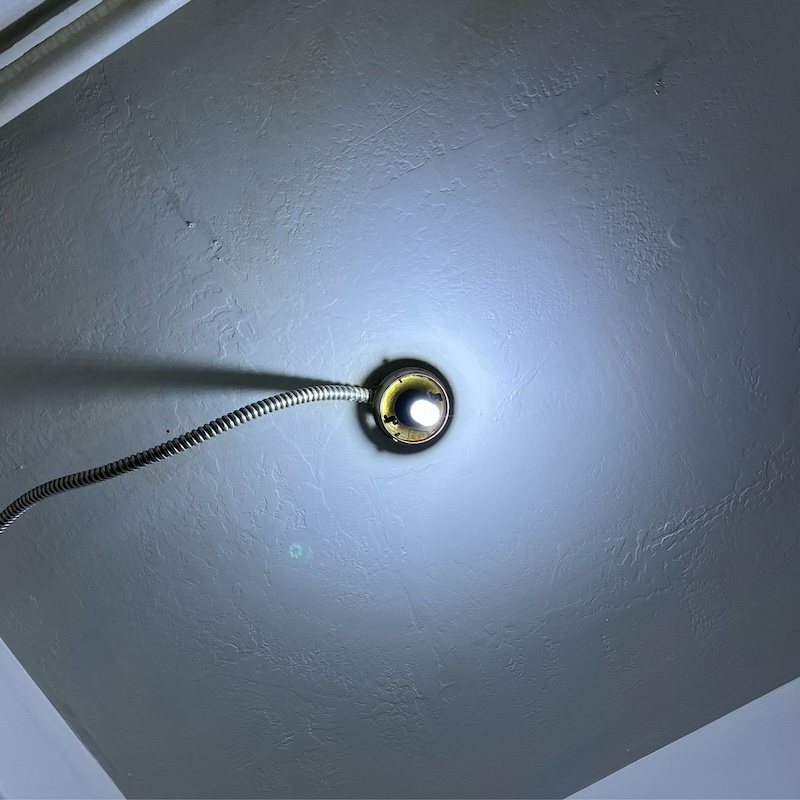
Bathroom ceiling at cafe. Imagine the Lynchian drone.
Scratch Pad: Clapping, Punk, Reading
From the past week
I do this manually at the end of each week: collating (and sometimes lightly editing) most of the recent little comments I’ve made on social media, which I think of as my public scratch pad. Some end up on Disquiet.com earlier, sometimes in expanded form. These days I mostly hang out on Mastodon (at post.lurk.org/@disquiet), and I’m also trying out a few others. I take weekends and evenings off social media.
▰ Afternoon trio for washing machine (spin cycle), passing buses (several), and guitar amplifier buzzing from across the room (but I’m on a video call and can’t get up to turn it off)
▰ A nifty synthesizer-related card deck I’m excited to have played a teeny tiny role in: patchdeck.cards.
▰ It’s Eschers all the way down
▰ Rivalry or unfortunate coincidence?
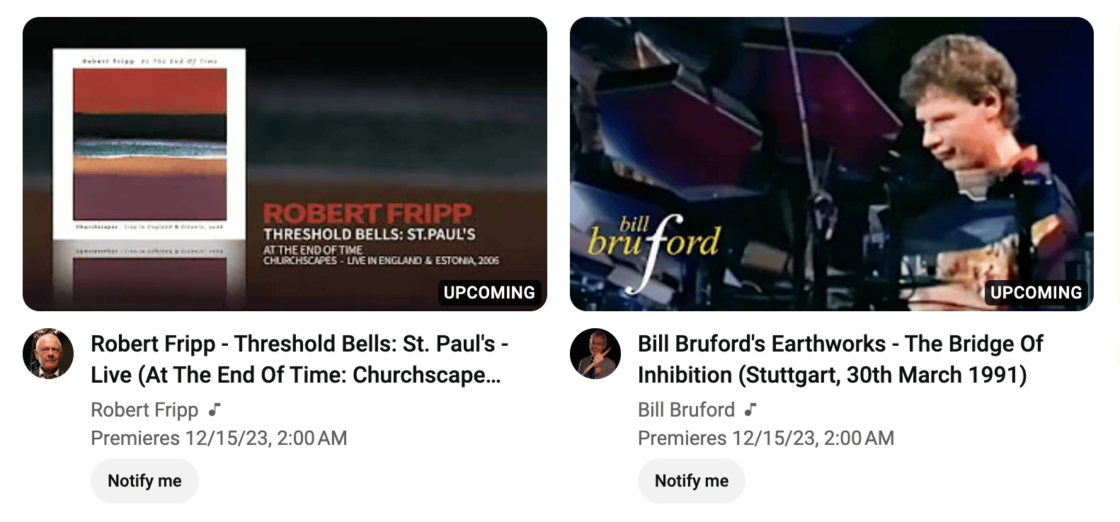
▰ I was listening to some particularly raucous music on YouTube, a live performance, and the Algorithm must have sensed a disturbance in the force, because it followed it up with Brian Eno’s Thursday Afternoon
▰ The rules of concert attendance, in case you just landed on Earth:
Jazz: clap at the end of each solo, even though the band is still playing.
Classical: hold applause until the end of the piece; don’t clap between movements.
Rock: talk through the whole show about how the band used to be better.
▰ The collection of short essays on proto-punk songs from the late 1960s and early 1970s is now up at Hilobrow. I wrote about an Ornette Coleman track. Check out Jonathan Lethem on the Monkees, Lucy Sante on the Count Five, Mike Watt on the Stooges, Stephanie Burt on Pauline Oliveros, Anthony Miller on Brian Eno, Nicholas Rombes on Yoko Ono, and much more.

▰ An example of “enshittification” is how it’s easier and more useful to track in a spreadsheet the books you hope to get around to reading, versus apps like Goodreads and StoryGraph. Hey, add a column for who recommended it. Hey, add colors or ranking to track what is of highest personal interest.
▰ After this many years, my guitar teacher knows me well, which means if my chord picking veers too close to “Dust in the Wind” he guides me back from the abyss
▰ I’ve read 25 novels so far this year, the latest being Richard Powers’ The Overstory. I think, with the holidays underway, I may get a few more in. At the start of 2023, I thought I’d double that to 50 but I read a lot of non-fiction, and I spent a lot of time on Duolingo German and guitar lessons.
Q: Marc, don’t you also use synthesizers?
A: Yeah, largely as an overly complex guitar pedal.
iOS Journal App & Sound
A soft opening with potential
A few thoughts on the iOS Journal app that debuted with the latest update of the software, 17.2:
1: Limited Tool Kit: It’s nice to see a sound recording option in there right from day one (so to speak). That said, it will be nicer still when there are helpful additional audio tools, such as editing, noise reduction, effects, maybe even music, and so forth as time proceeds.

2: Speech-to-Text Next: Unless I’m doing something very wrong, the existing audio notes in the Journal app don’t even automatically provide transcription, even though that is built elsewhere into iOS.

3: Blog Platform: As a blog advocate, I think it’d be cool if at some point one could publish some of one’s journaling to the public — not all of it, but have the option to post material online.
4: Social Opportunity: I could easily see this Journal tool, as well, becoming the foundation of an Apple social network, one that is the opposite of Threads (from Meta / Facebook) in terms of how it initially engages people — rather than blankly drawing them over from another platform (Instagram, as Threads does), it builds up from personal activity.
5: Sound Diagnosis: Right now, the main bell/whistle of the Journal app is how it nudges users to scribble down bits of their lives. This approach seems closer to Apple’s health and fitness operations than it does to any other existing Apple products. The Journal ping to write something is akin to the reminder to get your steps in or to take a deep breath. The existence of these prompts opens the door to a broader range of meditative cues, in particular — for my interests — ones that encourage the user to think about what they hear, to record sound, and to do things with sound.
6: Leaving Files Behind: For the time being, I’m just toying with Apple’s Journal app. I’m a longtime journaler, meaning I already have an idiosyncratic system that works well for me: one markdown file for each month, each day beginning as a preset list of fields (e.g., sleep, health, family, music, reading, TV, etc.) that I fill in (or erase at the day’s end if the given field ends up with nothing applicable in it). It would take something special for me to ditch my habit — all the more ingrained due to it having evolved over time — for an app, but you never know.
If you try Journal, please share your experience. Thanks.