
A quick lunchtime experiment. The Music Thing Workshop System (the device here dressed in black) does, indeed, supply sufficient power to run the KOMA Elektronik Field Kit (the device here dressed in white), which means I can easily run the randomly sampled FM radio from the latter into the modulated filter in the former. I imagine someone will recognize some of what is being sampled in realtime, but I certainly can’t. I wrote a story for The Wire magazine a few years ago about musical instruments that contain radios, and during the research phase I learned from KOMA that the radio portion of the Field Kit might someday become a standalone module, and that happened recently (though just the FM reception, not the AM or shortwave). Anyhow, much exploring ahead.
Category: studio journal
Video, audio, patch notes
Music Thing Workshop (First Patch)
Baby steps
Oh, this is fun. Very happy. We had a tornado scare early Saturday morning in San Francisco, so it’s been a long and confusing day. Further south, near Santa Cruz, cars were flipped. Up here, it’s been mostly a matter of downed trees, a fence in our backyard, as well as nearby power and phone lines. Speaking of cables, I’m safe at home playing with LFO beats on my newly arrived Music Thing Workshop System. The batch that’s going through the filter is being layered on the Ditto looper, which is helpfully powered by the Workshop itself, so I only need to plug in the Workshop, which works great with my laptop’s USB-C charger. Humorously, I didn’t understand at first where the on/off switch was. That’s what sleep deprivation and weather shock will do to the brain, apparently. So much more to explore here, most notably that “Computer” module on the left side of the contraption.
“Drop In, Tune Up, All Out”
Another evening out at the symphony, another excellent orchestral tune-up. I love how this sort of pre-concert moment can itself function like a composition, the murmuring crowd serving as an ersatz chorus.
Photogenic
I daydream of wires
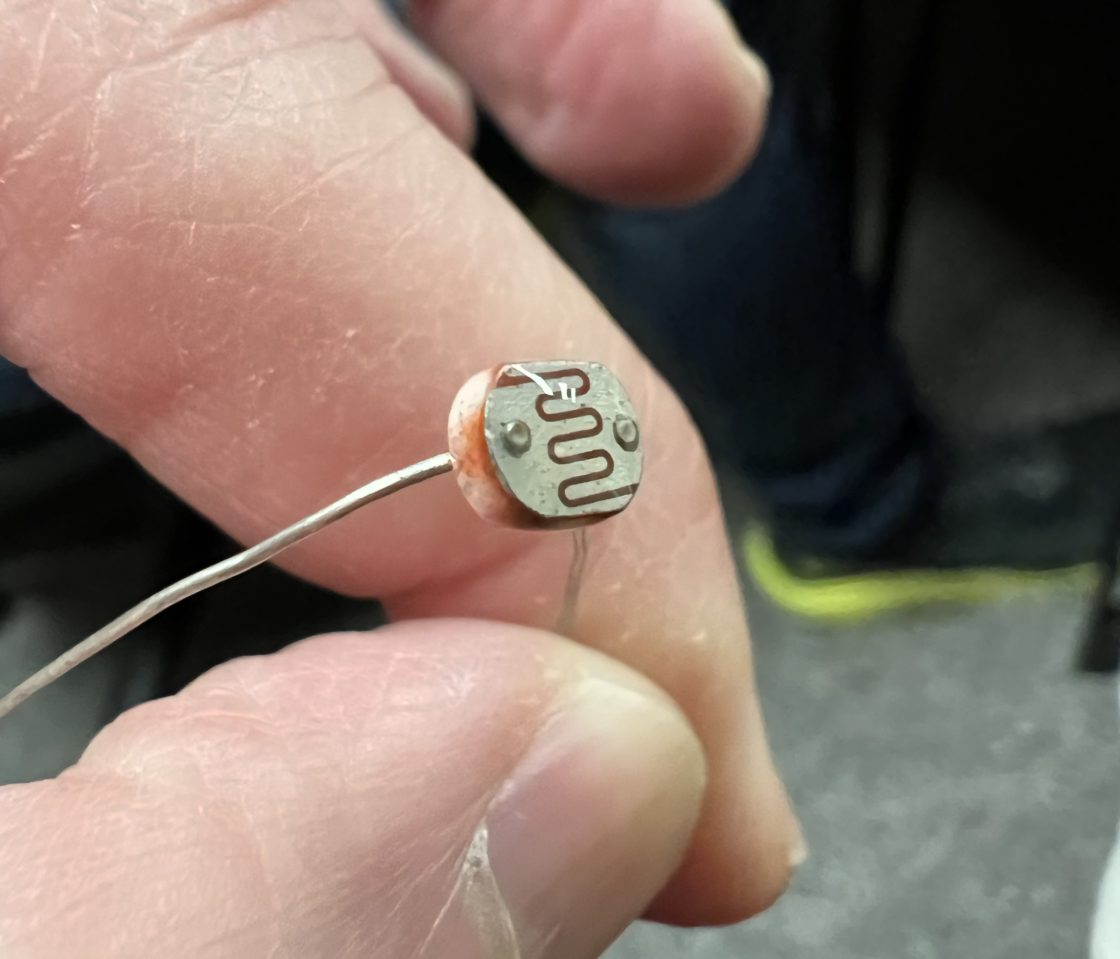
This photosensitive bit of electronics is my favorite item from this past weekend’s excursion into breadboarding. And yes, I should moisturize my hands more often.
Breaking Bread
At Gray Area in San Francisco
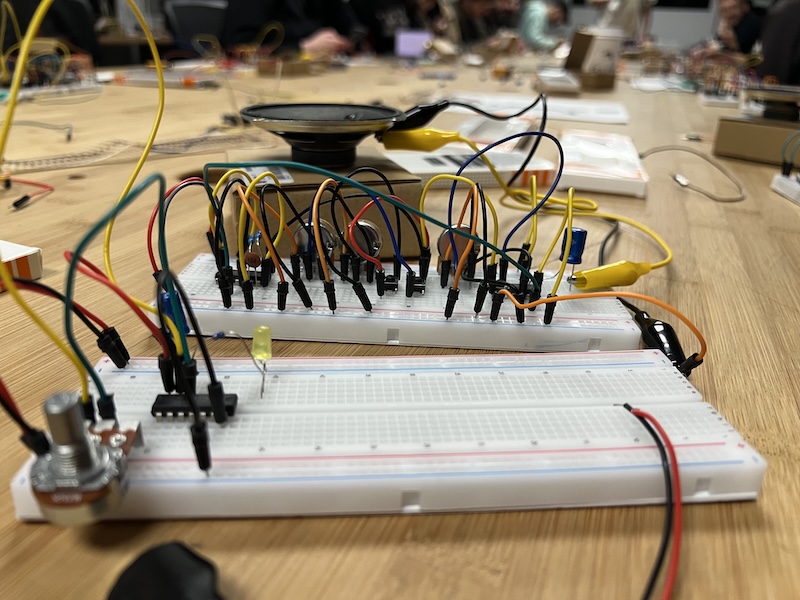
I hope to write about this more in the near future, but in the meanwhile, here’s a photo from a two-day course I took this weekend in electronics breadboarding. On day one, we made the rear item, which is a VCO, or voltage-controlled oscillator, with a three-button keyboard that allowed it to emit a variety of pitches. The breadboard in the foreground is shown when still under construction. It would eventually become an LFO, or low frequency oscillator, that would introduce variation to the VCO. Several other stages followed. I think I only destroyed one integrated circuit and one potentiometer in the process.