Image of the Week: Fortescue and LaBianca’s Horn

The following image is a photograph of “Sounding,” a sculpture that is the result of a collaboration between Donald Fortescue (who heads the furniture design program at the California College of the Arts) and artist Lawrence LaBianca.

It’s part of the “Bay Area Now 5” exhibit, currently running through November 16 at the Yerba Buena Center for the Arts. The image accompanied an October 1 article by Zahid Sardar in the San Francisco Chronicle (sfgate.com); the piece stated, “Wire, pebbles and even live sea organisms are employed to make this nostalgic cabriolet-legged, gramophone-like polycarbonate whaling horn ‘speak’ to us.” More information on the exhibit at ban5.org and ybca.org.

Quote of the Week: Matmos, Post-Experimentation

From an excellent interview, dated October 1, by Molly Sheridan with the duo Matmos, aka M.C. Schmidt and Drew Daniel:

MCS: What we do is not experimental music in the sense of a lot of people’s work where it’s, “We did the experiment; these are the results.” We want to make something that’s listenable music.

DD: And to us that’s pop music. Pop music and noise texture might be the formula for what we’re doing, in that we don’t have any squeamishness about atonality and obnoxious, disgusting, or unpleasant texture, but we have the kind of ears that like bass lines and snare parts and high hat rhythms and the sort of architecture of pop. I want both.

Read the full piece at newmusicbox.org.

Static-on-Speed MP3 from Hourglass Drops

It’s rare for static buzzing to get as downright rollicking as “Adrenaline State,” a recent single by Hourglass Drops (aka N. Pavlov) on the tibprod.com netlabel. The track has all the hallmarks of white-noise music-making: the between-channels fuzziness, the hints of radio-interference chatter, and that crackling pre-digital warmth that practically smells of frayed wiring. But it’s also got momentum. None of that call-signal Zen for Hourglass Drops; this is static on speed, a static composed of whirring cycles of sound that carry you along with them (MP3). It’s balanced by the more sedate and vaguely tuneful “Sleep State,” which has an almost digeridoo-like quality (MP3). More on the musician at hourglassdrops.com.

40-Year-Old Trevor Wishart Archival MP3

The British label Paradigm has re-released Machine, Trevor Wishart‘s almost 40-year-old mix of automation and spoken texts. The label’s website, stalk.net/paradigm, has posted a three-minute excerpt of one of the album’s five pieces, in which the ratatatat of gears and the ringing of bells mix with vocals clips and a torrent of water. It’s a collage wonder (MP3), one in which the (then) newness of the technical operations inherent in the sound editing is self-evident in the free-flowing, stream-of-consciousness nature of the goings-on. Wishart locates an eerie parallel between the routine of mechanization and the monotony of human speech, placing the recording on a continuum between, say, Charlie Chaplin and Pink Floyd. More on Wishart (born 1946) at his website, trevorwishart.co.uk.
Anton’s Tinkling MP3s

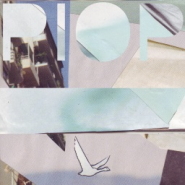
The Piop EP credited to Anton on the bumpfoot.net netlabel is comprised of the sort of nursery-rhyme electronic pop melodies that bring to mind the less aggressive work by Aphex Twin. Of the set’s seven tracks, especially promising are the second (“Sinetune I,” MP3), its lead tune plucked out as if on a cellphone keypad, each note rendered in a slightly sour envelope, and the fourth (“Betchgard Morning,” MP3), which is enlivened by twinkling little trinkets that seem almost random in their patternlessness. Get the full set at bumpfoot.net.

Bumpfoot’s two syllables apparently distinguish its two sonic realms. According to the site’s “about” page, “bump” is for “Techno, House,” and “foot” is for “Ambient, IDM, Electro Pops, etc.” By those guidelines, Anton’s Piop fits squarely in the “foot” category.