
Looking forward to some visual feedback in my synthesizer efforts
Looking forward to some visual feedback in my synthesizer efforts
This first appeared in the March 21, 2024, issue of the This Week in Sound email newsletter, also the newsletter’s 22nd Listening Post.
Just over a year into the pandemic, Kelly Moran marked most electronic music fans’ favorite annual holiday, April 14, in honor of the Aphex Twin song “Avril 14th,” with the requisite solo piano cover. She recorded her video with a camera that she set to look directly down on her keyboard, and at first all we see is the piano — even after the music starts playing. Magically, the keys move without anyone touching them, and then her hands — slender, sensual, nails gleaming colorfully — appear alongside the ghost accompaniment and flesh out her own version of the song.
It turns out that she was performing on a Disklavier, on loan from Yamaha, the same instrument on which Aphex Twin reportedly recorded the original version. “Avril 14th” appeared on his 2001 album, Drukqs; Moran’s cover marked the 20th anniversary.
More time has passed. In the years since that simple (if deceptively so) Aphex Twin experiment of hers, Moran has come to wield the Disklavier not just expertly but ferociously. She has pushed its feature set further. The instrument allows her to record parts and play along with them, and record that and play along with that. Her deep pandemic studies have yielded impossible, post-human music that is truly hyperactive, with chords that no human could accomplish on their lonesome in cadences no human could play for a prolonged period. The works are crystalline paradoxes at warp speed. It’s absolutely perfect that “Butterfly Phase,” the lead video for her forthcoming record, Moves in the Field (due out March 29), involves figure skating, because aesthetically that’s what Moran’s current music is: calisthenic, showy, muscular, and deeply competitive. (Regarding that last point, the title comes from the term in skating for the tests of a competitor’s abilities.)
Both “Butterfly Phase” and another track, “Sodalis (II),” are available as previews in advance of the full album’s release:
I do this manually at the end of each week: collating (and sometimes lightly editing) most of the recent little comments I’ve made on social media, which I think of as my public scratch pad. Some end up on Disquiet.com earlier, sometimes in expanded form. These days I mostly hang out on Mastodon (at post.lurk.org/@disquiet), and I’m also trying out a few others. I take weekends and evenings off social media.
▰ Having a newsletter about a specific topic is a virtuous circle. I process material that interests me in a way I wouldn’t otherwise. In turn the audience drawn to that material sends me additional items I might not have otherwise known about. Then I share some of those as well. Round and round.
Several times this week people sent me:
Now I have another issue of the newsletter to prepare.
▰ When you share an album for review consideration, here is a mind-blowing and underutilized concept: put your bio and liner notes inside the ZIP archive along with the music and the album cover.
▰ Acting on my urge to say: social media is fine but if you’ve got a focus for your interests, do yourself a favor and start a blog, even if all you do is collect your social media posts there and sometimes expand on one or another of ’em. Blogs are like ecological sentinels, the bees of the internet.
▰ “If you would like to hold without music, please press star.”
*
▰ This is pretty great. Nonesuch has nicked the Criterion Closet idea, and on top of showing the musicians pull their favorites, it also has playlists with examples of the audio. Nicely done. Four so far: pianist Tigran Hamasyan, multi-instrumentalist/singer Vagabon, pianist Timo Andres, and guitarist Mary Halvorson.
▰ Folks popping up in the Google Drive spreadsheet for the current, three-part sequence of Disquiet Junto projects, looking for tracks to turn from solos into duets, which may later become trios

▰ I love New Scientist’s take on the advice column
▰ For the moment I’m going to assume that the seeming increase in quantity of music releases (gauged by my overstuffed email inbox) and the rise of generative AI tools is a coincidence (or even me seeing patterns that aren’t there), but the parallel is striking
▰ Happy to report I was considerably less brain-dead when it came to 7th chords in guitar class this week. Bonus for the moment when my teacher played a sequence of notes and I, instinctively, played it back — Close Encounters of the Third Kind style — as a form of communicating my semi-sentience.
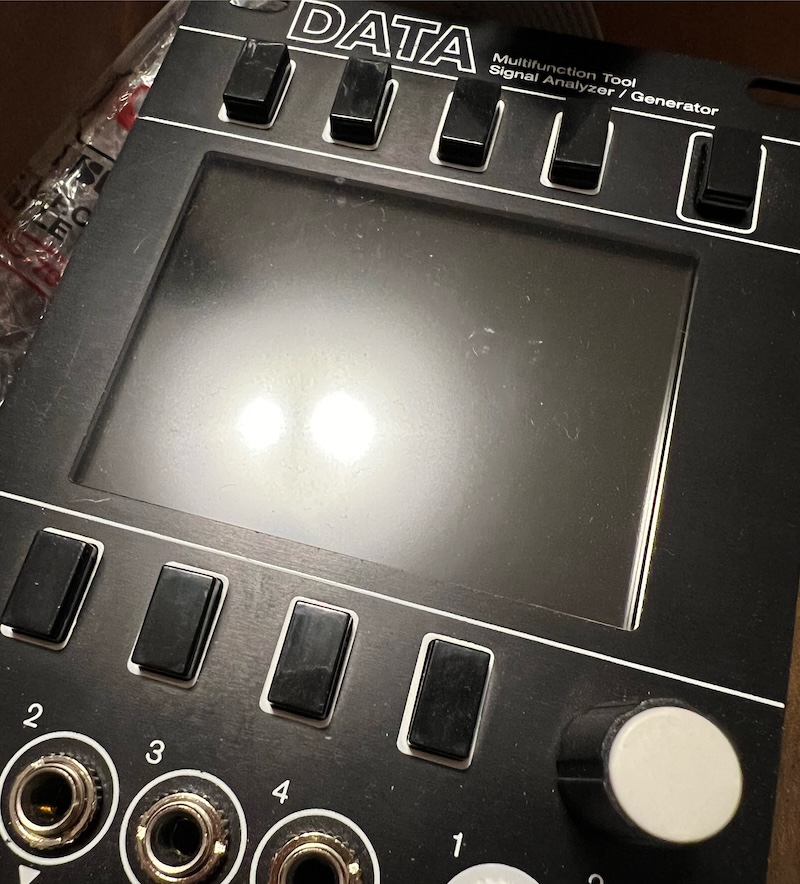
▰ Finding myself following the twisting paths of cables in modular synth videos to confirm they’re real and not, like the gloopy fingers common to AI-generated imagery, a tell of hallucinogenic forgery
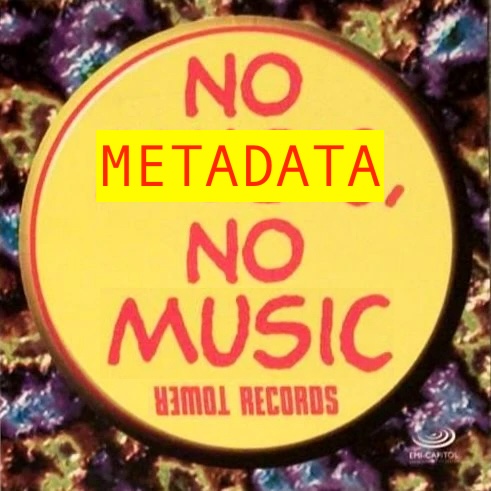
▰ No Metadata, No Music — take it from this former Tower Records employee
This appeared in the March 21, 2024, issue of the This Week in Sound email newsletter, also the newsletter’s 22nd Listening Post.
Nils Frahm has become one of today’s great one-man bands. He travels the world with enough equipment to fill a professional recording studio, hauls it from city to city, venue to venue, sets up shop for a day or two, and then noodles live to the adoration of fans who marvel at his ambidexterity, his technological fluency, and his theatricality. Brian Eno once suggested that the studio was itself an instrument, and while what Frahm does these days with that concept is in many ways the opposite of what Eno meant, it still works.
It’s also, by all appearances, exhausting. Hence Frahm’s recent album, Day (it came out March 1), on which he retreats from overkill, returning to the simple solo acoustic piano compositions that made him something of an emo ambient heartthrob in the first place.
https://nilsfrahm.bandcamp.com/album/day
The close microphones capture his playing in all its evocative interiority: the mechanisms of the keys, the ins and outs of his breathing, and creaks in the floorboards. At one point you hear a dog barking, echoing down a hallway. The album feels like a series of wordless entries in a wordless diary from a stint in tech-addiction rehab. The intimacy is kind of intoxicating in its own way, though you do have to sort out if these are compositions or one-time noodly improvisations — and whether that matters, given how great it is to listen to.
This appeared in the March 21, 2024, issue of the This Week in Sound email newsletter, also the newsletter’s 22nd Listening Post.
I don’t talk about the Disquiet Junto too often in my This Week in Sound emails, but each Tuesday I do list the latest project. Today I want to mention the current project while it’s just getting underway.
For background, the Disquiet Junto is a music community I initiated back in January 2012. Each Thursday I send out a music composition creative prompt, and then participants — as many as 70 and roughly as few as 20 — record tracks responding to those instructions. When describing the Junto, I usually take a moment to paraphrase music educator and longtime Junto participant Ethan Hein, who said that the Junto is a situation where I review records that don’t exist, and then internet strangers go ahead and record them.
One of my favorite Junto experiences each year is a sequence of projects that unfold over the course of three weeks. The first week, everyone records a solo piece. The second week, musicians take the resulting solo works, pan them to the left speaker, and then record their own addition, which they pan to the right, resulting in a duet with a lot of space in between. The key thing is that, all along, these musicians know that they’re working — collaboratively and asynchronously, very much in the spirit of the Creative Commons, as I discussed as a guest on a recent episode of the Artists & Hackers podcast — toward eventual trios. The first musician leaves room for two others, and the second for an imminent third. Come the final week, which began today, March 21, participants listen to the duets from the previous week and begin to turn them into trios. This time around, they have nearly 65 to choose from, built on nearly 50 solos from the first week.
Part of what I love about these projects is the multiverse-like listening experience. As the second week proceeded, when the duets were being recorded, you could hear the same initial track in numerous settings. Here, for example, are four different duets from last week’s project, all based on a solo piece by encym:
There’s also a fifth version of the encym original, by the Australian musician bassling, on YouTube rather than SoundCloud:
Right now, musicians are turning many of those duets into trios. Already two trios have resulted from duets based on encym’s original piece:
As the three weeks proceed, these projects become a sort of listening garden of forking paths. You can listen along as the trios surface in the discussion forum at llllllll.co. The project ends on Monday night, March 25, just before midnight.