I do this manually each Saturday, usually in the morning over coffee: collating most of the little comments I’ve made on social media, which I think of as my public scratch pad, during the preceding week. These days that mostly means post.lurk.org (Mastodon) and disquiet.bsky.social (if you’re on Bluesky, which remains behind a beta firewall at the moment).
▰ There should be special screenings of Spider-Man: Across the Spider-Verse that play at half speed. That way you can focus on how beautiful it is. I may watch it all over again, this time with noise-cancelling headphones blasting Nils Frahm, Brian Eno, or Hania Rani so I can just watch it all unfold.
▰ In episode “Let Bartlet Be Bartlet” of The West Wing (first season, episode 19), Donna asks Josh why everyone in the White House is so down, and my first thought is, “It’s the score.”
▰ Find someone who remixes your single like these voicemails I keep getting from someone I don’t know who leaves rambling messages with garbled music playing in the background.
▰ Shazam couldn’t recognize the drones playing during the live broadcast of sunrise at Stonehenge
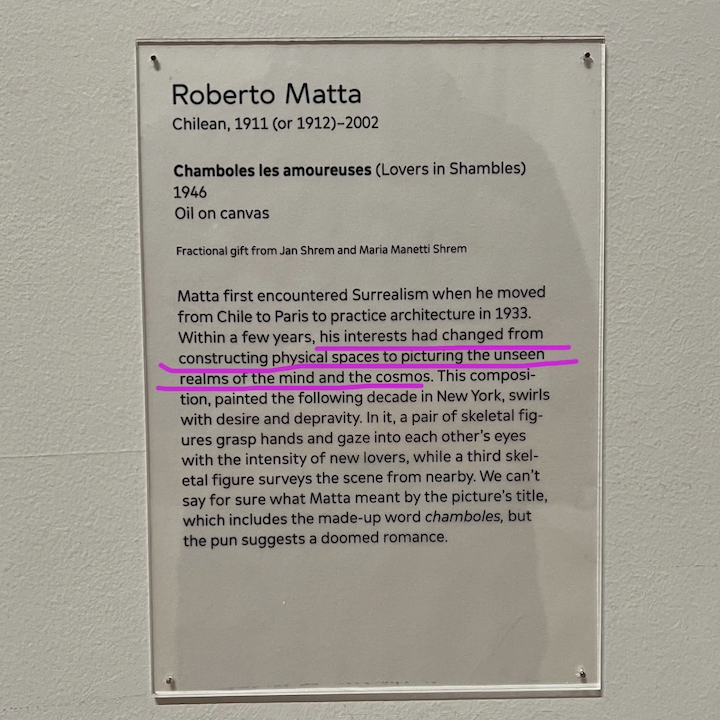
▰ And who among us hasn’t experienced this change from time to time?
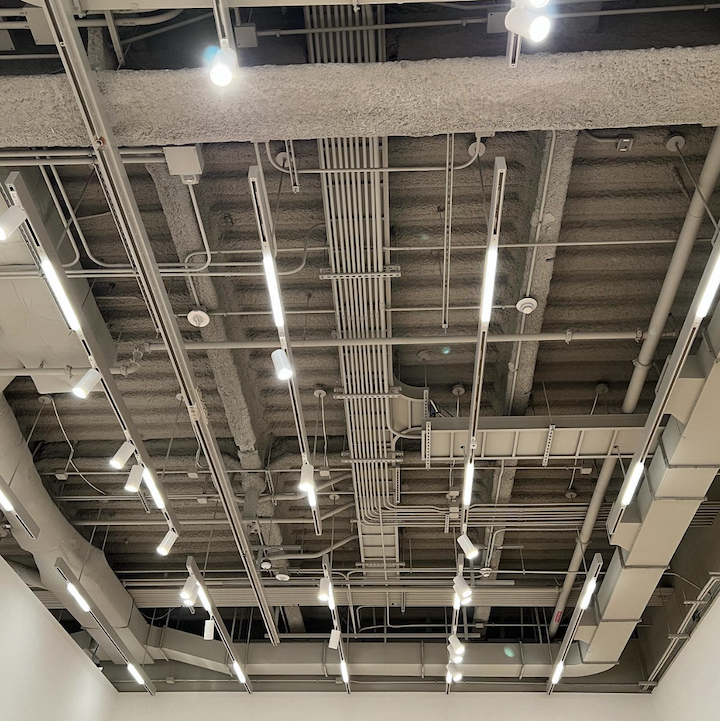
▰ The ceiling at SFMOMA isn’t too shabby, either.
▰ It’s as if the Slayer logo had been designed for this stage of its eventual deterioration.
▰ The immersion blender has taken EVP (electronic voice phenomenon) to new heights. Sounds like it’s singing death metal.
▰ Have a great weekend. Listen to your favorite album with the tracks out of order. Write down what you hear when you first wake up in the morning. Look for mentions of listening in the book you’re currently reading.
This recording was made in my backyard while I was deep asleep. At precisely 1am on June 22, 2023, the device, called the AudioMoth, turned on and at precisely 6am it turned off. In between those start and stop points, the AudioMoth recorded 55 seconds followed by a pause of 5 seconds, and then it repeated the process. This automated scenario filled, over the course of the night, the AudioMoth’s tiny, removable SD card with 301 files: one for each of the recordings (that’s 5 hours times 60 instances of 55-second audio snapshots), plus a single text file listing details of the session. The text file noted the device’s settings, which are configurable via my laptop thanks to a free piece of software. There’s also a free piece of software to set the AudioMoth’s internal clock, and another one to upload the firmware that runs the device. And there’s a free phone app (for iOS and Android) that serves one purpose: it plays a chime that syncs the AudioMoth’s clock. Which is to say, the device’s microphone isn’t just listening to record; it is listening for instructions.
For the June 22 session, my device’s maiden voyage (to the extent that being affixed to an umbrella pole in an urban backyard can be termed a voyage), it just used all the default settings. For the June 23 session, I made one change: I enabled the AudioMoth to automatically place each individual day’s recordings into a separate folder. Nothing has quite made me excited to get up in the morning like my AudioMoth recorder. I find myself unable to wait to go outside to retrieve it and hear what wonders it has recorded: birds, insects, passing critters, automobiles, planes — and all the better, the orchestrated combination thereof. I’m going to try to hold off until Monday (three mornings from today), now that the auto-foldering of daily recordings will save me a lot of data housekeeping.
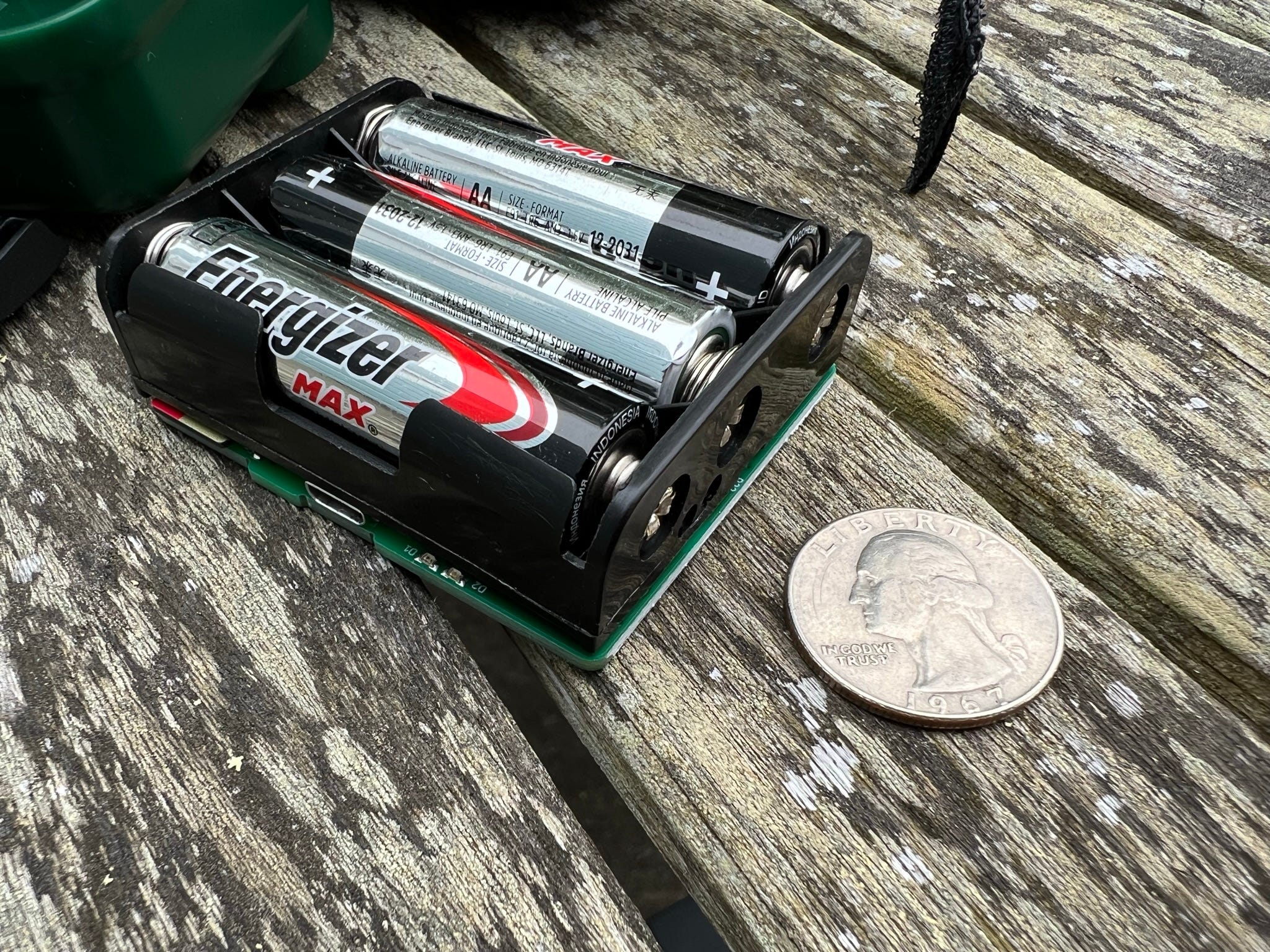
Dealing with all those files was one of two concerns I had after I started using AudioMoth. The other was knowing how the alkaline batteries were holding up. It turns out that when you switch the thing off, one of its two lights blink. If there are 4 blinks, the batteries are full — then it goes 3 blinks, 2 blinks, or 1 blink as the batteries drain. The fifth alert (lowest in terms of battery strength, highest in terms of expressed urgency) is 10 rapid blinks, so you can’t miss it. This solution is so simple, so clear. It exemplifies the efficient brand of ingenuity embodied by the AudioMoth.
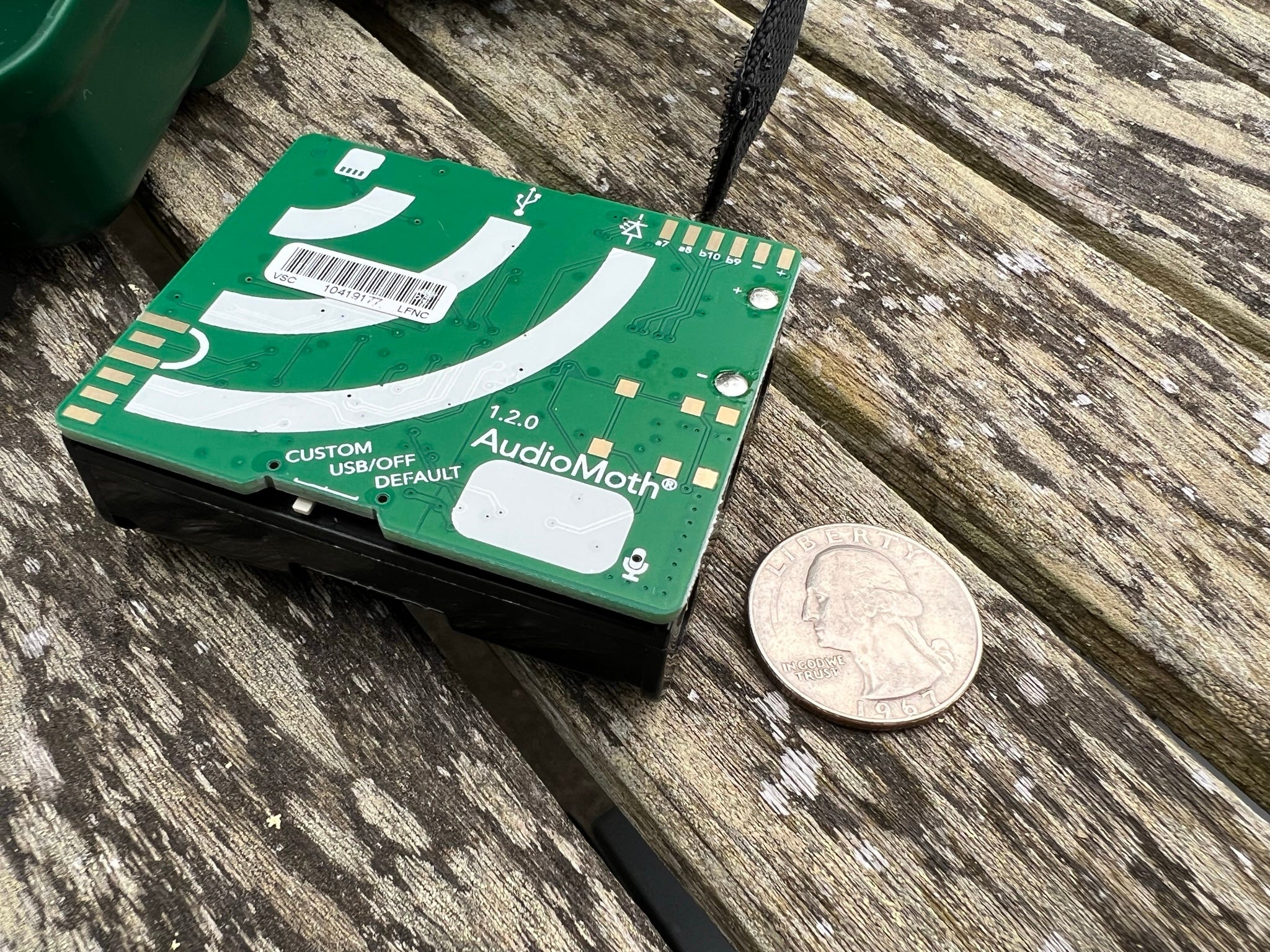
The one I purchased is part of a growing family of devices designed to enable acoustic ecologists and other audio practitioners to make audio recordings remotely. There is also a smaller version called the μMoth, a water-safe one called the HydroMoth, and something called AudioMoth Dev, which was designed with software and hardware developers in mind. The AudioMoth itself is little more than a naked printed circuit board, most of its size given over to the three AA batteries that provide power.
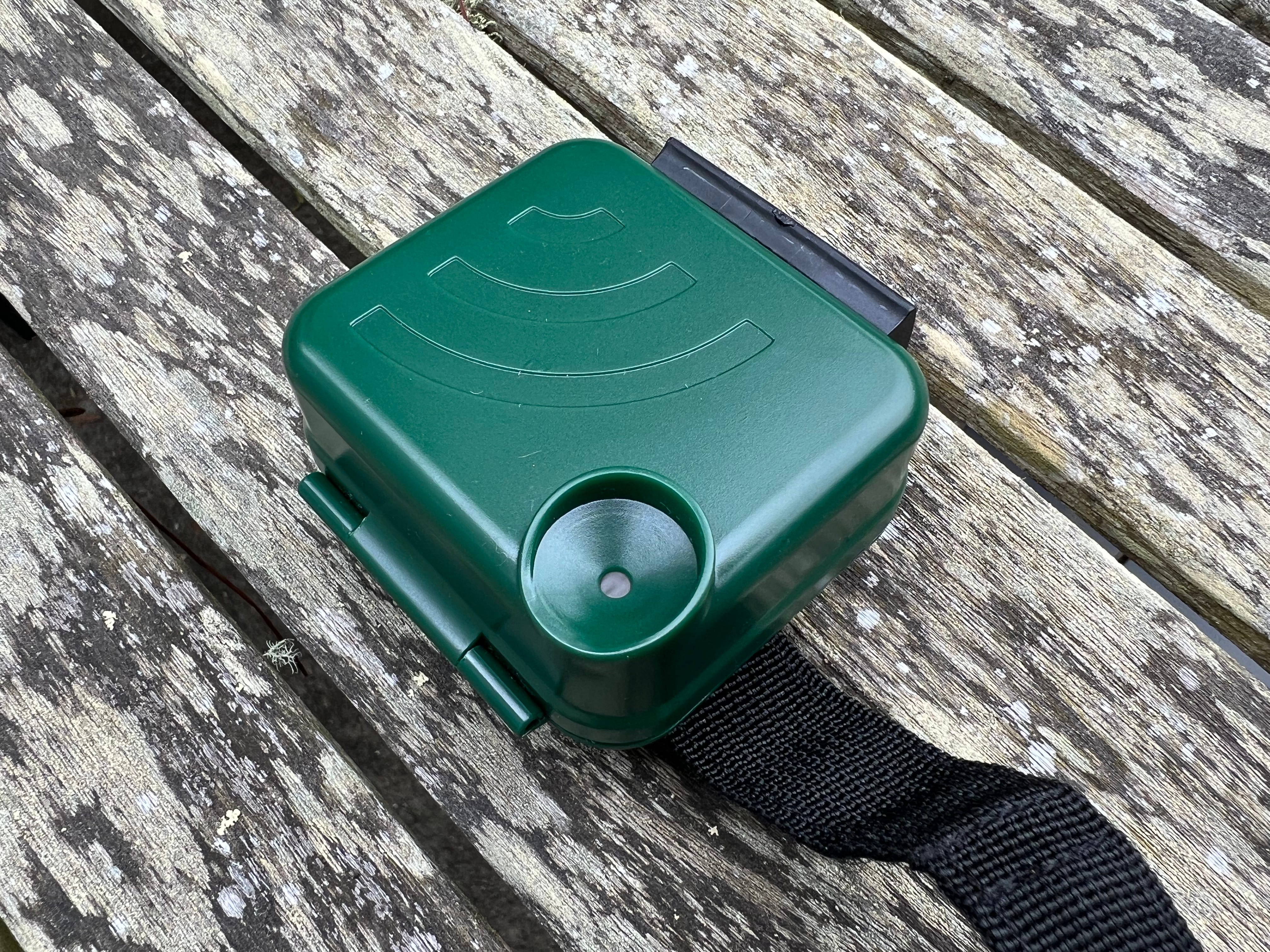
There’s also a small green plastic capsule available, complete with a velcro strap. For the June 22 session, I attached the thing to a table umbrella pole in the backyard. For June 23, I attached it to a chair, hoping to cut down on the wind. For the next three days, it’s attached to one of three stakes keeping a sapling erect. My next steps involve learning more about the device’s settings, in particular using built-in filters to limit noise, and about how to manage all these files — what are the best practices for identifying key moments when you’re faced with multiple hours of what many would simply call silence?
After I sent out Wednesday’s issue (just for paid subscribers), it occurred to me that a lot of readers come to Disquiet.com and to This Week in Sound from my book about Aphex Twin’s album Selected Ambient Works Volume II (Bloomsbury 33 ⅓, 2014). Due to that connection, I figured I’d reprint here one item of the three from Wednesday (the other two were about Brian Eno and Anton Lukoszevieze), as this relates to Aphex Twin’s just announced release, and the first track available from it:
DARK STAR: Aphex Twin has a new track out today, the first from a forthcoming EP due on June 28. “Blackbox Life Recorder 21f” is less frantic, less redolent of EDM excess, than has been much of his output since he returned from something akin to professional stasis back in 2014 with the album Syro. It’s been five years, though, since he last released anything (that was 2018’s Collapse). The imagery accompanying this release appears to be a 3D mishmash of musical instrument interfaces. I have had my impression of Buchla synthesizers in the mix confirmed by an informed friend. Here they look like Buchla was absorbed by the Borg from Star Trek. That cube structure aligns with some of the visuals from Aphex’s set last week at the festival Sónar in Barcelona (full video on YouTube). This new track, very much to its credit, doesn’t end where it starts. What begins as a welcomingly sedate, fairly straightforward Aphex song — mellow melody hovering above a slightly broken beat — blossoms into something far more rhythmically complex and melodically florid. And then it veers again, slowing rapidly to close with extended phrases of what sound like sampled or synthesized voices: 21st-century Gregorian chants for chill-out rooms.
The Assignment: Make a piece of music that combines self-contained minimalist parts.
/ By Marc Weidenbaum
Each Thursday in the Disquiet Junto music community, a new compositional challenge is set before the group’s members, who then have just over four days to upload a track in response to the assignment. Membership in the Junto is open: just join and participate. (A SoundCloud account is helpful but not required.) There’s no pressure to do every project. It’s weekly so that you know it’s there, every Thursday through Monday, when you have the time and interest.
Deadline: This project’s deadline is the end of the day Monday, June 26, 2023, at 11:59pm (that is, just before midnight) wherever you are. It was posted on Thursday, June 22, 2023.
Tracks are added to the SoundCloud playlist for the duration of the project. Additional (non-SoundCloud) tracks appear in the lllllll.co discussion thread.
Disquiet Junto Project 0599: Minimal(ist) Blend The Assignment: Make a piece of music that combines self-contained minimalist parts.
This project is the third of three that are being done in collaboration with the 2023 Musikfestival Bern, which will be held in Switzerland from September 6 through 10. The topic this year is « √ » — as the organization explains: “the radical, or square root symbol and the power of its symbolism are central to the festival and these will be translated into music in multifarious ways.” All three projects will engage with the work of Éliane Radigue, who is the Composer-in-Residence for the 2023 festival.
We are working at the invitation of Tobias Reber, an early Junto participant, who is in charge of the educational activities of the festival. This is the fifth year in a row that the Junto has collaborated with Musikfestival Bern.
Select recordings resulting from these three Disquiet Junto projects may be played and displayed throughout the festival. Anyone who’s interested in having their work included in the event should set their download option to “on.”
Step 1: You’re going to record a piece of music with between four and seven self-contained parts that get combined in various ways as the piece progresses. These parts should be minimalist. Drones would work well. Record a selection of such parts.
Step 2: Mix the parts recorded during Step 1 into a single work. When doing so, explore how different combinations achieve different ends, and how you handle transitions. (Also: consider lightly transforming the material by utilizing granular synthesis.)
Eight Important Steps When Your Track Is Done:
Step 1: Include “disquiet0599” (no spaces or quotation marks) in the name of your tracks.
Step 2: If your audio-hosting platform allows for tags, be sure to also include the project tag “disquiet0599” (no spaces or quotation marks). If you’re posting on SoundCloud in particular, this is essential to subsequent location of tracks for the creation of a project playlist.
Step 3: Upload your tracks. It is helpful but not essential that you use SoundCloud to host your tracks.
Step 4: Post your track in the following discussion thread at llllllll.co:
Step 5: Annotate your track with a brief explanation of your approach and process.
Step 6: If posting on social media, please consider using the hashtag #DisquietJunto so fellow participants are more likely to locate your communication.
Step 7: Then listen to and comment on tracks uploaded by your fellow Disquiet Junto participants.
Step 8: Also join in the discussion on the Disquiet Junto Slack. Send your email address to [email protected] for Slack inclusion.
Note: Please post one track for this weekly Junto project. If you choose to post more than one, and do so on SoundCloud, please let me know which you’d like added to the playlist. Thanks.
Additional Details:
Length: The length is up to you.
Deadline: This project’s deadline is the end of the day Monday, June 26, 2023, at 11:59pm (that is, just before midnight) wherever you are. It was posted on Thursday, June 22, 2023.
Upload: When participating in this project, be sure to include a description of your process in planning, composing, and recording it. This description is an essential element of the communicative process inherent in the Disquiet Junto. Photos, video, and lists of equipment are always appreciated.
Download: It is always best to set your track as downloadable and allowing for attributed remixing (i.e., a Creative Commons license permitting non-commercial sharing with attribution, allowing for derivatives).
For context, when posting the track online, please be sure to include this following information:
More on this 599th weekly Disquiet Junto project, Minimal(ist) Blend (The Assignment: Make a piece of music that combines self-contained minimalist parts), at: https://disquiet.com/0599/
This went out today as a thank you to paid This Week in Sound subscribers: an annotated playlist of recommended music. I wrote about (1) resurfaced Brian Eno sound art recordings, (2) a live cello piece by British-Lithuanian musician Anton Lukoszevieze, and (3) a new track from Aphex Twin.