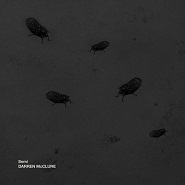
The Cicada Is Nature’s Vuvuzela

More cicada music, to follow up a Twitter comment this past week, and to lead into something this coming week (check back Tuesday, February 15). This is a piece by Darren McClure, and it was released recently on the netlabel Impulsive Habitat. It’s built from the sounds of cicadas, perhaps the greatest muse in the insect world for electronic musicians, because their sound is so redolent of near-sentient automatons. It is both alive and robotic, natural and yet, at its core, a kind of device. The cicada is nature’s vuvuzela. And before learning more about how McClure constructed the track, give it a listen (MP3):

[audio:http://impulsivehabitat.com/releases/018/ihab018-01-darren_mcclure_-_semi.mp3|titles=”Semi”|artists=Darren McClure]

As McClure describes it, this is, to a great degree, merely a recording — albeit a fine one — of the intense insect chatter in his garden, documented in late August. As he describes the scene,

The summer had been especially hot, and the sound of cicadas in the trees was really overpowering at times. From absolute silence, their sounds would suddenly emerge and escalate, before returning to silence again.

But while that is the source material, McClure has made some adjustments, and though the adjustments are minor, their impact is significant. What’s he’s done is create a filter, so at first all we hear is the the most trebly register, the one that the cicada’s shrill noise inhabits. The process is called, naturally, a “high pass filter,” and what happens is that the rest of the world disappears; at first, all we hear is the cicada. Then, slowly, by reducing the impact of the filter, the world begins to bleed back in. Writes McClure:

The recording is untreated, except for some filtering: the first few minutes have a high pass filter so that only the cicada sounds are allowed. Gradually, over the course of the recording, I filtered in the rest of the lower frequencies, so the street ambiance slowly bleeds in and the full sonic picture comes into view. During the final seven minutes, the cicadas cease to be heard and only that street ambiance remain.

The result is a kind of additive synthesis (or, perhaps more to the point, a reverse-subtractive synthesis), and reminds me of one of the earlier Aaron Ximm tracks I fell for, titled “Calisthenic”, which Ximm described as follows:

An exercise in negative space. Composed almost entirely from a single moment in a very short source recording, this piece was created using a sculptural process in reverse: starting from almost nothing, everything is added back, a little at a time.

McClure and Ximm take a similar approach, but the results are different, for various reasons. For one, their filters differ. For another, Ximm’s aim seems to have been to find the abstraction in the everyday, to find the esoteric in the world around us. McClure has his own lesson embedded in his track, but it’s a different one — and to be clear, I’m attributing an interpretation to both tracks, my interpretation. In the case of McClure, by employing the filter, he’s showing us how our ears themselves learn to block out noises. Country folk who visit the city complain about the noises: the cars, to horns, the people. But the reverse is true. As a lifelong city mouse, I find the insect noise of a camping trip too much to handle, like a premonition of debilitating tinnitus. Anyone who lives amid that noise (and suburban insect noise can be just as loud as rural insect noise) becomes accustomed to it. By the end of McClure’s track, we have all, in effect, adjusted to the noise, to treat it as a backdrop that verges on the unheard, despite its virulent presence.

More information, including details about the cicada’s sexual proclivities and sonic properties, at the releasing netlabel, impulsivehabitat.com.

Past Week at Twitter.com/Disquiet

  • Evidence of social media's value as self-selecting filter: few people in my social networks cared it was "Social Media Week." #
  • .@taylordeupree @mapmap Here's a request for at least one @soundcloud taste while you're still in the studio. #
  • At the library, a guy reeking of pot just took out five books on garden pest control. Let's all wish him luck. #
  • It's just possible this Creative Commons T-shirt won't help dispel the idea CC-licensed art isn't ready for prime time: http://j.mp/hPNaiN #
  • It's funny to look at the Facebook pages of netlabels and see which ones are and aren't "in a relationship." #
  • Dear @goodreads if someone hasn't reviewed a book, why do you persist in including a "see review" link next their name in a search result? #
  • We're discussing what videogame music is "worthy" of Grammy's attention. Not that Bieber & Maroon 5 set the bar high http://j.mp/e0jU8G #imr #
  • Wondering how well cellphone word-prediction is preparing us for sentence-, paragraph-, and book-prediction. #
  • If you do Facebook, there's a http://www.facebook.com/disquiet.fb page for that. #ambient #phonography #soundart #remix #noise #silence #
  • Continue reading “Past Week at Twitter.com/Disquiet”

True Glitch (MP3s)

Rare these days is the glitch album that doesn’t ultimately disappoint. Like “dubstep,” the term “glitch” has been yanked from its utility and, a victim of its relative success, turned into a label attached to music by companies and musicians eager for the association, though not for the ingenuity necessary to really earn the rubric. In the case of “glitch,” it means music that explores the beauty in failure (and, arguably, the failure of beauty). Often as not, a glitchy opening to a song reveals, eventually, a cursory appreciation for the actual pleasures of the risk inherent in the undertaking. The glitchy effects move to background from foreground, and more immediately melodic and rhythmic elements supplant them.

[audio:http://www.archive.org/download/2_3.dll/01_phasecycle.mp3|titles=”Phasecycle”|artists=Precious Mouse] [audio:http://www.archive.org/download/2_3.dll/01_phasecycle.mp3|titles=”dll_1_1_alpha_e”|artists=Precious Mouse]

And then you get a nice surprise: Precocious Mouse‘s 2_3/.dll (grey circuits) (from the netlabel brusionetlabel.altervista.org) knows exactly what it’s up to, and over the course of nine tracks explores the rarefied, splintering spaces of glitch with precision, affection, and no small amount of patience, for constructing some of these tracks may have required the kind of effort that goes into making a ship in a bottle. “Phasecycle,” for example, plays glitch against drone, a flittery pattern in pixel-wide beats versus a worrisome hum (MP3). And “dll_1_1_alpha_e” is even more remote, like the dying gasps of a satellite circuit recorded for its loved one back in the recesses of ground control’s freezer unit (MP3).

The “dll” in the album title (and various track names) appears to be a reference to those countless infinitesimal system files that dirty up Windows installations. Oval, one of glitch’s true originators, may have dispensed with the genre’s aural trappings on his recent works, but Precious Mouse shows there’s still life in the particulate.

Get the full release at brusionetlabel.altervista.org. More on Precious Mouse (aka Caleb Wood, aka Kid Functional), who is based in London, England, at precociousmouse.virb.com.

Beat Battles Meet the Sitar in the Soundcloud of Doom (MP3s)

Week 205 of the Stones Throw Beat Battles involved a bit of what appears to be Turkish music, a woman’s voice heard over flanging sitar and rattly percussion. In the hands of the Beat Battles crew, those raw materials experience a sonic diaspora, headed every which way. By a rough count, 50 or more different tracks built from the same shared source material were uploaded — presumably each by a different producer.

The first rule of the Beat Battles is “flip the chosen sample any way you want,” which happens here, ranging from pop-ready technofied hip-hop, to old-school afternoon funk by J Dilla acolytes, to some seriously out sounds. It was the late Dilla’s birthday (February 7) that this particular week’s battle coincided with, and today, February 10, is the fifth anniversary of his death, but his influence would have been heard no matter what the calendar read. He hovers over a substantial number of submissions every week.

There’s a special pleasure to just listening to one remix after another, each snagging different parts of the original — a drum sound here, a peculiar inaccuracy in the vocal here, a tiny rifflet there — and making new wholes from them. Here are a handful of favorites from the week 205 bunch:

Thingkyng‘s is something of a suite, opening with warbly, reverse-time samples, moving into a stuttered vocal snippet. It may make better use of the voice than any of the other entries:

My flipped track ( osmaniye ) by Thingkyng

OLOS‘s is a minimalist delight, this razor thin spring-like sound set on repeat against a thumping bass:

Say What, Say What STBB205 by OLOS

The track by uPprhand is the most blatant in its affection for Dilla, who is named repeatedly against a bleat beat that gets sliced with tiny little vocal bits, those narrow moments jutting in like stray memories. It’s a great effect put to good use:

STBB #205- Dilla Reflection by uPprhand

While its stroboscopic back’n’forth can be a bit hard on one’s sense of orientation,a heavy thump of a beat centers everything on G.HahD‘s entry, along with ghostly vocals and a distant wood block:

DwayBuChi-BB205 by G.HahD

“205” by Jondis has the most swing of the bunch, a loping swell that has your head bouncing side to side, using the original material in a manner that may be familiar in its structure but that rejuvenates the form by dropping in unlikely sample selections:

205 by jondis

For more, check out the discussion as the various renditions were uploaded, and read up on the voting process. Since around October 2010, all of the beats have been flowing at soundcloud.com (they were previously located at drop.io, which is now defunct).

Why the Grammy Awards Hate Video Games

The Grammy Awards this weekend mark the first time music from a video game has been nominated in one of its many (109 this year) categories. That’s the backdrop for a little essay I just published over at the In Media Res project. The piece is titled “… Or Other Visual Media.” It’s ironic that my post coincided with the announcement that the Guitar Hero video game franchise is being shelved. Somewhere, no doubt, the recording-industry equivalent of rockists (album-ists?) are mistakenly taking this as a sign that the cultural tide is turning back from interactivity to fixed recordings.

This week, as part of a pre-Grammy run up, a bunch of us have gathered at mediacommons.futureofthebook.org/imr to talk about the state of pop music: five mini-essays over the course of five days, each essay complemented by (or complementing) a selected video. The website is home to the In Media Res project, which bills itself as an experiment in online scholarship. Each week In Media Res selects a new subject and posts five new essays/videos. This week’s (“Theme: Pop Music [February 7-11, 2011]”) was edited by Ted Friedman, a Georgia State professor with whom I attended college.

All of the participants are fellow alumni who have done their share of music criticism. It’s a mini-reunion for our college music zine, which was named Nadine, after the Chuck Berry song. The first entry was Friedman’s, on the divide between music critics and academics who study music (“Tickling the Ivory Towers”), to which I added some thoughts about the gentrification of subject matter. Day two, Gavin Edwards (“Words, Words, Words”) reminded us of one of the beauties of the classic era of MTV interstitials, and I weighed in with my dream scenario in which MTV became a network of true video-music synaesthesia. Day three, James Hannaham (“Hide Your Kids! Hide Your Wife! Hide Your Husband!”) wrote on the autotune sensation that is Antoine Dodson — which was especially timely for me, because I’d been wondering when the first “unofficial summer song” would be a cloud-based phenomenon rather than a commercial single, and Hannaham reminds us it may have already happened. And tomorrow, Ivan Kreilkamp will write about the Wikileaks-inspired mixtape by M.I.A. (“Free and Freer: Wikileaks and ViCKi LEEKX”).

Anyhow, my post is up now, following some last-minute trimming due to a production issue. I took Friedman’s assignment literally, and elected to look at the Grammy Awards directly. Now, making fun of the Grammy Awards is too easy. It’s easier than shooting fish in a barrel. It’s like kicking over a barrel and watching the fish suffocate, and there’s really no pleasure to be had in that. Instead, I looked at the power relationship between the Grammy Awards and video games, in which the music industry (represented by Grammy) tries to act like video games don’t exist. The piece is titled “… Or Other Visual Media,” named for the catch-all that was appended to (but never apparently embraced by) the Soundtrack Album award more than a decade ago.

Less interesting is boosterism for nominating video-game scores. My emphasis is the shortsighted Grammy focus on “singles” and “albums,” which exposes how its governing body prioritizes “recording” as fixed artifact, versus recording as process or recording as system.

Many thanks to Friedman for the invitation. He talks a bit more about this week’s series at tedfriedman.com. (Also: Edwards: rulefortytwo.com; Hannaham: jameshannaham.com; and Kreilkamp: indiana.edu.)

PS: Just another note about Christopher Tin’s nomination for the song he composed for Civilization IV. That game, I should mention, was released in 2005. I kind of wonder if the reason it’s even nominated this year has something to do with how the song appeared on a commercial album by Tin this past year, and then when that song was itself singled out for nomination it was noted at some point that it had, earlier, appeared in the game. Anyhow, the half-decade gap between its initial release and its nomination suggests the game wasn’t the reason the Grammy governing body took note of it. Civ IV was updated several times after its initial release, so maybe Tin’s song appeared not in the initial release but in a later iteration. I’m not sure. I’ll look into that.

PPS: Discussion is continuing at the original post, specifically about what game music makes recommended listening (I list six examples, divided evenly into two categories: “fixed,” meaning albums and single-song servings of music from games, and “indeterminate,” meaning music from games in which the music shifts and changes as a result of the exigencies of gameplay), and whether some games are simply better without music.