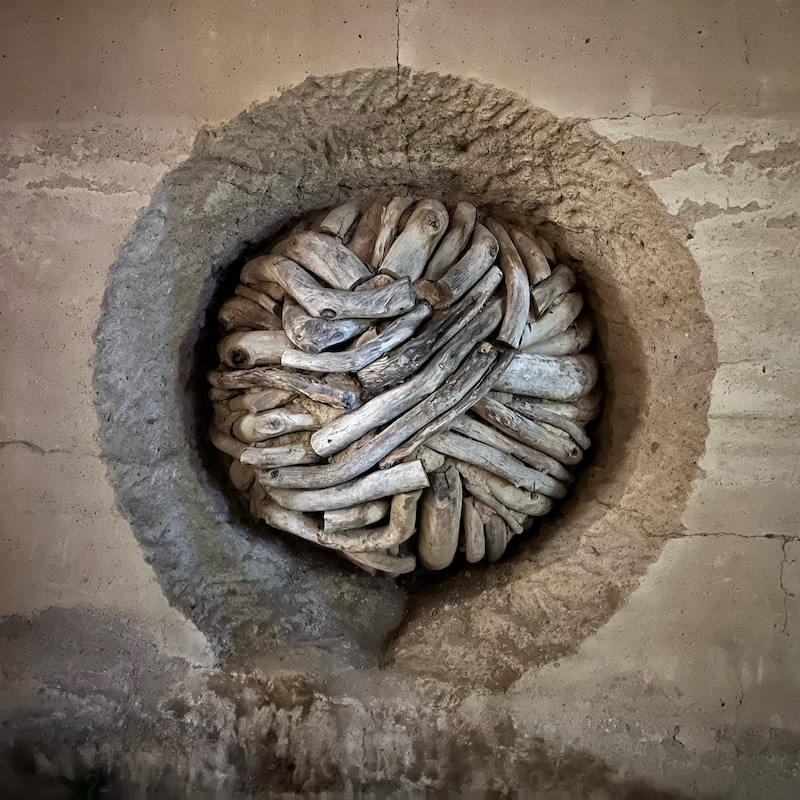
This excavated wall by Andy Goldsworthy in the Presidio is easily one of my favorite pieces of public art in a city with a lot of great public art. It’s a fantastic work of archeological and environmental fiction. You can sense, long after its creation, the growth — as well as the effort required to unearth it.
An event I'm leading at the Berkeley Alembic on September 29, 2023
/ By Marc Weidenbaum
It’s been a while since I did a live event. I think the last one may have been last year when I interviewed Mark Fell, Rian Treanor, and James Bradbury at the Algorithmic Art Assembly here in San Francisco. Now I’ve got a new event scheduled, across the Bay in Berkeley. On the evening of Friday, September 29, from 7pm to 9pm, I’ll be leading an in-person session in the Expanded Listening series at the venue Berkeley Alembic (berkeleyalembic.org). I was invited by my old friend Erik Davis (Techgnosis, Burning Shore) to program an evening’s listening after I attended an Expanded Listening session he did last month with Sam Plattner, a sound designer and field recordist. It’s a great format: I’ll speak a bit before the listening session, then we’ll listen straight through for about 80 minutes to music I’ve assembled from a variety of sources, and then we’ll discuss what we heard, as well as our experience of listening to it. It’s a comfortable, airy space, with yoga mats and cozy cushions to lay out on while the music plays.
For this session of the Expanded Listening series, we’ll enjoy a program of ambient and ambient-adjacent artists from around the world that employs techniques to not just slow but to even reverse and revisit time. From reverb to echo to tape loops to granular synthesis, various recording and performance practices give artists the means by which to examine the space within sound. We’ll listen to some of these artists via recordings as they explore what might be called the “poetics of the buffer”: the ability to capture sound, often in real time, and toy with it while it still lingers in the mind’s ear. This is music that listens to itself. Such recordings lend themselves readily to meditative states, to a consideration of music as a time-based art, and to an appreciation of the ways that numerous genres aspire to a state of utmost stillness. The evening will open with some framing comments from Marc Weidenbaum, a music critic and the moderator of the Disquiet Junto, a long-running online community for electronic musicians, some of whose compositions will be included.
There’s an Eventbrite page to get a ticket. Hope to see you there.
This went out last Wednesday as a weekly bonus — a thank-you to people who financially support This Week in Sound. It supplements the free Tuesday and Friday issues, which feature a broader array of material from the field of sound studies. It contained an annotated playlist of recommended music. I wrote about (1) a nearly four-hour album of “impossible” piano music by Kenneth Kirschner, (2) a half-day-long video by Dan Coffey of slow shifts in syncopation, and (3) a taste of the upcoming Andrew Pekler album.
I do this manually at the end of each week: collating most of the recent little comments I’ve made on social media, which I think of as my public scratch pad. I mostly hang out on Mastodon (at post.lurk.org/@disquiet), and I’m also trying out a few others. And I take weekends off social media.
▰ I’m the only customer at the pupuseria, and I can hear the hand slaps as they are made, one at a time — the cook, out of sight, singing along with the radio, just the chorus of each song
▰ The Who’s “Won’t Get Fooled Again” gets a little longer every few years. There’s a committee that decides when and by how much, but the group’s governance and decision-making are tightly guarded secrets.
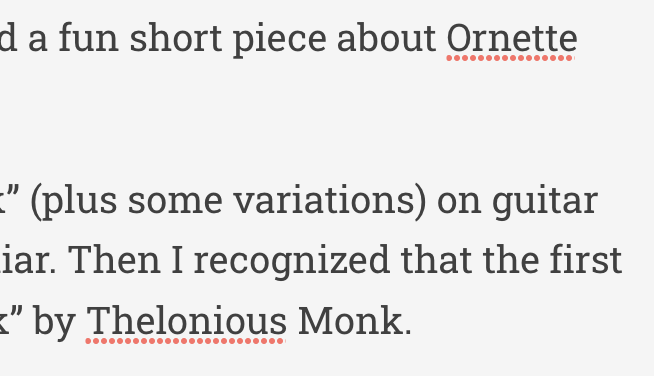
▰ If a widely used word processor can recognize the brand names for fast food, athletic equipment, and cleaning products, there’s no excuse for it not to recognize these names.
(I’m, er, belatedly getting around to memorizing the circle of fifths. And I originally had “Frothy” but Acoustic Mirror, on Mastodon, correctly suggested “Fluffy” in its place.)
▰ 1-Across “Sound made by an electric vehicle at low speed”
The answer had three letters. The New York Times Mini has my number.
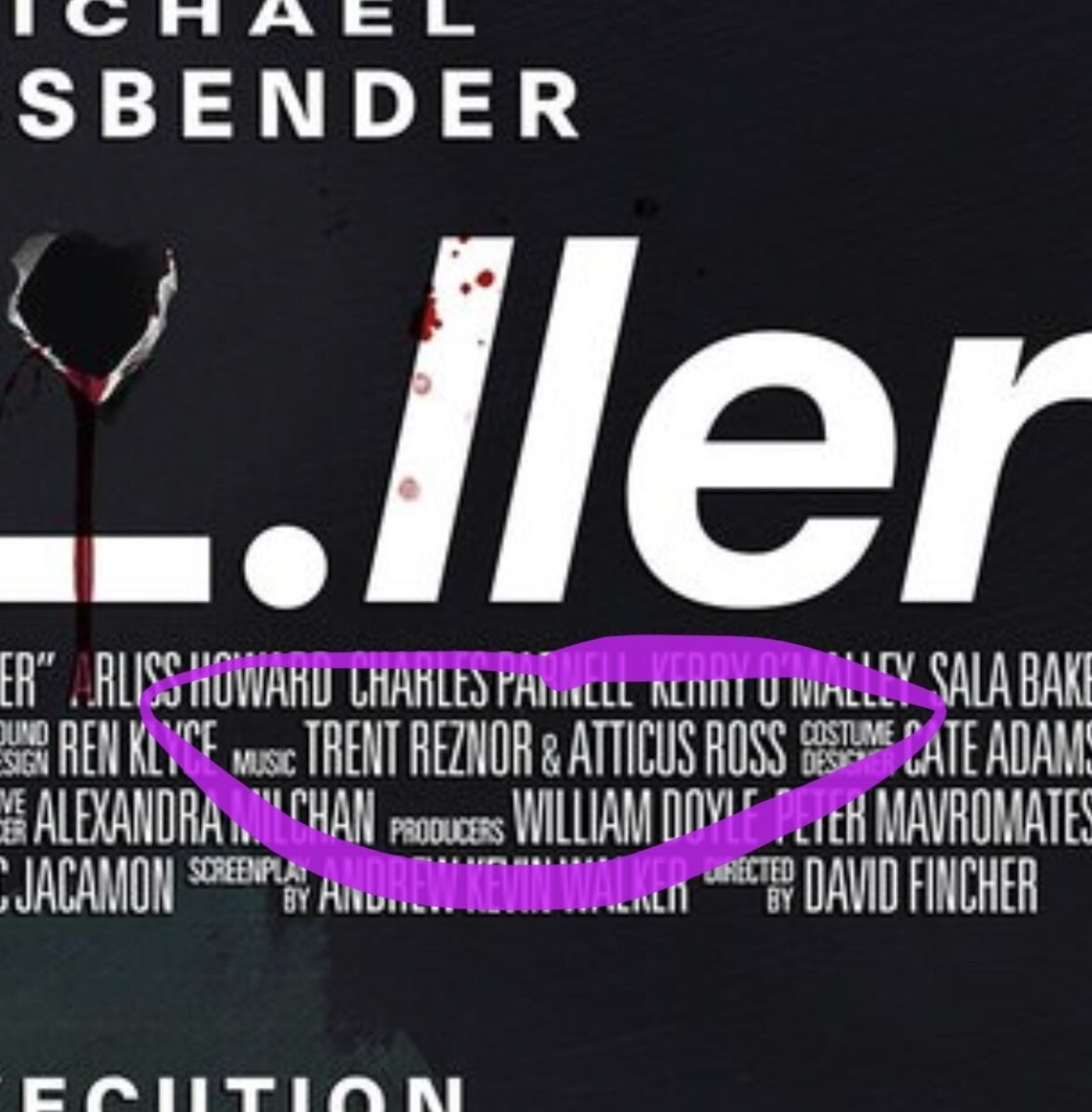
▰ Everything I need to know about the upcoming David Fincher movie, The Killer. (And Peter Albrechson noted Ren Klyce, Fincher’s longtime collaborator, returns for sound design, a role rarely highlighted in this sort of credit list.)
▰ For the record: a lunch that is one third Sichuan leftovers and two thirds Salvadoran leftovers is excellent.
From London, England: autoethnography, transdisciplinary creative practice, revisiting the music of one's teens
/ By Marc Weidenbaum
This Junto Profile is part of an ongoing series of short Q&As that provide some background on various individuals who participate regularly in the online Disquiet Junto music community.
What’s your name? My name is leon clowes. I prefer to write it all in lower case as that looks better, more balanced. I don’t like the capital ‘L’ or ‘C’ in my name, not sure why. (better not to question some things).
Where are you located? I grew up in a village called Ipstones and went to school in a town called Leek in North Staffordshire. I was born from and into a traumatized family and because of this, my maternal grandparents had to adopt me. It was an unsettling childhood because of secrecy around my father’s identity. This difficult childhood was compounded by being a gay teenager during the onset of AIDS in the 1980s. Being so vulnerable, I was bullied relentlessly at school.
To counter this I wrote electro pop and Brecht/Weill type cabaret songs using affordable synths and a Tascam Porta One under the moniker Damian’s Deviants. (This was a nod to Marc and the Mambas. Marc Almond, and the Some Bizzare record label roster, were my route to outsider and experimental music and is the point I’ll always return to.)
I dreamed of escaping to London and I did, being fortunate enough to be in an age where working class kids could still get grants to study arts at higher education levels in England. In 1988 I moved to London to attend Goldsmiths College to study music and, apart from 4 months in Leicester and 4 years in Manchester, that’s where I’ve stayed.
I was co-running multimedia performance clubs in the 1990s and being commissioned to write music for fringe plays in London and Glasgow but I f***ed it up by drinking and drugging. As a sort-of-functioning but pretty self-destructive addict I did successfully hold down jobs in arts administration though. That at least gave me lots of contacts in the cultural sector and the know-how of grant applications.
So in 2018 I started to get sober and when lockdown happened I made my re-entry into creative practice by making a radio audio collage piece, Days of Future Past, which got picked up by various queer festivals and exhibitions.
I’m currently doing a PhD into my own creative practice at London College of Music, University of West London. My research is into the self-compassionate use of autoethnography as a technique for artists exploring lived trauma.
What is your musical activity? I’m still working this out, in all honesty. My starting point was in the mid-’80s and my influences then would have been the alternative music I mentioned above, acts on the Some Bizzare label (Soft Cell, The The, Foetus, Cabaret Voltaire, Psychic TV). I was also massively into Joni Mitchell, Burt Bacharach, and David Bowie, so it was a fairly broad pop palette that funneled into me wanting to be an alternative pop star. Studying music was a portal to classical music. I know every single note of Beethoven’s Violin Concerto as I studied it at A level.
Because I was using analogue synths and a four-track recorder to make music until the early ’90s, when I began my transdisciplinary creative practice a few years ago, the hardest thing of all was to get back into writing music. Even though the technology had greatly improved and become much more intuitive than the CuBase I knew in the ’90s, I struggled with the amount of choice and possibility. I presented a practice research paper about this recently.
Mostly I’ve been writing electronic instrumental music and composing using recorded materials of acoustic instruments and sounds. I’ve mostly been drawn to recording acoustic improvisations and editing them into new music. It was a technique I developed using Audacity as an editing tool for composition. Here’s a film work ‘nesting’ that I made which uses four of these short pieces.
What is one good musical habit? Do the Disquiet Junto and Naviar Records SoundCloud weekly challenges. They perfectly complement each other. The Disquiet ones help me think about new ways of composing, and the Naviar Haikus give me free rein to explore. As a re-emerging composer I need the motivation, the deadlines, and the supportive online communities. Being involved in both has been absolutely key to my creative revival.
That said I’ve been a bit absent recently, it’s been silly busy with stuff. I miss it, creating for the sake of creating.
What are your online locations? I don’t hang out much online, I should spend a bit more time in https://llllllll.co/ as I would learn so much more. There’s a resolution I’ve just made. I’ve got loads of socials and a website: leonclowes.com.
What was a particularly meaningful Junto project? Oh there’s been so many. It’s like a notebook of ideas, doing the Juntos. I will go back, barely remember something and it’s an idea that’s been jotted down I can return to.
I got the math wrong on it, I didn’t give it a name, and I absolutely love this one. When I mixed together a series of Naviar and Disquiet pieces for the Naviar Records Haiku Fest at Cafe Oto in December last year, this was the opener, it was the perfect way to start ‘The Haunting’, the recording of the live performance is available to watch here.
For people who might find the subject abstract, can you talk about how instrumental music can express personal experience? What a thoughtful question. I’m halfway through my practice research study at London College of Music, and with the prospect of analysing and revisiting the electronic pop music I wrote as a teenager I had thought to focus on the lyrics rather than the music, but this question reminds me that that would be avoidant.
I worked recently with an instrumentalist who was, and is, going through a difficult grief process. By recording the improvisations we made together, there was something sorrowful and profound captured on the zoom recordings which prompted a series of compositions. Recording acoustic instruments in particular spaces has become a growing fascination — on these particular improvisations I’m referring to, we recorded the playing in the player’s home and there’s faint wind chimes outside the window and a clock ticking in the room. This depth generates sound materials that provide me with a rich palette for composing.
I was scratching my head about this question at first but I have found it very helpful in clarifying how I’m developing my compositional process, so thank you Marc!
Can you talk more about strategies you’ve developed to avoid the issue you describe about contemporary music tools providing too much choice and possibility? Initially I restricted myself to only using GarageBand to write music. I’d like to say that was a deliberate strategy but truthfully it was what was freely available on my MacBook Air. When I was writing on a synth and four track in the ’80s and ’90s, I had access to one polyphonic synth, drum machine, and piano. Being a beginner again, by having only a limited range of free software sounds, encouraged innovation. I layered multiple GarageBand instruments in A Love Divine to find timbres that echoed what I had recorded in the 1989 demo of the same song. I’m also fond of how you can record and overdub effects on instruments on GarageBand (such as in this Disquiet track), my favourite of this being the gradual shifts that are possible with organ stops (like in this Disquiet piece). I particularly like the warm pulsing and throbbing of the organ sounds, it puts me in mind of Talk Talk’s ‘Spirit of Eden’ and ‘Laughing Stock’ albums which are extraordinary albums.
Also, I like to record things quickly and instantly. A melody that pops into the head, or a short improvisation. Get it out quickly, no more than a few instruments. Don’t re-record, keep the first take. On something like this track Webbed, I think that works well. However in my next phase of compositional practice I want to sit with material and go much deeper, take more time, use more reflection. For that reason I’m now starting to collaborate with other more experienced musicians.
The photo of leon clowes was taken by Amber Franks as part of her ‘Dead Memories’ project last year: amberfranks.co.uk/dead-memories.