I do this manually each Saturday, usually in the morning over coffee: collating most of the little comments I’ve made on social media, which I think of as my public scratch pad, during the preceding week (or in this case, the past two weeks). These days that mostly means post.lurk.org (Mastodon).
▰ I’ve read some great Chinese fables that characterize something akin to hell. None of them mentioned the piano rendition of “Living on a Prayer” playing in this restaurant while I wait for takeout.
▰ I experienced something this morning I wrote about a few weeks ago (in the context to a scene in a film), which was waking to an alarm I first experienced in my dream as something where my brain tried to insinuate the presence amid whatever narrative was unfolding, and eventually I woke to what was actually happening. In this case, the alarm in my dream first sounded like loud insect noise, until recognized what was actually happening.
▰ Can the new Pixel Tablet UX be installed on a Samsung Tablet (it doesn’t really matter, ’cause I 99% of the time just use the Samsung as a Duet extension of my MacBook).
▰ I’ve come to wonder if this electric car I’ve been driving turns off the fake engine noise when it hits a certain speed, and if there’s a speed when the sound of the car moving is quieter than the combination of a slower speed and the fake engine noise
▰ Nothing spoils a TV/movie thriller quite like rote music. If the director approves rote music, it undermines every other decision they made.
Currently on display at the San Jose Museum of Art
/ By Marc Weidenbaum
This is “Mirror Image” (2020), a sculpture by Kelly Akashi currently on display at the San Jose Museum of Art as part of a sizable solo exhibit. The artist brings a broad array of techniques to her work, including glass-blowing, candle-making, carpentry, and bronze. If I were constructing a docent tour of the Akashi show, I might ask the visitors to locate the sonic in this piece. Is the blown bubble a signifier of human breath? Is the hand signaling something in ASL?
As it turns out, the pedestal depicts the artist’s own echocardiogram. After learning this fact, you might recognize that the woodwork does, indeed, have an unusual cadence to it — an unusual shape, at least for pedestals, which tend toward the symmetrical rather than the lopsided. And then you might notice that the pulsing, the beating, is at the same time highly familiar, since it’s something we, as humans, have in common. Once you know what the pedestal is, those two secondary bulges, which signify the apex of heart beats, take on a somewhat discomforting significance, and draw further attention to the fragility of the glass bubble below that heavy, if delicately positioned, brass hand. The paired beats form a sort of mirror image, as does the connection between the two representations of mortality. The exhibit closes on May 21, 2023.
Speaking of bronze, I guess it is currently a thing. There’s quite a bit of bronze in the Kehinde Wiley exhibit currently at the De Young Museum here in San Francisco. The Wiley exhibit is titled “An Archaeology of Silence,” a term apparently from Michel Foucault, the late French philosopher. We’re informed that Foucault “used it to describe the action of making visible a socially repressed phenomenon.” This phrase has a social and political connotation in the context of Wiley’s art. In a sort of mirror image, it might also be applied to the more personal realm of intimacy inherent in Akashi’s. (The Wiley exhibit closes on October 15, 2023.)
The Assignment: Complete an asynchronous trio begun by two other musicians.
/ By Marc Weidenbaum
Project-Specific Note: You may contribute more than one track this week. Usually Junto projects have a one-track-per-participant limit. This week you can do a second one. Please see additional details in Step 5 below.
Answer to Frequent Question: You don’t need to have uploaded a duet in last week’s project to participate in this week’s third phase of the trio sequence.
Each Thursday in the Disquiet Junto music community, a new compositional challenge is set before the group’s members, who then have just over four days to upload a track in response to the assignment. Membership in the Junto is open: just join and participate. (A SoundCloud account is helpful but not required.) There’s no pressure to do every project. It’s weekly so that you know it’s there, every Thursday through Monday, when you have the time and interest.
Deadline: This project’s deadline is the end of the day Monday, May 15, 2023, at 11:59pm (that is, just before midnight) wherever you are. It was posted on Thursday, May 11, 2023.
Tracks are added to the SoundCloud playlist for the duration of the project. Additional (non-SoundCloud) tracks appear in the lllllll.co discussion thread.
Disquiet Junto Project 0593: The Charm The Assignment: Record the second third of an asynchronous trio.
Please note: While this is the third part of a three-part project sequence, you can participate in one, two, or all three of the parts, which have occurred over the course of three consecutive weeks.
Step 1: This week’s Disquiet Junto project is the third in a sequence that encourages and rewards asynchronous collaboration. This week you will be adding music to a pre-existing track, which you will source from the previous week’s Junto project (disquiet.com/0592). Note that you are finishing a trio: you’re creating the third part of what two previous musicians began. Please keep this in mind.
Step 2: The plan is for you to record an original piece of music, on any instrumentation of your choice, as a complement to a pre-existing track. First, however, you must select the piece of music to which you will be adding your own music. There are tracks by numerous musicians to choose from. The majority are in this playlist:
And additional tracks may appear in the discussion:
(Note that it’s possible another track or two will pop up in or disappear from that playlist and discussion. Things are fluid on the internet.)
To select a track, you can listen through all those and choose one, or simply look around and select, or you can come up with a random approach to sifting through them.
Note: It’s fine if more than one person uses the same original duet track as the basis for their trio.
It is strongly encouraged that you look through the above discussion on the Lines forum, because many tracks include additional contextual information there.
Step 3: Record a piece of music, roughly the length of the piece of music you selected in Step 2. Your track should complement the piece from Step 2, and it should be placed dead center between the left and right stereo channels. When composing and recording your part, do not alter the original piece of music at all. To be clear: the track you upload won’t be your piece of music alone; it will be a combination of the track from Step 2 and yours.
Step 4: Also be sure, when done, to make the finished track downloadable, because it may be used by someone else in a subsequent Junto project.
Step 5: As with last week, you can contribute more than one track this week. You can do up to two total. If you choose to do a second, you should preferably try to use a duet track that no one else has used yet. The goal is for many as people as possible to benefit from the experience of being part of an asynchronous collaboration. After a lot of detailed instruction, that is the spirit of this project.
Eight Important Steps When Your Track Is Done:
Step 1: Include “disquiet0593” (no spaces or quotation marks) in the name of your tracks.
Step 2: If your audio-hosting platform allows for tags, be sure to also include the project tag “disquiet0593” (no spaces or quotation marks). If you’re posting on SoundCloud in particular, this is essential to subsequent location of tracks for the creation of a project playlist.
Step 3: Upload your tracks. It is helpful but not essential that you use SoundCloud to host your tracks.
Step 4: Post your track in the following discussion thread at llllllll.co:
Step 5: Annotate your track with a brief explanation of your approach and process.
Step 6: If posting on social media, please consider using the hashtag #DisquietJunto so fellow participants are more likely to locate your communication.
Step 7: Then listen to and comment on tracks uploaded by your fellow Disquiet Junto participants.
Step 8: Also join in the discussion on the Disquiet Junto Slack. Send your email address to [email protected] for Slack inclusion.
Note: Please post one track for this weekly Junto project. If you choose to post more than one, and do so on SoundCloud, please let me know which you’d like added to the playlist. Thanks.
Additional Details:
Length: The length is up to you. Stick to close the length of the track yours adds to.
Deadline: This project’s deadline is the end of the day Monday, May 15, 2023, at 11:59pm (that is, just before midnight) wherever you are. It was posted on Thursday, May 11, 2023.
Upload: When participating in this project, be sure to include a description of your process in planning, composing, and recording it. This description is an essential element of the communicative process inherent in the Disquiet Junto. Photos, video, and lists of equipment are always appreciated.
Download: It is always best to set your track as downloadable and allowing for attributed remixing (i.e., a Creative Commons license permitting non-commercial sharing with attribution, allowing for derivatives).
For context, when posting the track online, please be sure to include this following information:
More on this 593rd weekly Disquiet Junto project, The Charm (The Assignment: Complete an asynchronous trio begun by two other musicians), at: https://disquiet.com/0593/
Today I wrote a post to the This Week in Sound email list just for paid subscribers. It’s an experiment, and supplements the usual (and still free) Tuesday and Friday issues.
Just yesterday I asked what people would potentially pay for, or more to the point what people who do pay might appreciate, and so far in the poll recommended ambient music came up on top, seconded by an additional email issue. Today’s email accomplished both those ideas. We’ll see how it goes.
The items in this first issue of the TWiS Listening Post were (1) a remix, (2) a demo, and (3) a clip. The remix was a sneak listen to Karen Vogt’s upcoming album (the cover image of this issue is a still from the video for one of the tracks). The demo was a short video of a piece of looping/sampler software. The clip was a video by Orbital Patterns on Instagram.
I don’t love paywalls, but I figure one out of three posts requiring a paid subscription may not be a bad idea. Or it may be a bad idea. Experimenting means experimenting, and as Brian Eno says, something really only is an experiment if there’s a potential it will fail.
Plus: sound gadgets for infants, onomatopoeia ingenuity, and more
/ By Marc Weidenbaum
These sound-studies highlights of the week originally appeared in the May 9, 2023, issue of the Disquiet.com weekly email newsletter, This Week in Sound.
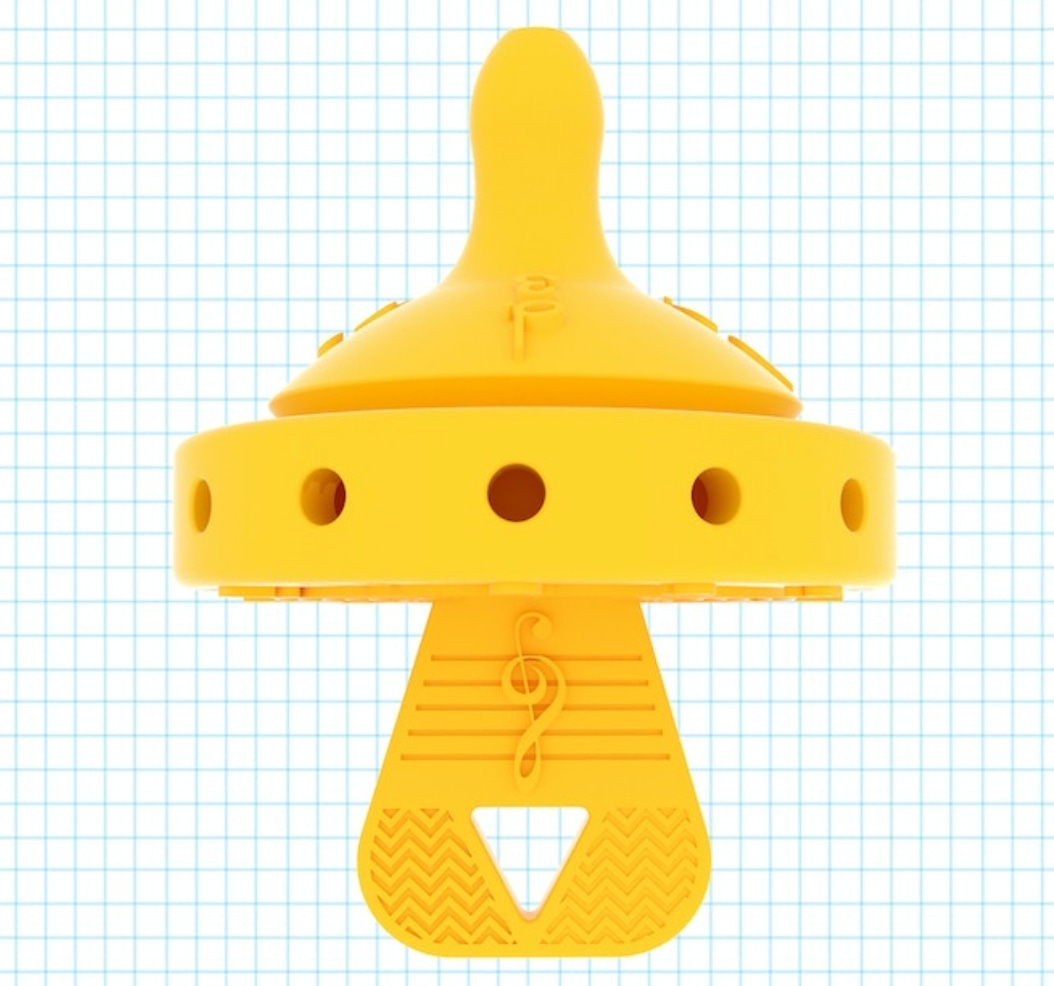
JUST KIDDING: There is a Kickstarter (I have no association with it) for a “smart pacifier.” The little device, which seems to combine a harmonica and a binky, is designed to “activate the creative mind at an early age, making passive listeners into musicians before they can say their first words.” … And separately, news about a nursery device that turns “patented auditory sequences into soothing melodic and other background tracks to help the infant brain do its job of paying attention to environmental sound changes.” It’s the Smarter Sleep Sound Soother from RAPT Ventures.
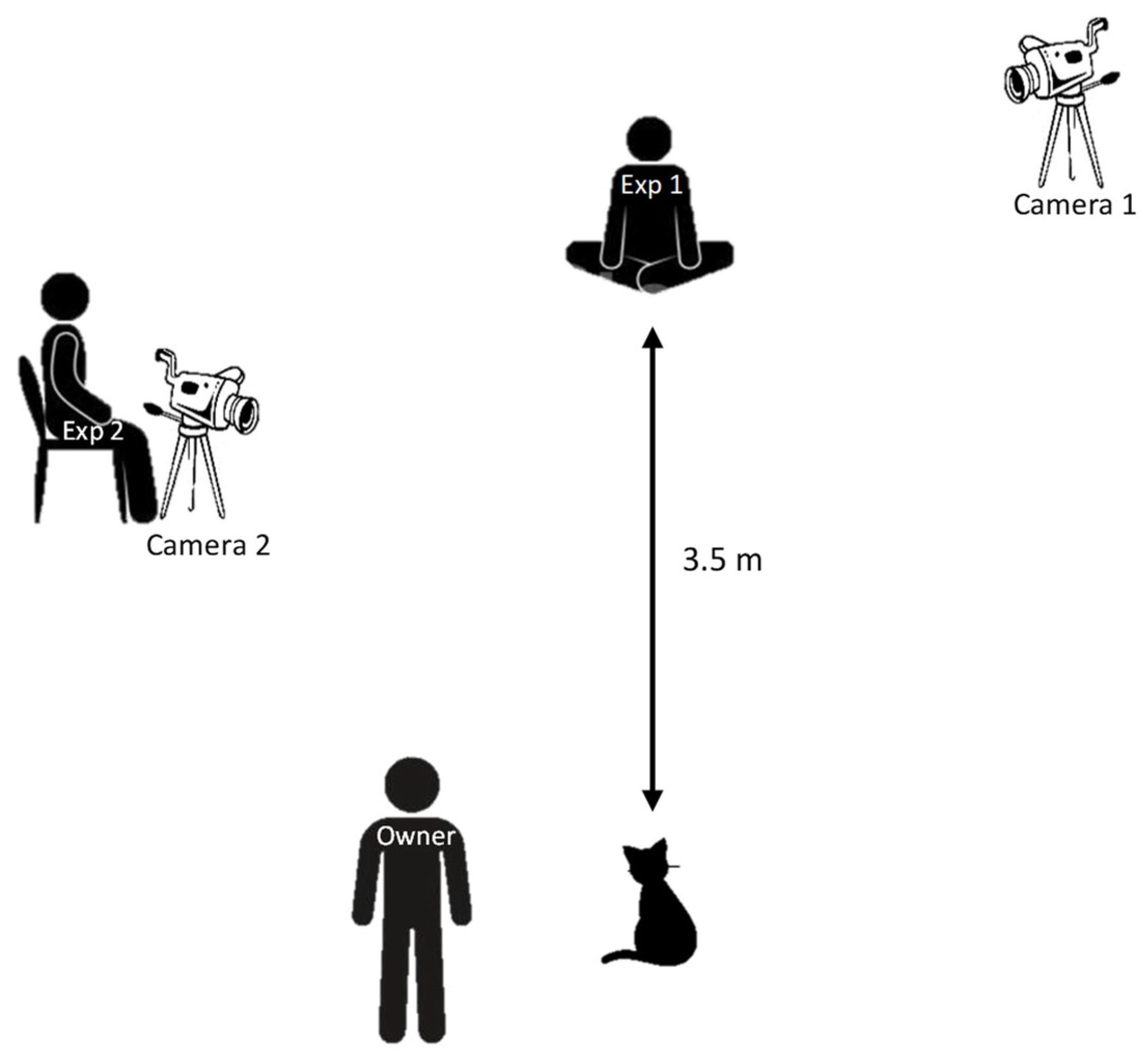
WHISKER WHISPERERS: “Scientists in France might have just found the most effective way to catcall an unfamiliar cat. The team discovered that cats living at a cat cafe responded most quickly to a human stranger when the stranger used both vocal and visual cues to get their attention. The cats also appeared to be more stressed out when the human ignored them completely,” writes Ed Cara at Gizmodo. Here’s a helpful diagram of how the experiment, by Charlotte de Mouzon and Gérard Leboucher at Paris Nanterre University’s Laboratory of Compared Ethology and Cognition, was undertaken:
THE THIX OF IT: “Irish inventors Rhona Togher and Eimear O’Carroll created an advanced acoustic material that reduces noise and can be used with household appliances, as well as in the automotive, construction, and aerospace industries.” The material is called SoundBounce, and it “has a cellular structure that works in tandem with a thixotropic gel placed inside the cells that allow sound to be dampened, reducing noise transmission from one space to another.” FYI, “thixotropic” means “Becoming a fluid when agitated but solid or semi-solid when allowed to stand.” Togher and O’Carroll are currently in the running for a European Inventor Award 2023.
CROSSTOWN TRAFFIC: The ecommerce/delivery reality is making life louder: “With millions of Americans now living in close proximity to a warehouse, it’s time to start treating these drab, feature-less buildings like pollution hotspots, says a recent report by the Environmental Defense Fund. Warehouses are quickly popping up all over the US, bringing truck traffic and tailpipe emissions with them. And yet there is no federal database to see where current or proposed warehouses are located, unlike other major sources of pollution like oil and gas facilities. … [T]here’s significantly more traffic, air pollution, and noise in census tracts with warehouses compared to those without them, another study based in California found last year.”
QUICK NOTES: Rim Shot: Netflix has a news desk (I don’t know how new it is) and it’s called “Tudum” — i.e., onomatopoeia for the network’s sonic brand logo — and that is sorta genius (netflix.com/tudum). ▰ Bank Teller: Voice biometrics was the focus of a letter sent by Senator Sherrod Brown, chairman of the Senate Banking, Housing and Urban Affairs Committee, reportedly to JP Morgan Chase, Bank of America, Wells Fargo, Morgan Stanley, Charles Schwab and TD Bank. ▰ Moon Man: Austin Kleon did a new blackout poem inspired by comments I madein recent issue of This Week in Sound. ▰ Bull Market: The Shriek of the Weekwas the bullfinch, “adept mimics” that “can be taught to whistle a human tune like a parrot.” ▰ Mo’ Mojang: There’s new ambient music in Minecraft (update 1.20) and Rohan Jaiswal knows where to find it. ▰ Street Scene: Check out this microtonal composition based on data related to Krasnodar Public Transport in Russia. (Thanks, Glenn Sogge!) ▰ Blue Jay Way: Soundfly, which offers courses for musicians and connects them to mentors, has a story about bird song — I love the idea of musicians having an avian tutor.