
 Excising a few lines from a longer poem can be as invasive an act as displaying a detail of a larger piece of visual art. Free of (though not entirely free from) its original context, the segment can take on an abstraction, a peculiarity, that is entirely unintended by its author. With that warning, and all the caution that comes with it, below appears a section of “Next Door,” a poem by Jessica Greenbaum. “Next Door” appears in the current issue of The New Yorker, dated April 12. (The full poem is viewable at newyorker.com.) Each week I read the poems in the magazine, and in recent months had begun to actively seek out references to music (to noise, to silence) that might appear in the poems. I’ve been surprised how infrequent such reference have proved to be … and then Greenbaum’s poem appeared:
… while the shooter sized up the competition or
focussed his solitary mind, and then the bomb-fuse ticktickticktick
while he feinted right, moved left, setting up the shot
and the listener (not trying to listen) and then the blank
space of the arcing quiet as he shoots. That silence
is also like the space between the reader and the page,
the little nation between the writer’s words and our
particular way of receiving them, or the blank station
we fill in between ourselves and passing strangers,
or between ourselves and people we presume to know,
but most achingly in the ones we try to know.
The combination of basketball onomatopoeia (“the bomb-fuse ticktickticktick“) and the description of silence is striking, in particular how Greenbaum connects the silence that follows the toss of the ball (“the arcing quiet,” as she puts it exquisitely) to the silence between reader and page — that is, between the reader and the very poem we’re reading. She cements it by having the “achingly” aspect of loneliness echo that “arcing quiet.”
Even though she’s written the poem as an adult, it contains the silence, which here signifies a distance from others, that she recalls from her youth.


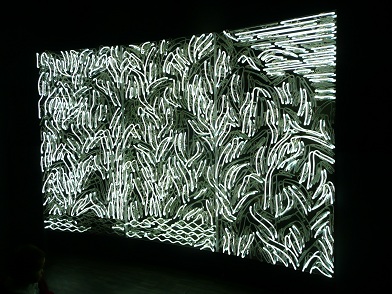

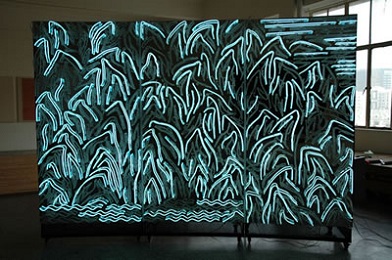
 Texas-based lawyer-cum-beatmaker Diego Bernal is back with Besides …, nearly a dozen tracks of downtempo, hip-hop-infused, crate-digging goodness. Lightly strummed guitar at the opening of “A Long Second” suggests some regional flavor, as flanging light noise and a raspy drum kit kick in, followed by wisps of r&b horns that sound more like memories than like samples. “Blue Neon,” a particular favorite, makes the most of a back beat, a hi-hat, a vocal call-out, and some sour organ playing.
  When musicians plumb the murky depths of their nostalgia, one might think they run the risk of alienating, or at least confusing, an audience with whom they do not share a common pop-cultural background. Camberwick Green was the name of a British TV series for children that apparently ran for a short time in the mid-1960s. It made enough of an impression on Guy Birkin of Nottingham, England, that he took a sample of the show’s opening theme music — a mix of music-box melody and spoken introduction — and fashioned from it his own contemporarily glitchy yet backward-glancing rendition.