Quick News, Links, Bits, Reads: The avant-garde rises to the surface in Internet sales of classical music, reports Justin Davidson, guest-blogging for Alex Ross at therestisnoise.com. He’s discussing the charts at emusic.com:
No. 2 is Gavin Bryars‘ The Sinking of the Titanic, a minimalist portrayal of slow-motion calamity that caused one Floridian subscriber’s spouse to ask: “What’s wrong with the player?”
The Washington Post’s Anne Midgette on a Steve Reich premier performed by the ensemble Eighth Blackbird (washingtonpost.com; thanks for the tip, Mike):
Six musicians are playing a duet with recorded versions of themselves. It is like looking into an electronic mirror. The mirror refracts the rapid, driving beat of piano and marimba; it adds a reflected gleam to long-held chords of strings and winds.
A massive controller for the software Ableton (aux-armes.blogspot.com — via engadget.com, makezine.com). … An anthology of homemade cassettes (from the great radio station wfmu.org, via Rob Walker‘s murketing.com‘s del.icio.us/murketing links). … The blog obscenejester.typepad.com on an Ikue Mori performance to films by Maya Deren: “Yet, as my technologically inclined friend commented afterward, ‘it’s endearing when performers make mistakes, but not when the techs do.'” … The great musicthing.blogspot.com on how Francis Bacon foresaw the recording studio back in 1626, as quoted in a recent history of the BBC Radiophonic Workshop by Steve Marshall (at soundonsound.com):
We have also sound-houses, where we practise and demonstrate all sounds, and their generation. We have harmonies which you have note, of quarter-sounds, and less slides of sound. Divers instruments of music likewise to you unknown, some sweeter than any you have…
At newmusicbox.org, Alyssa Timin on new graphic notation in scores. The image below, one of several in Timin’s article, is by Stephen Vitiello:
Still, why does experimental notation seem to be making a comeback? What happened after composers of the 1960s made notation an object of radical investigation? In recent years, computer notation software programs such as Finale and Sibelius have made standard notation more convenient than ever, further marginalizing the possibility of more experimental approaches. While computer notation programs are ubiquitous among composers these days, there has also been a backlash of composers who treasure the handwritten manuscript and remain resistant to the depersonalization of digitally manufactured scores. At the same time, the most sophisticated computer notation programs now contain the ability to accept symbols entered by a user, and the most techno-savvy composers now have the tools to create their own programs.

The first MP3 celebrated its 10th birthday this month (engadget.com). … Christian Maclay supplied the music for choreographer Jonah Bokaer‘s “The Invention of Minus One,” which was performed in Manhattan at the Henry Street Settlement’s Abrons Arts Center from March 12-16 (chezbushwick.net). … Peter Kirn of createdigitalmusic.com is hosting a “Futuristic Music Design Challenge” at the upcoming yuricdm.com event; deadline April 7. … The Netaudio conference will take place in London from October 22 – 25 (netaudiolondon.cc). … Entries for the Giga-Hertz Award 2008, its second year, for electronic music are due April 19 (via transition.turbulence.org) and the Leonor Hirsch Award has been created to support “electro-acoustic music and video” (also via transition.turbulence.org). …
Jean Michelle Jarre talks with the London Telegraph (telegraph.co.uk):
All those ethereal string sounds on Oxygene IV come from the VCS3 … It was the first European synthesizer, made in England by a guy called Peter Zinoviev. I got one of the first ones. I had to go to London in 1967 to get it, and it’s the one I still have onstage 40 years later.
In the (London) Sunday Times of March 2 (timesonline.co.uk), Jeremy Clarkson on the noise pollution of everyday life:
We are constantly being told that light pollution is ruining life for astronomers, that patio heaters are killing polar bears and that your carrier bags will one day choke a turtle. But I don’t give a fig about aquatic tortoises or astronomy. All I want is a bit of peace and quiet.
Speaking of sound and pollution, the following option popped up when I purchased a ticket to see Cluster in an upcoming show in San Francisco:
Yes, please add $2.35 USD to my order to help green my experience. This equates to 1 green ticket(s) @ $2.35 each which offsets approximately 348 lbs. of CO2. begreennow.com.
Audio-Games: The Loop Machine for the Wii had achieved version 2.o status (theamazingrolo.net). … Apparently that Korg synth port to the Nintendo DS will be released worldwide, not just in Japan (via the-palm-sound.blogspot.com). … Cool, Doraemon-themed, glove-music toy in Japan (imprinttalk.com, via engadget.com and numerous friends). The five fingers each have a sensor that triggers a note on the scale when pressed, and to complete the octave there are three more buttons on the wrist band. … An NES game cartridge doubles as a harmonica — that is, as a “harmonesica” ( makezine.com). … Guitar Grip coming to the Nintendo DS (engadget.com). … Online, user-created FAQ for Electroplankton: gamefaqs.com. … And there is a stage for Electroplankton in the new Wii video game Super Smash Bros. Brawl, alongside stages for Pokémon, Mario, Wario, Yoshi’s Island and other favorites. Image below from the coverage at wiisworld.com. Video at youtube.com. Additional coverage at gamersmark.com, wii.qj.net, and the game’s official home page, smashbros.com:

Score Keeper, News on Quiet, Minimal and Otherwise Atmospheric Music on the Big and Small Screens: Pop-techno figure Paul Oakenfold scores the new Bourne Conspiracy game (music4games.net). … Yes, the score for the romantic comedy Definitely, Maybe was by the same Clint Mansell who scored Requiem for a Dream, The Fountain, Abandon, World Traveler and Pi (theplaylist.blogspot.com). … Director Anthony Minghella (January 6, 1954 ”“ March 18, 2008) passed away (iht.com). Minghella’s movies showed special attention to their scores, featuring excellent work by Gustavo Santaolalla (Cold Mountain), Underworld (Breaking and Entering) and Gabriel Yared, his most frequent collaborator (The Talented Mr. Ripley, and collaboration on B&E with Underworld). … Also passing this month, composer Leonard Rosenman (September 7, 1924 ”“ March 4, 2008; Fantastic Voyage, Barry Lyndon), who helped bring atonalism to film scores (nytimes.com).
Grey Market: The excellent hip-hop MP3 blog 33jones.com posted audio of two classic instrumental tracks, Run-DMC‘s “Peter Piper” (MP3) and Original Concept‘s “Knowledge Me” (MP3), the latter produced by the “other” Doctor Dré, not the N.W.A member but the MTV VJ.

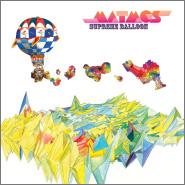 The dynamic field-recording duo Matmos have turned the tables on themselves. For the forthcoming Supreme Balloon (Matador), they’ve forsaken their sampling of unexpected source materials (rats, liposuction, Björk) in favor of synthesizers. As a teaser, they’ve released one song for free download. It’s a chipper bit of what’s generally thought of as willfully dated Casio pop — Casio in the manner than every photocopy machine is a Xerox and every portable tape player was a Walkman — and probably counts as the most high-profile bit yet of chiptune music, or music approximating the feel of an old video game (MP3).