Tangents: Hangout Concerts, Orchestronic Stream, Glass Remixed, …

News, quick links, good reads

¶ Beyond Bunker Broadcasts: Ambient musician Mark Rushton has been trying to use Google+ Hangouts “as a way to broadcast live or on YouTube, in unedited form.” Rushton has a great brain for music distribution. Between his website, his podcast, and his SoundCloud work alone, he’s a model of the individual who manages to be productive creatively while still experimenting regularly with infrastructure. He’s made some notes on his blog about using the Hangouts’ Studio Mode, which, according to Google, “optimizes your individual audio for music instead of conversation.” Rushton discusses various issues, some technical, some relating to the potential audience: “the potential boredom of looking at somebody looking at computers.”

Rushton’s post is at markrushton.com.

¶ Orchestral-tronic: Chicago-based composer Olivia Block has posted an excerpt from her forthcoming album, Foranum Magnum. Performed by Chicago Composers Orchestra, it’s a mix of Ligeti/Feldman-style spectral density and the low-level percussion of what could be shuffling feet.

More on Block and the orchestra at oliviablock.net and chicagocomposersorchestra.org.

¶ Screen Sound: “Since your display is flexible ”“ it could be able react to the sound vibrations as you speak. So why not put a laser microphone behind the display to capture those vibrations, and get rid of traditional mic holes?” That’s unwiredview.com reporting on a recently revealed Apple patent application (found via macrumors.com). From the patent: “The internal component may be an output device such as a speaker that transmits sound through the flexible display or an actuator that deforms the display in a way that is sensed by a user. The internal component may also be a microphone or pressure sensor that receives sound or pressure information through the flexible display.” The question that should always linger with patents is the unintended consequences. When Apple announced that the new iPhone 5 would have three microphones, coders live-commenting via Twitter sat up straight for a moment and pondered the potential uses. As for a screen that doubles as speaker and microphone, what opportunities are there — could what’s on the screen impact the sound, could intense visual activity in some way serve as a kind of filter, could the whole thing end up a useful or otherwise artistic feedback system? View the patent: patentscope.wipo.int. Here’s an image from the patent:

¶ In Brief:Blue Fringe: Update to recent post on the use of music in the first episode of the new season of Fringe: the theme that the Dr. Walter Bishop character summons up during interrogation, as a means to concentrate, is “Song for the Unification of Europe”by composer Zbigniew Preisner, from the movie Blue (1993), directed by Krzysztof KieÅ›lowski: “Resolving the Sonic Themes in Fringe.”Glass (Re)Works: That remix album of Philip Glass‘ music featuring Beck, Tyondai Braxton, Amon Tobin, and others mentioned here recently is now streaming in its entirety at npr.org. It’s part of the ongoing Glass-at-75 celebrations, and there is an app in the works as well (it’s by Scott Snibbe Studio, best known for the development of Björk’s Biophilia. … Genre Ceasefire: Just as a side note, it’s interesting that Beck is mentioned as an exemplar of the rockist side of cultural life in a recollection by Tim Munro of the ensemble eighth blackbird. He’s discussing how he was the classical kid, always fighting with his brother, the rock kid, about the relative merits of their pastimes: “While other mothers worried that their kids were doing drugs or having sex, our mother was defusing brawls about the relative superiority of Ligeti and Beck.” The post is from the blog at eighthblackbird.org (found via rgable.typepad.com).”
John Cage by the Letters

A play on the composer's name on his 100th birthday

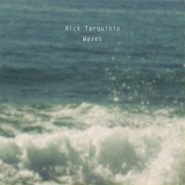
The latest from the great Resting Bell netlabel is a two-track, 25-minute set by Rick Tarquinio titled Waves. Things are buried beneath these waves, in particular the first track. A lush, lightly melodic piece (MP3), it’s reportedly built on a note sequence derived from the last name of composer John Cage, who would have turned 100 this year. No doubt Cage, a fan of such wordplay as mesostic, would have appreciated both the piece’s affect and its provenance. The second track is a wonderfully sedate meditation on the melodica (MP3). In the composer’s description of the album as a whole, “Waves uses minimal source material arranged accidentally into long pieces meant to evoke waves coming ashore.”

Tracks originally posted at restingbell.net. More on Tarquinio, who is based in New Jersey, at soundingplace.com. His work was previously featured here in November of last year.

Disquiet Junto Live @ Apex Art (NYC)

Poster and details regarding the Disquiet Junto concert to be held in Manhattan on November 27

This is the splendid logo/poster that’s part of the upcoming Apex Art exhibit As Real as It Gets, organized by Rob Walker, for which I’m handling sound design aspect, largely through the collective efforts of the Disquiet Junto. Per the date on the poster, there will be a live Disquiet Junto concert event at Apex Art in Manhattan on November 27, the Tuesday after Thanksgiving. The beautiful image is by Oliver Munday:

The list of participants in the concert will become public as the event approaches.

In a post at his Design Observer blog (“Listening to Retail”), Walker gets into some detail about what we’re up to. The exhibit overall is a fascinating exploration of the “fictional products, imaginary brands, hypothetical advertising and speculative objects.”

Disquiet Junto, under Marc’s direction, will create “sonic branding”on behalf of an imaginary retailer: The Ladies’ Paradise, the seduction-machine of a department store at the center of Zola’s 1883 novel of the same name. More precisely, we’re positing a sort of contemporary iteration of the store — maybe you could say, “If the Ladies’ Paradise were real and existed today, how would this unique retail brand sound?”

He’s been keeping an enthusiastic, curious, and sensitive ear on the Junto projects as they’ve developed:

I’ve found the listening experience to be totally fascinating, drawing into aural focus details like the mad peeping of a battery of checkout counters at a busy store, an unanswered phone that never stops ringing, the processed voices of official announcements (“Please follow the instructions on the pinpad”) and the murmer and chatter of shoppers. (All this became particularly interesting to me as I lost track of which were real field recordings, and which were artificial.)

I didn’t really realize how much the listening experience here had affected me until I found myself in a waiting room recently, at our veterinarian’s office. The machine sounds of the air conditioning, the interlocking but disconnected out-of-sight conversations, the mysterious and clicks and clunks I couldn’t actually identify: Suddenly it was all crystal clear, and oddly riveting.

Read Rob’s full piece at designobserver.com. More on Munday at olivermunday.com. More on the concert event, which is being billed as a “speculative sound performance,” and the exhibit, which runs from November 15 through December 22, at apexart.org.

Phone Phreak Remix

Cold War communications overload

Through the simple act of layering and editing, 1000 Abstract Machines (aka Andrzej Koper of Wroclaw, Poland) in the track “Phone Lines” summons up what seems like the Cold War”“era nightmare of a professional patchcord operator. Conversations, signal interrupts, and prerecorded alerts combine into a slow-motion frenzy of data overload.

The period audio is sourced from elmercat.org‘s phone mashups, and, thus, further back from Evan Doorbell’s phonetrips.com, a collection of archival recordings from phone phreaking, the dawn of what would mutate into — would merge with — computer hacking.

Doorbell recounts his early phone phreak activity:

I would drive around to small towns primarily for the purpose of playing with their payphones. I often brought along my trusty Craig 212 portable 3-inch reel-to-reel tape recorder (this was before cassettes were popular) to record the phone noises and narrate information about them for my friends. I don’t go on phone trips anymore and you are probably thinking that this is because I grew up, but no, I never did. The reason I stopped phone tripping is that all phones are about the same all over the country nowadays and they are really boring.

More on 1000 Abstract Machines/Koper at 1000abstractmachines.com.

Tangents: RjDj’s Retirement, Android Audio-games, Flavin’s Buzz, …

News, quick links, good reads

Download Before It Expires: The flagship RjDj app of the London-based Reality Jockey firm, home to the Inception and Dark Knight Rises Z+ apps, will no longer be available shortly. It is highly recommended that you download RjDj from the iTunes app store now for your iOS device before the app is retired. Details on the decison at the company’s blog, at rjdj.me. The post mentions that the company’s website will be relaunched on Monday, October 8.

Android Play Pretty Some Day: The website androidmusician.com is a solid compendium of sound/music apps for the Android operating system. It does a much better job than the Play store of displaying the state of tools for such activity. It’s more product-specific than the more cultural/newsy palmsounds.net, and complements it well.

Recent discoveries via androidmusician.com include the generative tool Orbits (screen shot shown above) and the old-school drum machine RD3 — Groovebox (video below):

The site also has a presence at twitter.com/androidmusician. It’ll be interesting to observe, over time, how these app-discovery services function best, whether the users will congregate at sites focused broadly on OS-specific coverage (Android versus iOS, etc.), focused broadly on usage-specific coverage (music, productivity, fitness), or as is the case of androidmusician.com focused at the intersection of a specific OS and a specific user base.

Boinquarius: One of the best music publications about adventurous sounds is the weekly email newsletter of the San Francisco record store Aquarius. The store is located on Valencia Street, not far from such cultural epicenters as the Borderlands science-fiction bookshop and the McSweeney’s pirate store. Aquarius’ newsletter, which usually pops up in email boxes on Friday evenings, has hooked up with the great Boing Boing (boingboing.net). The latter will be publishing one review per day, culled from Aquarius’ loquacious and knowledgeable crew, who are major fans of Krautrock, experimental electronics, and the darkest of death metal, among other things. Here’s a taste of what’s to expect, a review of the Common Eider, King Eider DVD Sense of Place: “wheezy chordal whirs, the vocals layered and wreathed in echo and reverb, a mysterious chorale that instead of building and then fading out, remains somewhat constant, with different voices receding and resurfacing, each part of the music slipping easily from just organ, to organ and voices, making for a constantly shifting landscape of muted melody and vocal texture.” Visit Aquarius Records (online) at aquariusrecords.org.

Sonoma Sound Art: If you’re in the North Bay (and, that is, if the Bay is the San Francisco one), be sure between now and October 14 to take the time to visit the art gallery on the Sonoma State campus, which is currently showing Sound, Image, Object: The Intersection of Art and Music. The participating artists are Mauricio Ancalmo, Terry Berlier, John Cage, Brian Caraway, Chuck Close, Bruce Conner, Lewis deSoto, Chris Duncan, Jacqueline Kyomi Gordon, Victoria Haven, Robert Hudson, Christopher Janney, Paul Kos, Tom Marioni, Jack Ox, Sarah Rara, Steve Reich, Isabelle Sorrell, Alice Wheeler, and William T. Wiley. Indeed, quite a lineup. I hope to have time to write it up soon.

The Reich are a pair of early compositions, including “Clapping Music”; the Ox a set of visuals combining sheet music and architecture drawings (above right); the deSoto a suspended stereo console; the Duncan an LP record made of paper (above left). A tremendous show.

In Brief: Camera-phone footage of Kronos Quartet opening for Amon Tobin last night: youtube.com; apparently someone threw a bra onstage, a first for the ensemble. … Kronos violinist and founder David Harrington submitted a mixtape to wqxr.org, where it is streaming currently; it features Arvo Pärt and DJ Qbert, Erik Satie and John Oswald. … John Kannenberg (of the Stasisfield netlabel) has started a new blog, phonomnesis.wordpress.com; its focus: “Silent memories of sound, art, time, museums, philosophy, and culture.” A definite add to your RSS reader. … In his excellent soundscrapers.blogspot.com blog, Nick Sowers probes a pressing question about fluorescent light sculpture Dan Flavin: “Spending countless hours, days, and years to get his installations just right, was Flavin using the buzzing sound to inform his work?”

The above is a recording by Sowers of Flavin’s buzz.